library · field guide

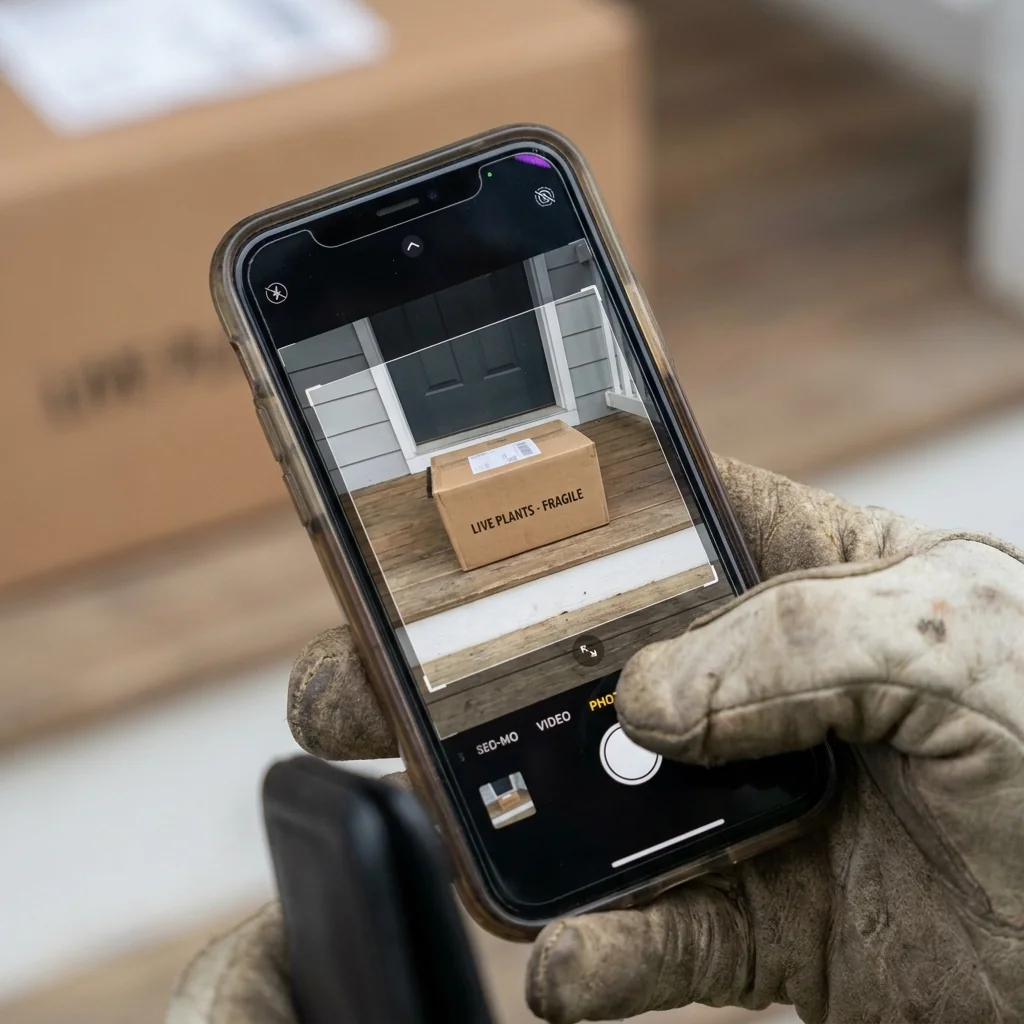
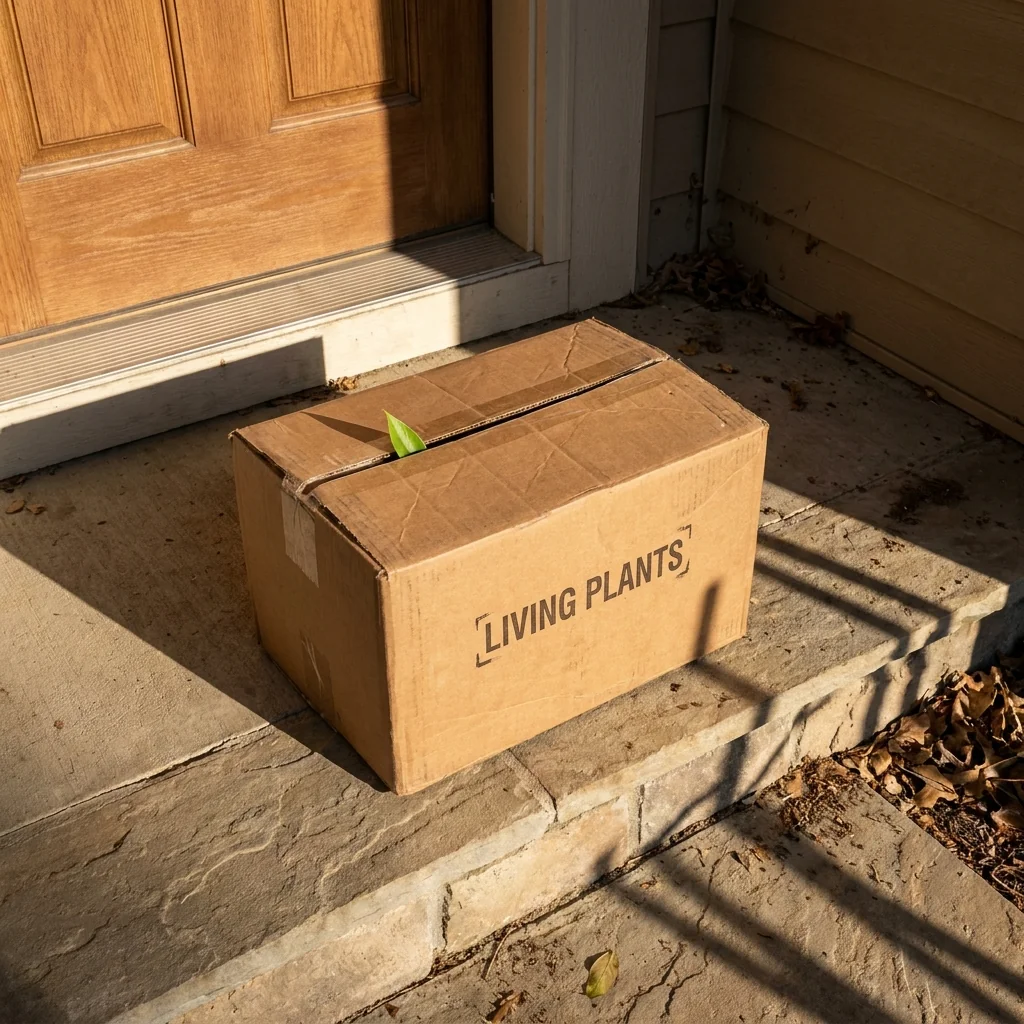
Nobody home, plant on the step for three days.

The parcel arrived on time. The plant still died, because it landed on a Friday afternoon at an empty house and spent the weekend in a dark porch while its clock kept running. With living goods, the day a delivery leaves and the day it lands matter as much as the distance in between.

the clock does not stop at the door

A delivery is not finished when it is dropped.

A parcel network measures success at the moment of the drop — scanned, photographed, done. For a living thing the drop is only the start of the most dangerous stretch: the hours or days it waits, unopened, in whatever conditions the doorstep offers. Timing is how you keep that stretch short.

the last mile is the last night

On time is not the same as in time.

Ask a courier and the delivery was a success: it left the depot, it was scanned at the door, the tracking says delivered. Ask the plant and it was a disaster: it was dropped at 4pm on a Friday behind a wheelie bin, the household was away for the weekend, and by Monday it had cooked in a sun-trap porch or drowned in a plastic sleeve. Nothing went wrong in the ordinary sense. It simply arrived at the worst possible moment.

That gap between on time and in time is the whole problem of timing a living delivery. A book can wait a fortnight on a doormat. A plant goes on respiring and losing water the entire time it sits unopened, living off its own reserves. Every extra hour on the step is drawn from a battery that started draining the moment it was lifted from the bench, and a weekend is a very long time to a plant in a box.

So the timing decision is not an afterthought bolted onto dispatch. It is dispatch. When a plant leaves determines when it lands, and when it lands determines whether a living thing meets an open door or an empty house. Get the day right and the journey is uneventful. Get it wrong and the healthiest plant, packed perfectly, still arrives as a complaint.
A Friday dispatch is a weekend in the dark.

the friday trap

A Friday dispatch is a weekend in the dark.

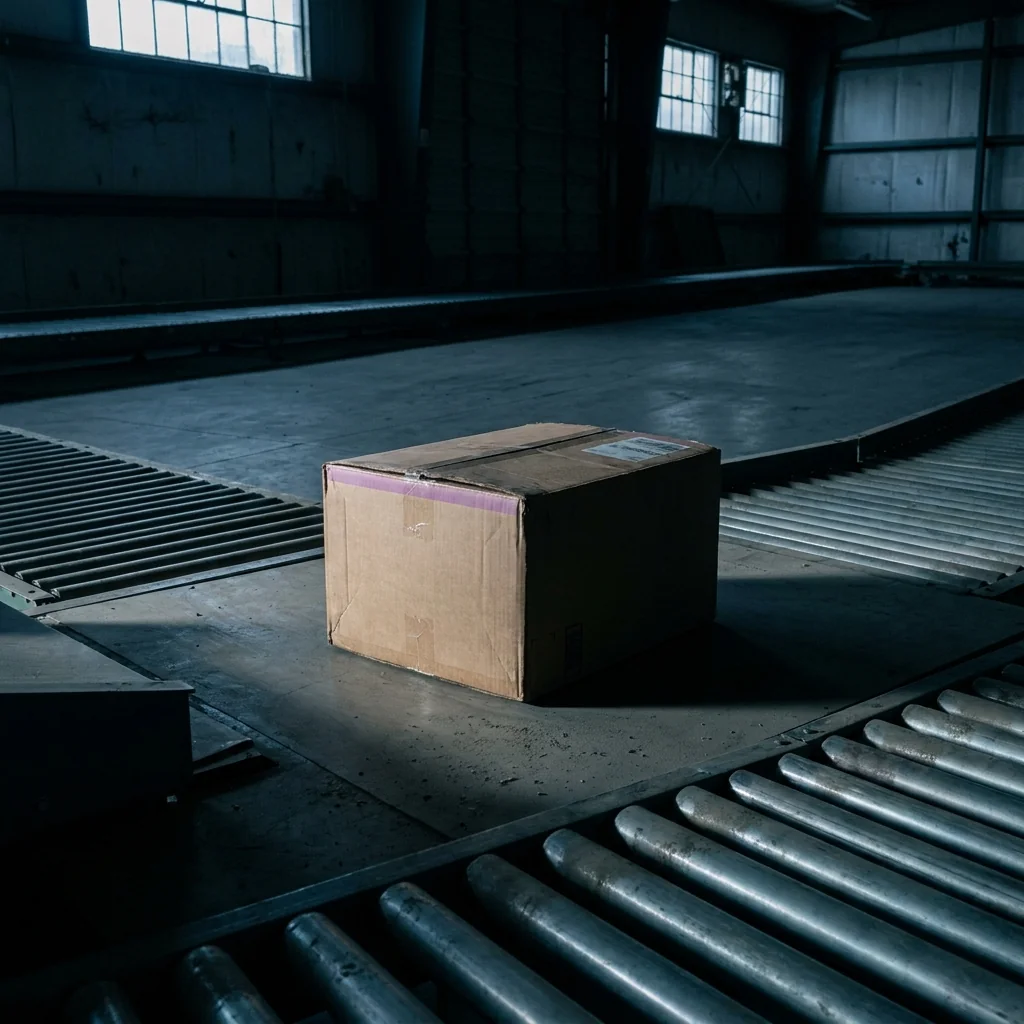
The single most avoidable loss in mail-order plants is the Friday gamble. A parcel posted late in the week on a standard service does not enjoy a quiet weekend at rest. It sits in a depot, unheated and unmoving, or lands on a doorstep on Saturday where it waits until someone comes home on Monday evening. Two, three, four days of a plant's life spent in transit or on a step, precisely when the network slows down and nobody is watching.

The fix is not complicated, but it has to be a rule rather than a mood: know each carrier's real transit time, count the days the parcel will actually be moving, and don't let a fragile plant leave on a day that lands it in a weekend limbo. Sometimes that means holding a Thursday order until Monday so it travels midweek. The plant does not care that it shipped a few days later; it cares enormously that it did not spend Saturday and Sunday in a cold hub.

The doorstep is a climate you don't control.

after the drop

The doorstep is a climate you don't control.

Once a plant is dropped, it inherits whatever the doorstep is: a south-facing porch that becomes an oven by noon, a shaded side-return that stays frost-cold, a communal hallway, a locked gate, a safe place chosen by a driver who has never handled a living thing. The nursery's careful packing was designed to survive a journey, not an open-ended stay. The longer the wait, the more the doorstep decides the outcome.

This is why timing and information travel together. A delivery aimed at a day the customer is home, with a sensible safe-place instruction and a heads-up that a living thing is coming, turns an open-ended wait into a quick hand-off. The plant that is opened within hours of arrival almost always makes it. The one left to fend for itself against an unknown doorstep is the one you hear about, by which time the timing decision that could have prevented it is days in the past.

work backwards from the promise

The promised date should set the leaving date.

A delivery date is a promise made forwards and kept backwards. If a plant is due to arrive on a Wednesday and the carrier takes two days, it has to leave on Monday. No sooner, or it ages on a shelf; no later, or it misses the day. A system should work that out so a human doesn't have to guess.

Most timing mistakes are arithmetic done in someone's head under pressure. A customer wants their plant for a birthday on Saturday; the picker, busy, sends it Thursday on a next-day service and it arrives two days early to an empty house, or sends it Friday and it misses the day entirely. The maths was never hard, arrival minus transit time equals dispatch day, but done in the middle of a busy morning against a dozen other orders, it slips.

The discipline is to make the dispatch date fall out of the promise automatically, so the bench is told when to send rather than asked to work it out. A required-by date on the order, a known transit time for the chosen service, and the leaving date computes itself. Then the human judgement is applied to a date that is already right, instead of being the only thing standing between the order and a badly-timed drop. Is that leaving day a Friday? Is the destination cold this week? Is the customer away? The system holds the arithmetic; the grower holds the judgement.

The customer knows when they'll be home.

let the doorstep tell you

The customer knows when they'll be home.

The one person who knows whether Thursday is safe is the customer — they know they're away next weekend, that a neighbour can take it in, that the porch bakes in the afternoon. The more of that a nursery can capture before dispatch, the fewer plants meet an empty house. A chosen delivery day, a "not this week, we're away" note, a click-and-collect option for someone who would rather fetch it than gamble on being in: each one shortens the dangerous wait.

None of this needs to be elaborate. It needs to be captured and carried: attached to the order so the person timing the dispatch can see it, and honoured so the plant leaves on a day that lands it in front of an open door.

When a delivery misses, you need to see it early.

the drop you can prove

When a delivery misses, you need to see it early.

Even timed well, some deliveries miss: a failed attempt, a wrong address, a customer who was home after all but the driver left it next door. The living-goods penalty for a missed delivery is severe: a plant that goes back into the network for a second attempt spends more days in the dark, and one marked delivered to the wrong doorstep is a plant quietly dying somewhere the customer can't find it.

The defence is visibility and proof. A delivery that can be seen sitting in transit, a failed attempt flagged the moment it happens rather than discovered when the customer calls, and proof of the drop in the form of a photo and a location at the door: together they turn a timing failure into something you can act on while the plant is still alive. A photo of the parcel on the correct step ends the "it never came" dispute; a fast flag on a failed attempt lets you re-time the second try before the plant runs out of road.

atlas core

How Atlas Core times a living delivery

Atlas Core won't decide the customer's week for you, but it does the arithmetic and holds the decision, so the timing judgement is applied to a date that's already right:

  • The dispatch date is worked out from the promise. When a delivery is raised against an order with a required-by date, Atlas Core sets its ship on by counting back the chosen delivery method's transit time, so the bench is told when to send rather than left to do the sums under pressure.
  • A dispatch date you can move, deliberately. If that leaving day falls into a weekend, or the customer is away, a logistics manager can reschedule the ship on date; the shipment moves to a Scheduled state and the system won't let you set a date in the past. The plant waits on the record, aimed at a better day.
  • Transit time lives on the delivery method. A next-day courier, a slow economy service and Click & Collect for a customer who'd rather fetch it each carry their own transit time, so choosing the service changes the leaving date automatically.
  • The shipment is visible in flight. A delivery moves through Pending → Scheduled → Processing → Picking → Packed → In Transit → Delivered, with a Failed state for a missed attempt and Returned for one that loops back, so a miss is a status you can see and re-time rather than a surprise phone call.
  • Proof of delivery on the record. Photos and a signature captured at the door attach to the delivery, so "it never arrived" is a lookup, and a wrongly-placed drop is something you can prove and put right.

The customer's week and the weather stay human calls. Atlas Core makes sure the leaving date follows from the promised one, and that when you decide to hold for a better day, the shipment actually waits.

Read further

Too cold to post this week Field guide · 2026

Too cold to post this week

A plant posted into a cold snap can arrive frozen days later, when the sale and the goodwill are already gone. Reading the forecast at both ends, packing against the cold, and knowing when a living thing simply shouldn't go in the post at all.

7 min read · Jul 2026 Read →
Posting a plant is its own craft Field guide · 2026

Posting a plant is its own craft

A parcel network was built to move boxes, not living things. Shipping a plant by courier, alive and undamaged and on time, is a discipline of its own, and the last, most dangerous stretch can undo all the earlier work.

8 min read · Jul 2026 Read →
Half a truck to Rotterdam, every week Field guide · 2026

Half a truck to Rotterdam, every week

A small nursery pays a premium to move a plant, because it ships in half-loads and the haulier still charges for the empty space. Consolidating part-loads with other growers, and costing freight by the trolley, lets a small grower ship at a big grower's rate.

8 min read · Jul 2026 Read →

Land the plant when someone's home to catch it.

Atlas Core works the dispatch date back from the promised one, lets you reschedule a shipment to dodge a weekend, and keeps proof at the door. Talk to us about how it fits your nursery.