library · field guide

Posting a plant is its own craft.

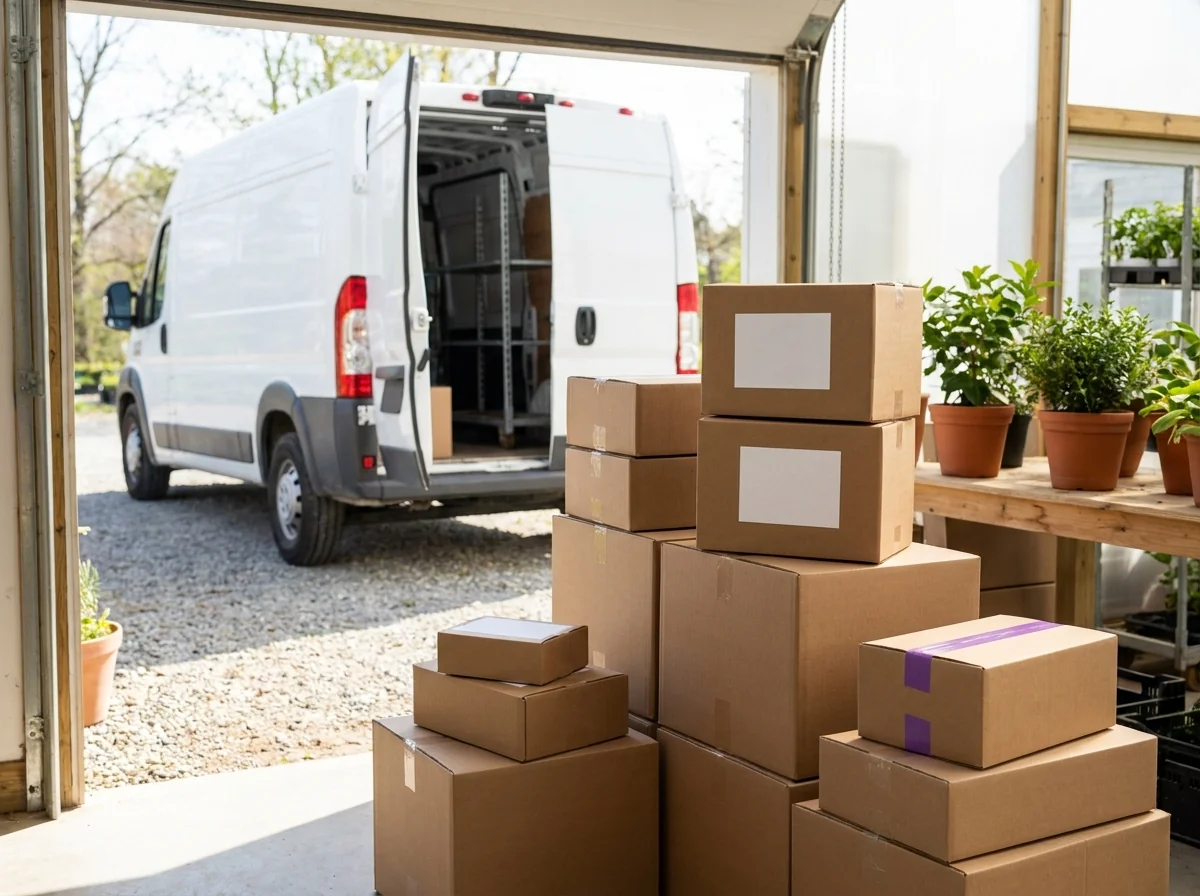
The courier network was built to move boxes that don't mind the journey. A plant minds every hour of it: it is alive, it is fragile, and its clock is already running. Getting one from the bench to a stranger's doorstep in good health is a craft with its own steps, and every step has to be recorded to be repeatable.

a box that breathes

The parcel network was not built for living cargo.

Carriers optimise for volume, weight and speed. Roots, moisture and cold are invisible to the conveyor. The craft is putting all of it back: in the pack, on the label, and in the record.

unlike posting anything else

Alive, fragile and perishable, all at once.

Post a book and the worst that happens is a bent corner. Post a plant and you are shipping something that is simultaneously alive, fragile and perishable — three problems a parcel network was never designed to solve, arriving all at once, in the same box.

Alive means it is respiring, losing moisture and reaching for light the whole way, so a dark lorry and a warm depot are a countdown. Fragile means a snapped stem or a soil-emptied pot turns a healthy plant into a complaint, and couriers sort by tumbling parcels down chutes. Perishable means the clock that started when it was lifted from the bench does not stop for a failed delivery, a weekend in a dark porch, or a return that loops back through the network.

So dispatch is not the boring end of the sale — it is where the sale is kept or lost. A plant chosen well, propagated well and grown well can still arrive dead because it was packed on a Friday, mislabelled at the door, or left to bake in a van. The craft of posting it is the discipline that carries all the earlier work safely across the last, most dangerous stretch, the same way every time.
It starts with picking the actual plant.

the right one, confirmed

It starts with picking the actual plant.

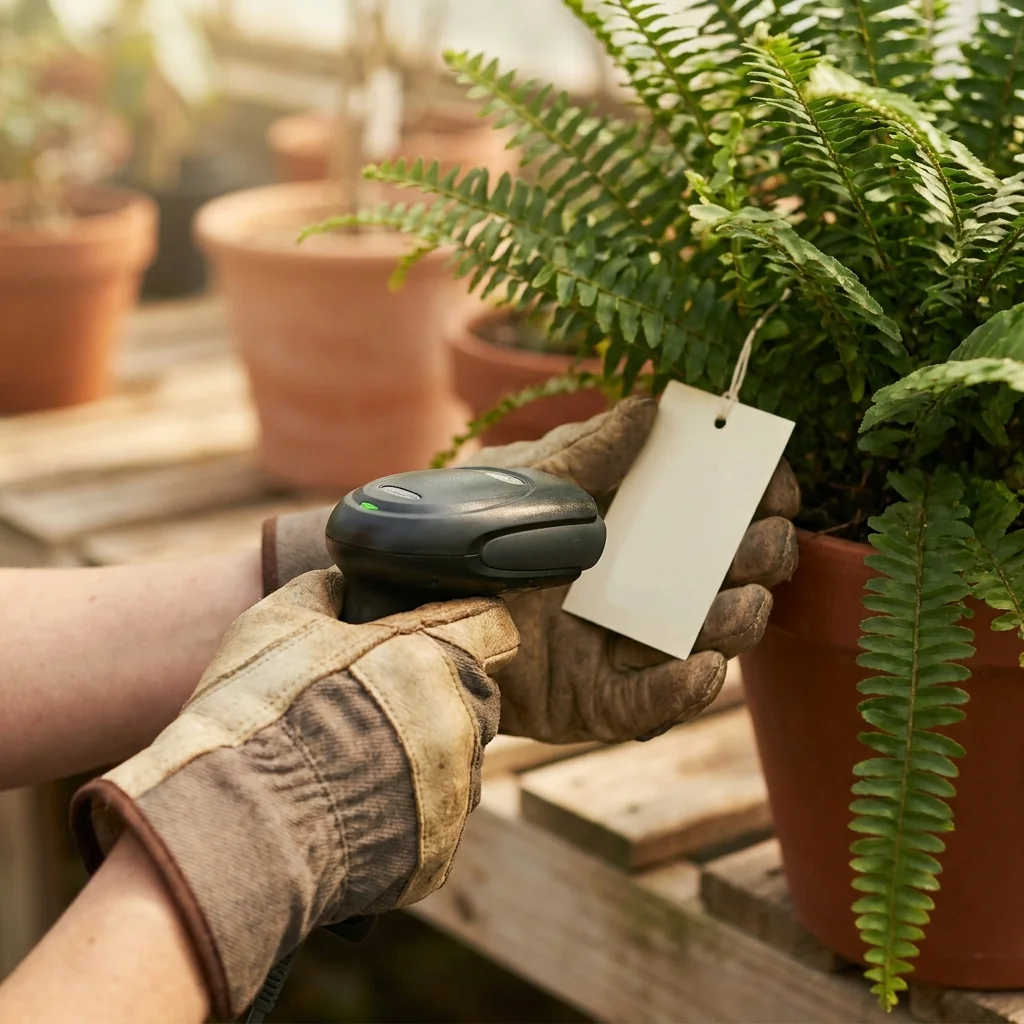
No two specimens of a living plant are identical, so a mail-order pick means choosing the right grade, size and quality for what the customer bought, and confirming it is exactly that. A scanned barcode at the bench turns "we think we sent the right one" into a recorded fact tied to the order.

The pick is also the moment the honest answer to a shortfall is captured. If the picked grade isn't there, the person on the floor flags a short-pick with a reason rather than quietly substituting something the customer didn't choose. Picking a living order is where accuracy is either built in or lost, and every later step inherits whichever it was.

Immobilise the roots, let the leaves breathe.

packed to travel

Immobilise the roots, let the leaves breathe.

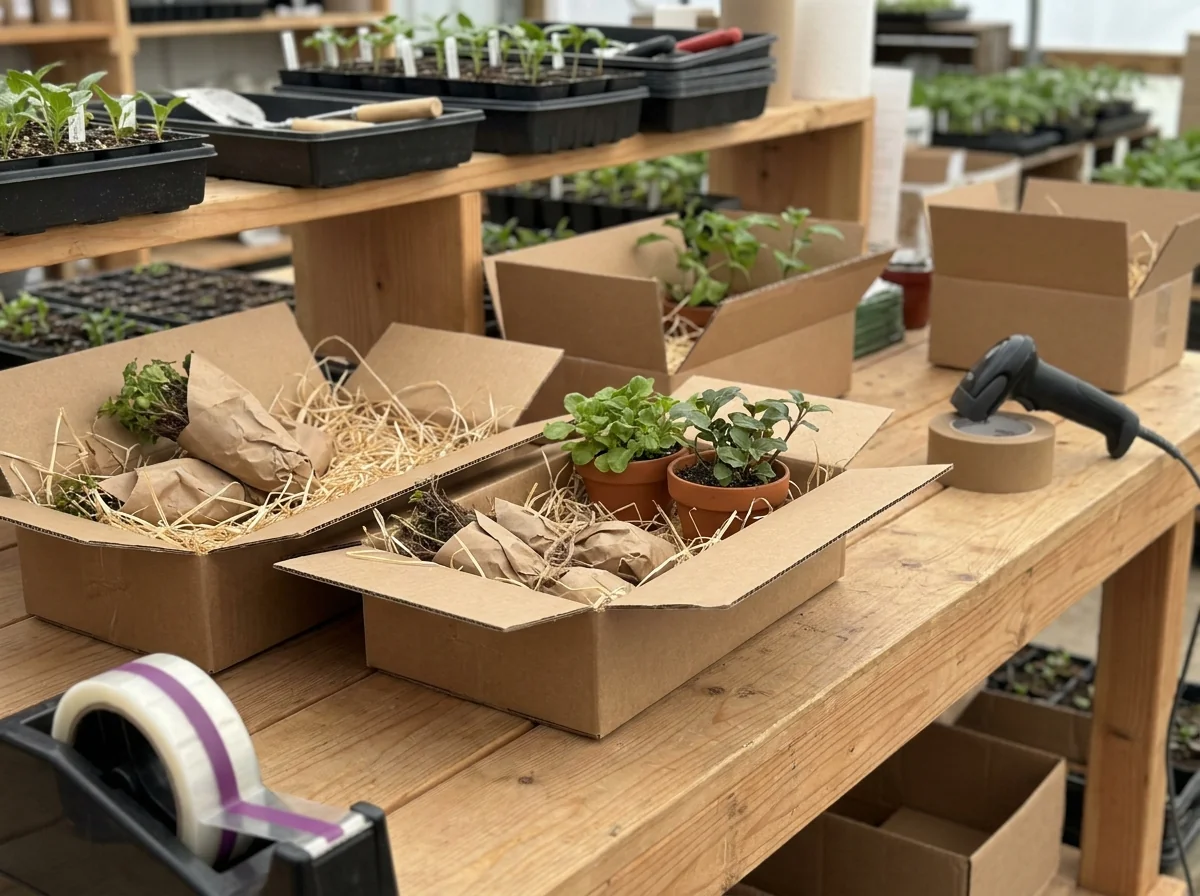
Packing a plant is a craft with competing rules held in balance. The root ball has to be locked in place so the pot can't empty in transit; the foliage needs enough room and air that it doesn't cook or crush; the whole thing has to survive being thrown, stacked and left on its side. And it has to do all that with enough packaging to protect the plant without burying it under waste that lands on the customer's doorstep.

So record the pack as a real thing: which packaging type it went in, its dimensions and weight, whether it is fragile and how it must sit. The gross weight the courier bills against is the pack plus its contents, a number worth knowing before the label prints rather than after the invoice surprises you.

the label is a promise

What rides with the parcel matters as much as what's in it.

A living parcel travels with more than an address. It carries its plant passport, its tracking identity and the terms of what happens if it goes wrong, and each of those has to be right at the moment the box is sealed.

Consider everything a single mail-order plant has to carry out of the gate. Where the species requires one, an EU plant passport must travel with it — printed, legible, and in the right language for where it is going. It needs a tracking identity so that "where is my plant?" is a lookup rather than a shrug. And it leaves under a policy for the thing the trade quietly dreads: the dead-on-arrival, the nobody-home, the return that can't work the way a returned book does.

A passport missing from the box can stop the parcel at a border or in a buyer's hands. A tracking number that isn't linked to the order turns a missing-plant call into detective work. A returns policy invented on the phone, case by case, is how a business bleeds goodwill. The craft is that passport, tracking and terms are all decided and attached at the bench, so the sealed box is already telling the whole truth about itself.

Booked, labelled, and synced to the carrier.

the hand-off

Booked, labelled, and synced to the carrier.

The moment a plant passes from your bench to a courier's van is the moment you lose sight of it, unless the hand-off is done properly. A named delivery method carries the shipping option and its real cost; the carrier booking produces the label the parcel travels under; and the tracking reference flows back so the shipment's progress is visible from inside your own system as well as the courier's website.

This is also where the choice of carrier and service becomes a plant-health decision as much as a price one. A Friday dispatch on a slow service is a weekend in a dark depot; the same plant on the right service leaves and lands inside its safe window. Booking is where speed, cost and survival are weighed together, and recorded, so the decision can be reviewed when something arrives poorly.

A photo at the door, a trail you can follow.

proof, and the bad day

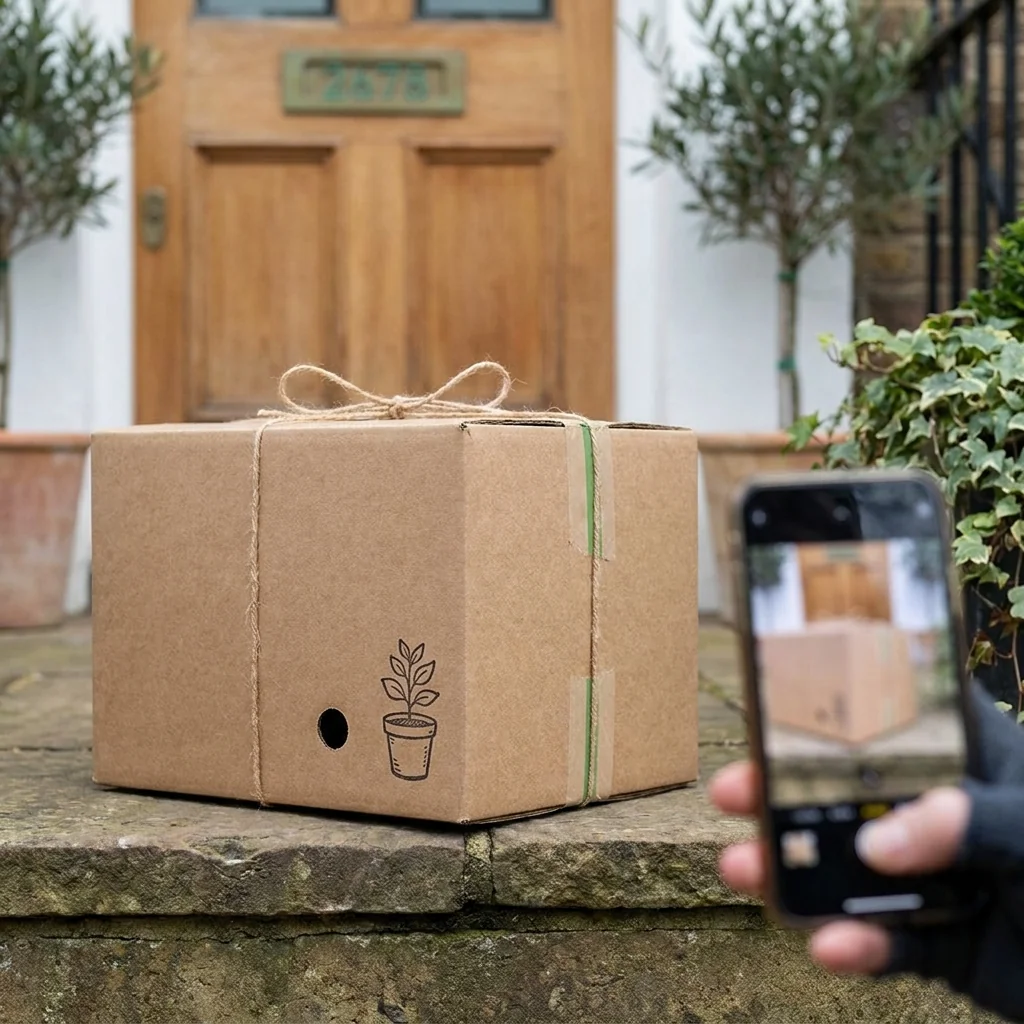
A photo at the door, a trail you can follow.

Most parcels arrive fine. The craft shows in how the ones that don't are handled. Proof of delivery, a photo and a signature captured at the doorstep, turns "it never arrived" from your word against the customer's into a settled fact. A tracking log that records each step means a delayed plant can be chased at the right point in the chain instead of written off.

And when a plant does arrive dead, the answer is a policy rather than an argument. Because ordinary returns don't work for living things, the trade leans on refund-and-replace rather than send-it-back. The record of what was picked, how it was packed, which service carried it and what the tracking showed is what lets you honour that quickly and stop it happening twice.

atlas core

How Atlas Core carries a plant to the door

Atlas Core models the dispatch of a living parcel as the staged, recorded workflow the craft demands:

  • A staged delivery lifecycle. Each shipment moves through Pending → Scheduled → Processing → Picking → Packed → In Transit → Delivered, so where a plant is in the craft is always visible, and the people working it can act on it without needing broad permissions.
  • Real packs on every delivery. A delivery breaks into the physical packs it's made of, each tied to a packaging type with its own dimensions and tare weight; the system computes the gross weight the courier bills against before the label prints.
  • Passports print with the goods. Where a plant needs an EU plant passport, it's generated onto the delivery note automatically, in the customer's language, so the paperwork leaves in the box.
  • A courier framework built for booking and tracking. Delivery methods link to couriers through a driver-based integration layer designed for shipment booking, label printing and tracking sync, with a per-shipment tracking log.
  • Proof of delivery on the record. Photos and signatures captured at the door attach to the delivery as proof-of-delivery media, so a disputed drop is a lookup rather than an argument.
  • The dispatch decision stays auditable. The method can be overridden on the shipment itself when a service or vehicle changes — an audited, reason-bearing choice that leaves what the order recorded intact.

Read further

Half a truck to Rotterdam, every week Field guide · 2026

Half a truck to Rotterdam, every week

A small nursery pays a premium to move a plant, because it ships in half-loads and the haulier still charges for the empty space. Consolidating part-loads with other growers, and costing freight by the trolley, lets a small grower ship at a big grower's rate.

8 min read · Jul 2026 Read →
When the courier loses your orchid Field guide · 2026

When the courier loses your orchid

A plant leaves the nursery in perfect condition and never arrives. The real cost is rarely the lost stock. It is not being able to say which courier had it, which parcel it was in, or where its trail went cold. How to make a missing order a lookup, not a shrug.

7 min read · Jul 2026 Read →
The right VAT in seven countries Field guide · 2026

The right VAT in seven countries

A pallet that crosses two borders can carry three different tax answers before it is paid for. Who charges VAT, who reclaims it and who simply reports it depends on the buyer, the border and where the goods end up - and the reason a line is zero matters more than the rate.

7 min read · Jul 2026 Read →

Get the plant there alive, every time.

Atlas Core turns posting a plant into a repeatable craft — a staged pick-pack-ship workflow, real packs and weights, passports on the delivery note, courier booking and tracking, and proof at the door. Talk to us about how it fits your nursery.