library · field guide

The right VAT in seven countries.

A pallet of plants that crosses two borders can carry three different tax answers before it is paid for. Who charges VAT, who reclaims it and who simply reports it depends on where the buyer sits, where the goods started and whether they left the bloc at all.

the problem

One consignment, several tax jurisdictions.

The rate is the easy part. The hard part is the reason a line is taxed the way it is — and getting that reason recorded, because the reason is what a tax authority actually checks.

why it is hard

Tax follows the buyer, not the bench.

When every sale happens in one country, VAT is a single rate applied to a price. Sell across borders and the question changes from "what is the rate" to "which country's rules apply, and why." A German garden centre buying from an Italian grower, a Dutch wholesaler reselling into France, a private buyer ordering a single olive tree from abroad — each is a different tax event, even for the same plant at the same price.

Three things decide the answer: who the buyer is (a VAT-registered business or a private consumer), where they are (inside the same country, elsewhere in the EU, or outside it entirely), and where the goods physically go. Change any one and the correct treatment can flip from standard-rated, to zero-rated with the buyer accounting for the tax, to no EU VAT at all.

Get it wrong in the cautious direction and you charge tax a customer should never have paid, then spend a quarter unwinding it. Get it wrong the other way and you have under-declared — a liability that surfaces at audit, with interest attached. Both are a records problem.

Different countries, different rates.

the rate is not the hard part

Different countries, different rates.

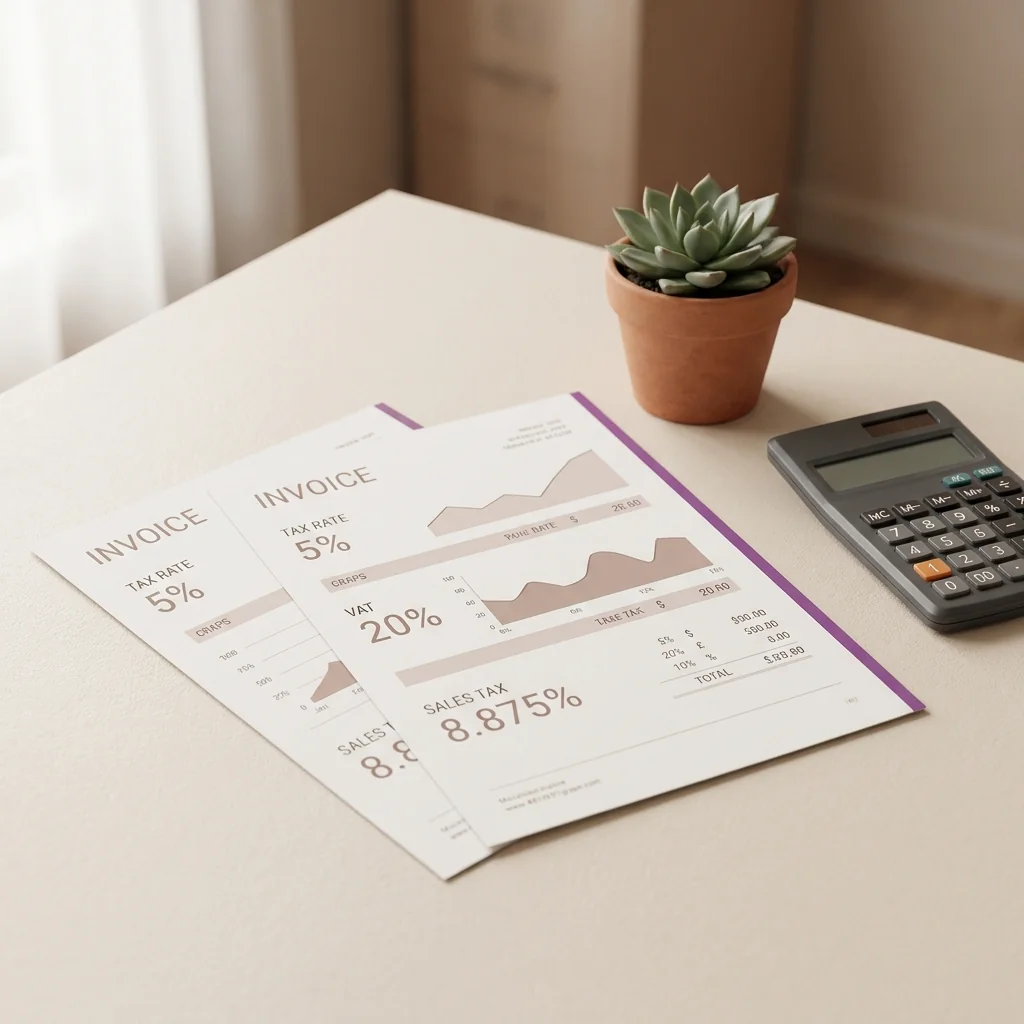
Every country sets its own VAT rates, and horticulture rarely sits in one neat band. Live plants, bulbs, seeds and cut flowers attract reduced rates in some member states and the standard rate in others; fertiliser, hard landscaping and delivery can each fall differently again.

A tidy system does not hard-code "20%" anywhere. It keeps tax as named bands (standard, reduced, zero, exempt), each with its own symbol and rate, and attaches the right band to the product. When a rate changes or a new market opens, you adjust the band and every price in the catalogue stays as it is. The figure on the shelf edge never has tax baked into it; the tax is decided at the moment of the sale, from the band that applies.

The invoice with no VAT on it — on purpose.

business to business, across the border

The invoice with no VAT on it — on purpose.

Sell to a VAT-registered business in another member state and the usual answer is the reverse charge: you invoice the goods with no VAT, and the buyer accounts for it in their own country at their own rate. The line is legitimately zero — but only because the buyer's VAT number checks out and the goods genuinely crossed a border.

That "why" has to be captured. A blank tax column looks the same whether it is a correct intra-EU supply or a mistake. The difference is a recorded reason on the customer, this account is treated as an intra-EU business, so the zero on the invoice is a decision the system can defend.

the reason behind the number

A zero on an invoice has to say why it is zero.

Standard-rated, intra-EU, reverse charge, exempt, export — each carries a different meaning downstream, in your return and increasingly in the electronic file a tax authority receives directly.

A simple "VAT: yes / no" switch is not enough once you trade across borders, because two lines that both show no tax can be zero for completely different reasons — an export leaving the bloc, a reverse-charge sale to an EU business, a genuinely exempt supply. Your VAT return treats them differently, and so does the buyer.

The durable approach is to treat the reason as the primary fact and let the number follow from it. Attach a tax treatment to the customer (standard-rated, intra-EU, reverse charge, exempt, export) and where a line ends up carrying no VAT, record the specific ground for it. Some countries now require exactly that: an electronic invoice with a zero line must state a coded reason why it is zero, or it is rejected.

Zero-rated only if you can prove it left.

leaving the bloc

Zero-rated only if you can prove it left.

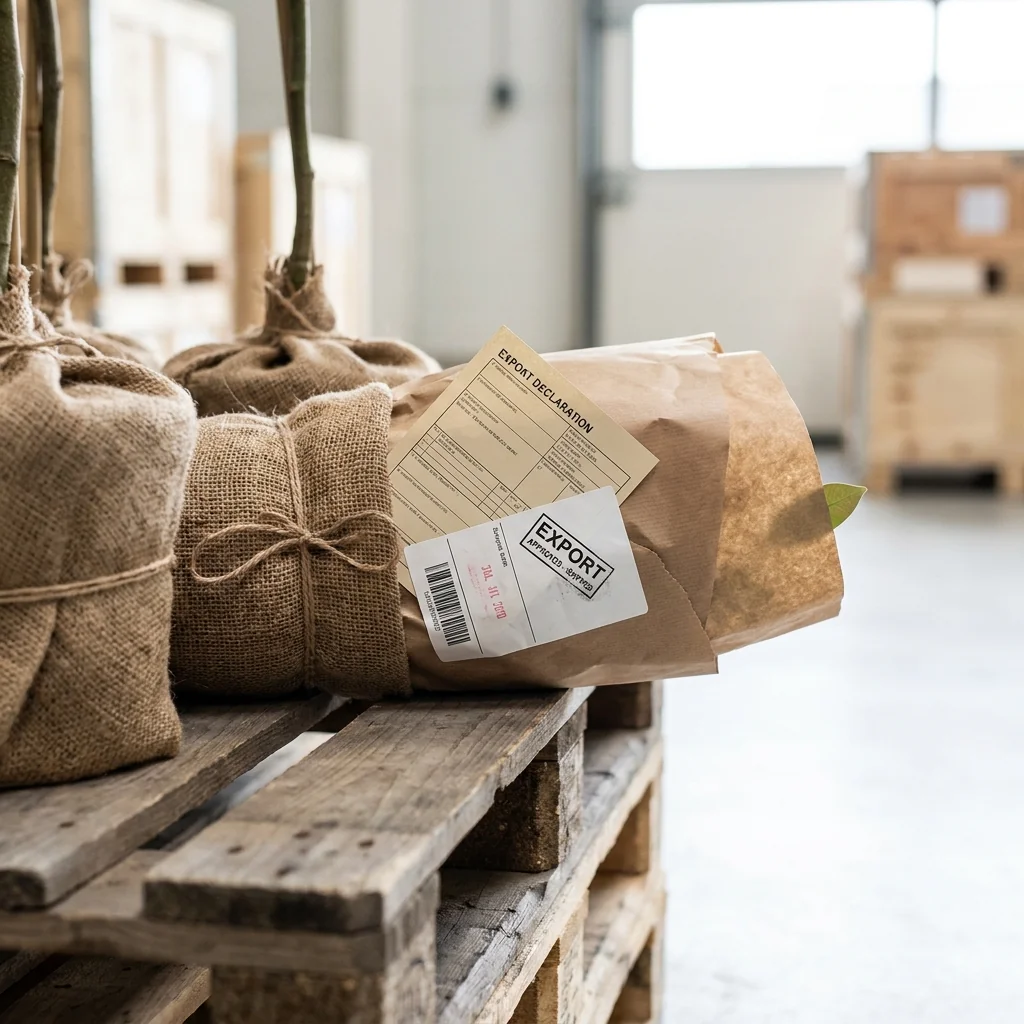
Goods that leave the customs union can be zero-rated for export — but the zero is conditional. The relief stands only if you hold evidence that the consignment actually departed: the export declaration, the transport paperwork, the proof of exit. Without it, an auditor is entitled to treat the sale as if domestic VAT should have applied, and bill you for it.

So the export zero is a claim backed by documents that ride with the consignment. The tax treatment on the order and the shipping evidence behind it are two halves of the same record, and the time to line them up is at dispatch, long before the query lands.

The tax authority now reads the invoice directly.

reporting as well as charging

The tax authority now reads the invoice directly.

Charging the right VAT is only half the obligation; the other half is reporting it in the form each country demands. A growing number of member states require invoices to be submitted electronically to the tax authority — Italy through its SDI exchange and the FatturaPA format, others following on their own timetables.

Handled well, this is country-pluggable: the same sale produces the ordinary commercial invoice for the customer and, where the rules require it, a structured fiscal file transmitted through an accredited intermediary. Whether the customer has the invoice and whether the tax authority has accepted it are tracked as two separate states — so "sent" never quietly means two different things.

atlas core

How Atlas Core handles cross-border VAT

Atlas Core builds the reasoning above into how a sale is priced and billed:

  • Tax Levels — named bands (standard, reduced, zero, exempt) each with a symbol and rate, set on the product and on delivery charges, so the right rate is chosen at sale time rather than typed in.
  • Prices stored without VAT. Every price (retail, price list, offer, volume discount) is held VAT-exclusive; separate settings control only whether tax is shown, never how it is stored.
  • A VAT Treatment on every customer (standard-rated, intra-EU, reverse charge, exempt or export), so the reason a line is taxed the way it is travels with the account.
  • A recorded reason for every zero line (a Natura ground) where no VAT applies, satisfying the e-invoicing rules that reject an unexplained zero.
  • Country-pluggable e-invoicing, off by default and enabled per country, Italy first, via SDI and FatturaPA through an accredited intermediary, with the invoice's commercial status and its fiscal transmission status tracked separately.

Read further

Where is a plant actually from? Field guide · 2026

Where is a plant actually from?

Every plant passport carries a country of origin - the deceptively simple Field D. For a plant propagated in one country and grown on in another, that single answer is rarely obvious. Why growers guess, and the mislabelling that follows.

7 min read · Jul 2026 Read →

Sell across borders without dreading the return.

Atlas Core keeps the rate, the reason and the report together — tax bands on the product, a VAT treatment on the customer, a recorded ground for every zero line, and e-invoicing where the law requires it. Talk to us about how it fits the countries you sell into.