library · field guide

Where is a plant actually from?

Every plant passport carries a country of origin. It sounds like the simplest field on the label - until you follow a finished plant back through the growers, countries and seasons it passed on the way to the bench.

the deceptively simple field

One field. No simple answer.

The origin line on a plant passport asks for a single country. A finished plant rarely has just one.

what the passport records

Four fields, and the one that trips people up.

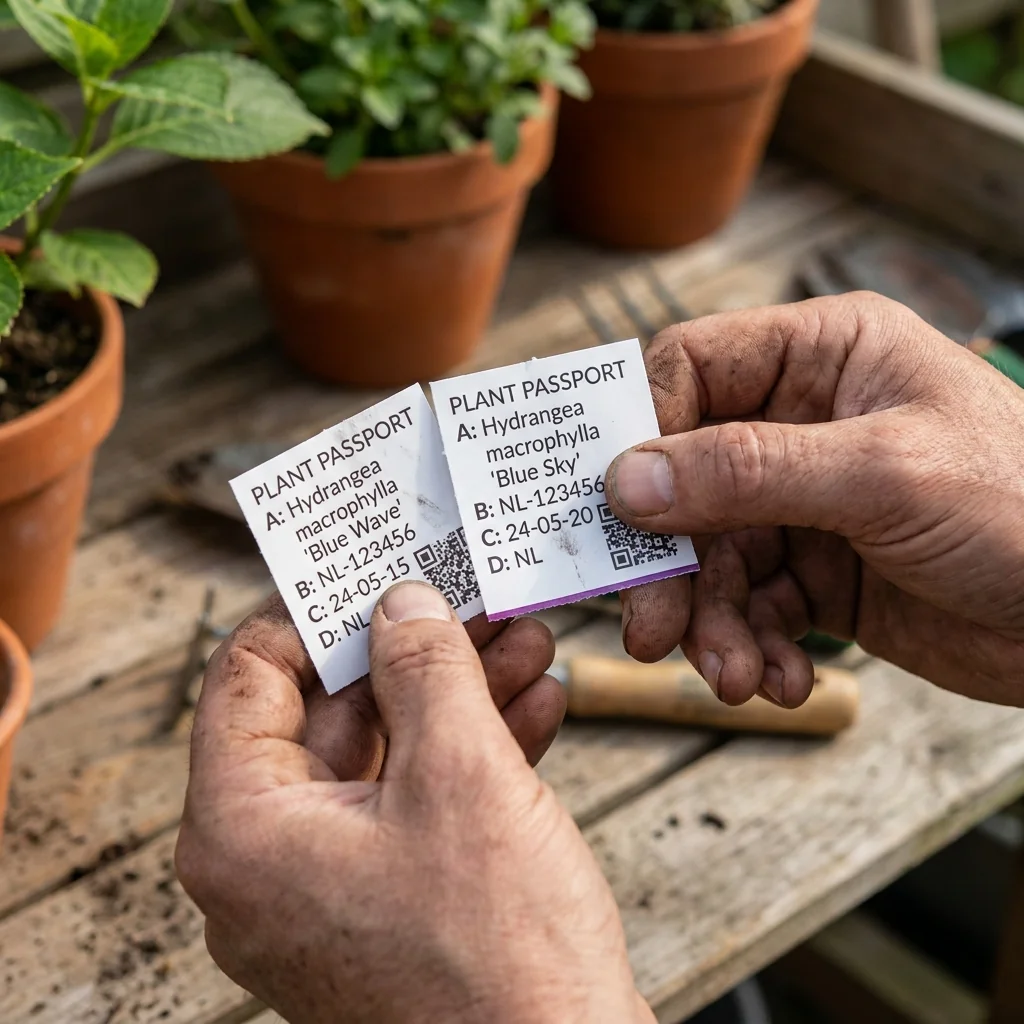
An EU plant passport is a small label carrying four pieces of information: the botanical name of the plant, the registered operator and member-state code of whoever issued it, a traceability code that ties the plant to a specific batch, and the country of origin — the field usually printed as D.

Three of those four are facts you already hold. You know what the plant is, who you are, and which batch it belongs to. The fourth is different in kind: it asks a question about the plant's own history, and that history may have happened long before the plant ever reached you.

For a plant you raised yourself from seed on your own site, the answer is easy. For most finished plants moving through a modern supply chain, it is not — because the plant has already lived in more than one place.
Propagated in one country, finished in another.

a plant with more than one home

Propagated in one country, finished in another.

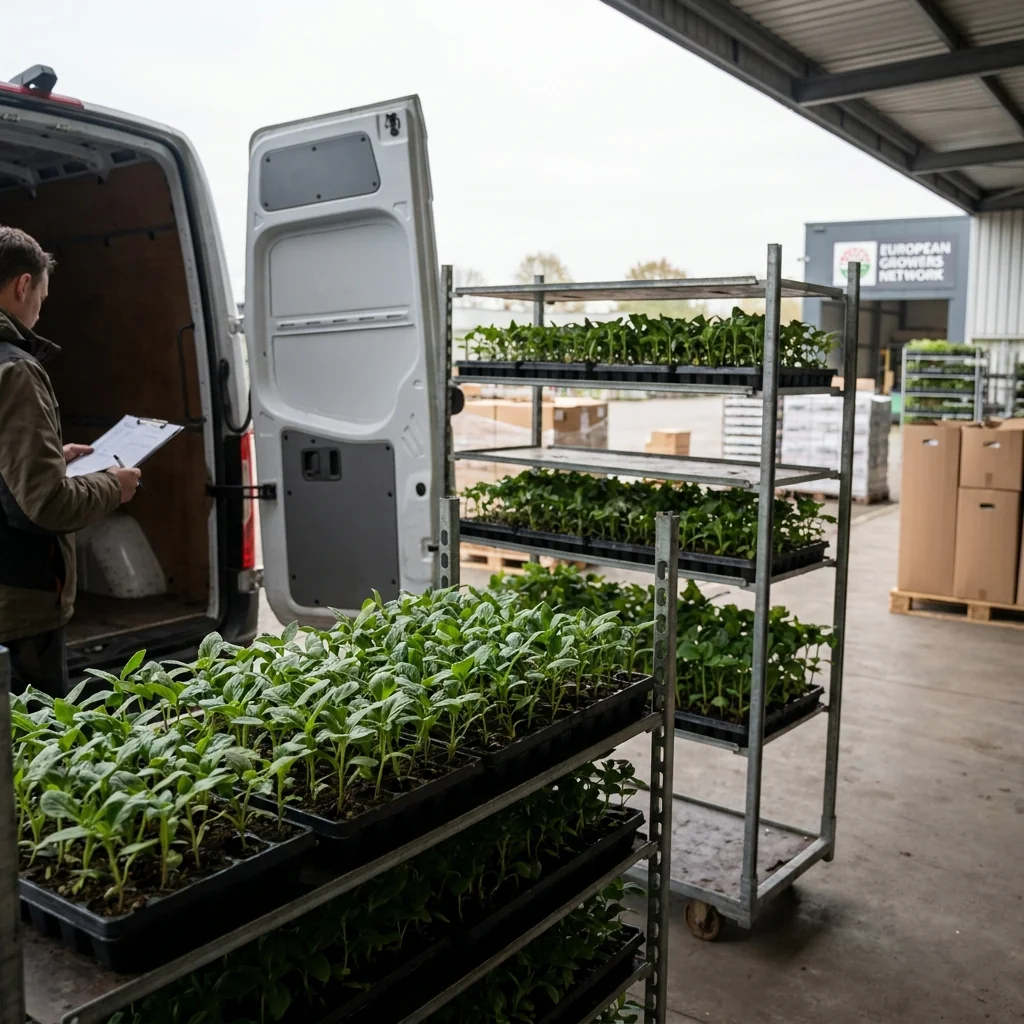
A young plant might be struck from a cutting in the Netherlands, shipped as a rooted liner to a grower in Italy, potted on and grown for two seasons, then sold to a garden centre in France. Every leg of that trip is ordinary. None of it is a mistake.

But by the time the plant is a saleable three-litre on a trolley, "where it's from" has several plausible answers — the country that propagated it, the country that grew it on, or simply the country it last shipped from. The passport asks for one.

Country of origin, not country of dispatch.

what the rules point to

Country of origin, not country of dispatch.

The origin field records where the plant was produced, rather than the last place it sat before sale. For plants produced within the Union, that is the member state of production; for plants brought in from outside it, the third country they came from.

Simple enough in principle. The difficulty is practical: to fill it honestly for a plant that changed hands, you have to know something you did not witness — and the rules assume that knowledge travels with the plant, when in the real chain it often does not.

where it goes wrong

When you don't know, you guess.

And the guesses are predictable: copy the incoming label, default to your own country, or record wherever it last shipped from.

A grower under time pressure, faced with an origin field and no clear answer, tends to reach for one of three shortcuts — and each is wrong in its own way.

  • Copy the incoming passport blindly. Often right, sometimes not: if the supplier already guessed, you have just inherited and re-issued their error under your own name.
  • Default to your own country. Comfortable and confident, and wrong whenever the plant was actually produced elsewhere. Growing a plant on is not the same as originating it.
  • Record the country it last shipped from. That is the country of dispatch, a different idea entirely — an easy substitution that quietly changes the plant's declared history.

The trouble is that a wrong origin is invisible. It looks exactly like a correct one: a valid-looking passport, a plausible country, no error message. It travels down the chain, and every operator who re-issues after you inherits it as fact.

A wrong origin quietly breaks traceability.

why it matters

A wrong origin quietly breaks traceability.

Origin is one of the threads an investigation pulls when something goes wrong. Trace a pest finding back toward its source and a false country of origin sends the trail in the wrong direction — past the real source, toward growers who never touched the problem.

It has a nearer cost, too. An inspector who spots an origin that cannot be right has reason to doubt the rest of your records. Getting this one small field wrong is rarely just a typo; it reads as a business that does not know where its plants come from.

Capture origin once, at the gate.

getting it right

Capture origin once, at the gate.

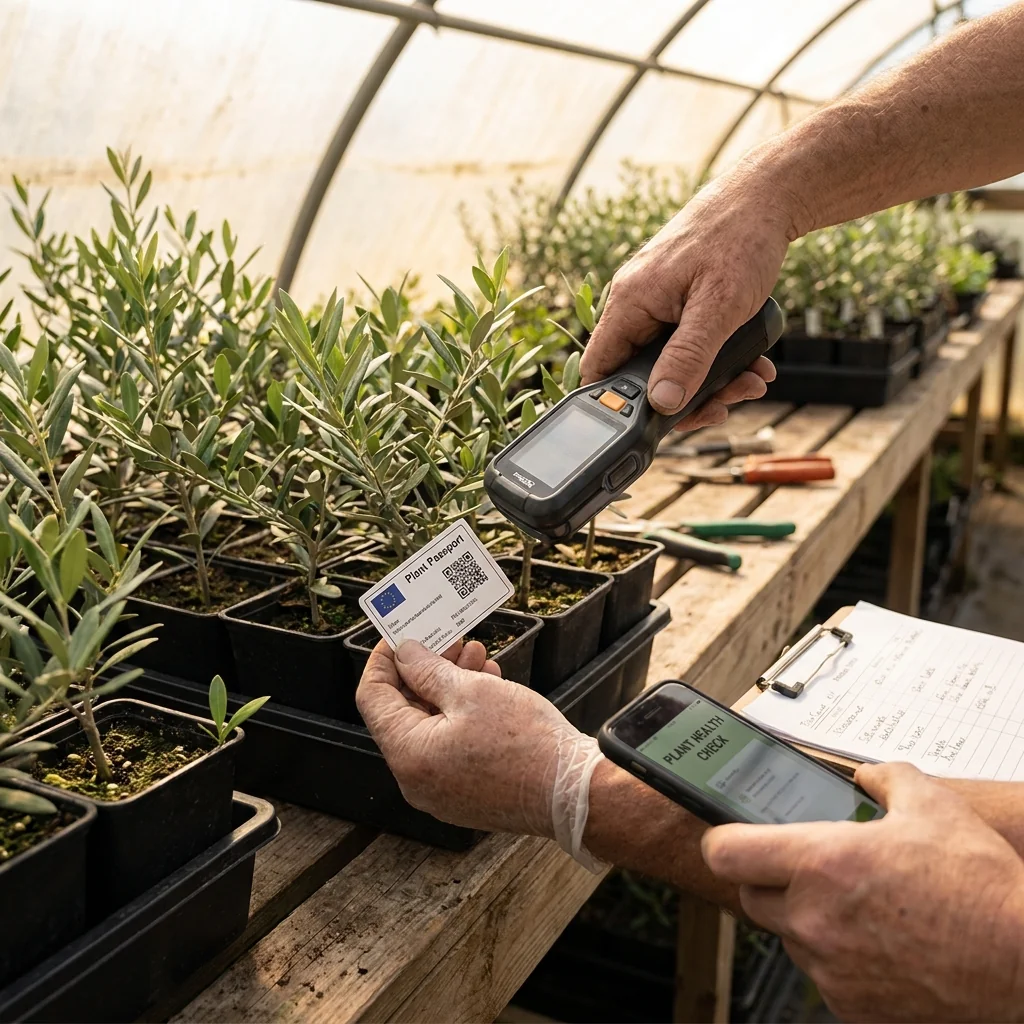
The reliable way to keep origin honest is to record it the moment a plant or batch arrives — read from the supplier's passport and the delivery paperwork, and attached to the batch it creates, rather than reconstructed months later from memory.

From there it should simply travel. Pot the batch up, split it across benches, grade it down — the origin rides along unchanged, so the passport you issue at sale inherits a fact you captured on arrival rather than a guess you made under pressure at the label printer.

atlas core

How Atlas Core handles plant-passport origin

Atlas Core is built so origin is a captured fact, not a last-minute guess:

  • Recorded at goods-in. A Goods Receipt Note captures origin, lot and certificate detail from the incoming passport onto the very batch it creates — the moment the plant arrives, while the paperwork is in front of you.
  • Inherited downstream. Every passport Atlas Core issues later draws origin from that batch, so it is carried forward unchanged through repotting, splitting and grading rather than re-typed.
  • Origin kept distinct from dispatch. The two are separate fields on separate facts, so the country a plant shipped from can never quietly overwrite where it was produced.
  • A whole, un-overwritten trail. The movement ledger keeps origin attached to the batch across its entire life, so an inspection is a search box rather than a scramble, and an EPPO-coded, passport-ready output falls out of records you already kept.

Read further

The origin field is only as honest as your records.

Capture provenance at the gate, keep it attached to the batch, and never overwrite it, and the hardest field on the passport answers itself. Talk to us about how Atlas Core fits your nursery.