library · field guide

When the courier loses your orchid.

A single plant leaves the nursery in perfect condition and never arrives. The customer wants an answer, the carrier wants a reference number, and somewhere between the two sits the real question: who was holding it, and when did it stop moving?

the real problem

A parcel is only lost if nobody knows who had it.

Missing stock is rarely the true cost. The cost is not being able to say which courier took it, which parcel it was in, or where its trail went cold — so the conversation becomes a shrug instead of a claim.

why it goes wrong

The gap opens the moment it leaves your hands.

Ship living goods by post and some fraction will go astray — that is the trade. A box is misrouted, left on a step, signed for by nobody, or simply swallowed by a carrier's network for four days until the plant inside is beyond saving. None of that is unusual. What separates a nursery that absorbs it calmly from one that bleeds refunds is not a lower loss rate. It is knowing exactly what happened to each consignment.

The gap opens at the handover. The moment a parcel leaves your packing bench it becomes someone else's responsibility — but only if you can show it was handed over, to whom, and in what condition. If your record stops at "dispatched," you have handed away the goods and the accountability with them. When the customer emails four days later, all you have is their word against a carrier who has no reason to look hard.

Closing that gap means keeping a record precise enough that a missing order becomes a lookup: this delivery, these parcels, this carrier, this status.

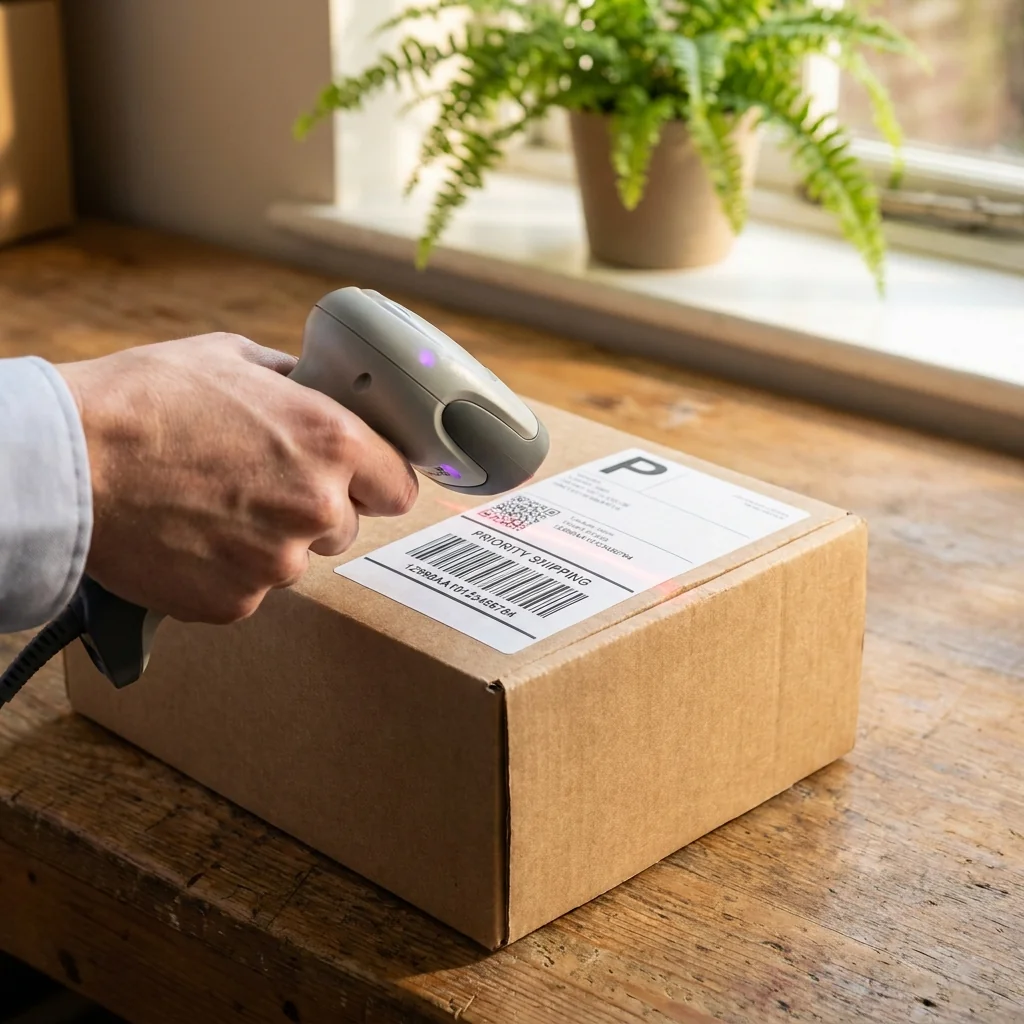
Every shipment needs an owner.

the handover

Every shipment needs an owner.

The first discipline is simple: every outbound shipment records who is carrying it — this named courier, or this one of your own vehicles, on this consignment. That single fact is what turns a vague loss into an addressable one.

A shipment also isn't always one box. A large order can go out as several parcels, and a customer's order can be split across several deliveries: a part-load now, the back-order next week. If your record treats "the order" and "the box on the van" as the same thing, you lose the resolution you need the day one of those boxes doesn't turn up. Name the carrier, count the parcels, and the handover stops being a blind spot.

Every step, with a time against it.

the trail

Every step, with a time against it.

"Dispatched" tells you nothing about where a parcel actually is. A shipment moves through a sequence, packed then in transit then delivered, and each step deserves to be written down as it happens, with a time against it. When something goes wrong, that log is the difference between "it left us on Tuesday" and "it was picked, packed and handed to the carrier at 14:20 Tuesday, and its trail goes quiet after their depot scan."

The states that matter most are the unhappy ones. A delivery that comes back is returned; one that couldn't be completed is failed. Both are real, named outcomes, and a record that can hold failed and returned as first-class facts is a record you can act on: re-ship, refund, or open a claim, with the history to back it.

more than one carrier

One order, many parcels, several carriers.

The fragile orchid goes by an overnight courier; the heavy pots go on your own van; the back-order ships next week by a third route. Accountability only holds if each leg is tracked on its own.

Very few growers ship everything one way. The same order can be split by fragility, by weight, by destination and by timing — an express carrier for the plant that can't sit in a warehouse over a weekend, an economy service for the pots, your own driver for the local leg. Each route has its own reliability, its own cost, and its own failure modes.

That is exactly why a single "shipped" flag on the order is not enough. Each leg is a separate shipment with its own carrier, its own parcels and its own status trail, and when one goes missing you want to interrogate that leg. Keeping deliveries as distinct records under one order is what lets you say "the pots arrived, the orchid didn't, and here is who had it" — the sentence that turns a refund fight into a carrier claim.

A missing parcel is a state, not a mystery.

when it does not arrive

A missing parcel is a state, not a mystery.

When a customer says a plant never came, the useful question is not "did we send it?" but "what is its status, and when did it change?" If the delivery is sitting at in transit with a last update four days old, you have a stuck parcel and a case to raise. If it shows delivered to an address the customer disputes, you have a proof-of-delivery question. If it is failed or returned, you already know — and can act before the customer even writes.

Every one of these is a recorded outcome you can look up, rather than a hole you have to reconstruct from memory and email threads. Reading a status is faster than arguing about it.

Proof travels with the parcel, or not at all.

the claim

Proof travels with the parcel, or not at all.

A carrier claim stands or falls on evidence, and the evidence has to exist before you need it. What left, in how many parcels, on what date, with which carrier, at what recorded condition — assembled at dispatch, that is a claim you can file the same afternoon. Reconstructed a week later from scraps, it is a claim you quietly write off.

The same record answers the customer. Instead of "let me check with the courier and get back to you," you can say what shipped, when, by whom, and what its status is right now — and mean it. Losses then get handled in minutes and, where they are the carrier's fault, paid for by the carrier.

atlas core

How Atlas Core keeps deliveries accountable

Atlas Core models the shipment itself, as well as the order behind it:

  • A Delivery for every outbound shipment, each one carrying who is taking it: an outside Courier or one of your own Vehicles, so every consignment has a named owner.
  • Packs, the physical packages a delivery is split into, so a missing parcel is a specific one you can point to.
  • Several deliveries per order, for partial shipments, back-orders and split routes, each tracked as its own record rather than one blurred "shipped" flag.
  • A delivery lifecycle with a tracking log: Pending → Scheduled → Picking → Packed → In Transit → Delivered, including Failed and Returned as first-class states you can act on.
  • A per-courier integration framework that records each carrier and its settings, built to plug in electronic booking and tracking as carriers are connected — with couriers fully recordable and manageable today while that pipeline is extended.

Read further

The right VAT in seven countries Field guide · 2026

The right VAT in seven countries

A pallet that crosses two borders can carry three different tax answers before it is paid for. Who charges VAT, who reclaims it and who simply reports it depends on the buyer, the border and where the goods end up - and the reason a line is zero matters more than the rate.

7 min read · Jul 2026 Read →
Where is a plant actually from? Field guide · 2026

Where is a plant actually from?

Every plant passport carries a country of origin - the deceptively simple Field D. For a plant propagated in one country and grown on in another, that single answer is rarely obvious. Why growers guess, and the mislabelling that follows.

7 min read · Jul 2026 Read →

Make a missing parcel a lookup.

Atlas Core tracks the shipment as well as the sale — a named carrier on every delivery, the parcels that make it up, and a status trail that turns "it never arrived" into an answer. Talk to us about how it fits the way you dispatch.