library · field guide

Your plants are stuck at the border.

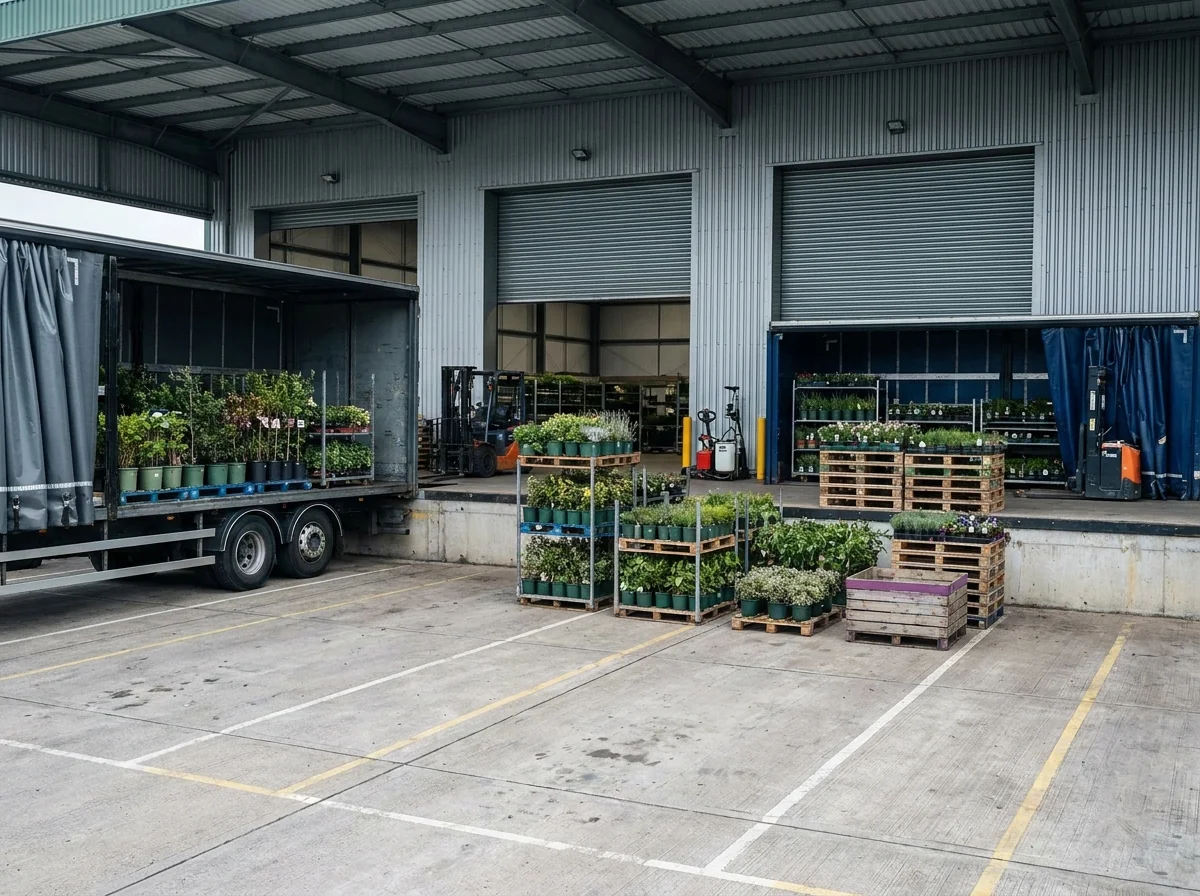
A lorry parked in an inspection bay is rarely parked because of the plants. It is parked because a code was wrong, a weight did not tie back, or a certificate says one thing and the invoice says another. With living goods, the difference between an answer in ten minutes and an answer tomorrow is measured in dead stock.

what a hold really is

The hold is on the paperwork.

Border staff cannot see your greenhouse. All they can see is a set of documents and a load, and their whole job is deciding whether those two things describe each other. Every hour a consignment stands still is an hour spent proving a fact you already knew.

the cost of standing still

The clock at the border is a biological one.

For a pallet of ceramic tiles, a two-day customs hold is an irritation and a storage charge. For a pallet of plants it is something else entirely. The load has already been picked, wrapped and packed for transit — roots restricted, light removed, air still, temperature drifting towards whatever the trailer decides. Everything about the way a plant is prepared for a journey assumes the journey ends soon.

So a hold on living goods is damage with a delayed invoice. The plants that eventually clear are not the plants that were loaded. They arrive stretched, wilted, botrytis-spotted, or simply late for the week they were sold into. The credit note that follows lands weeks after the paperwork problem that caused it, by which point nobody connects the two.

The frustrating part is that almost none of it is about plant health. Genuine phytosanitary interceptions happen, and when they do there is a real problem to solve. The far more common hold is administrative: a commodity code that does not match the description, a quantity that does not reconcile, a country of origin that appears differently on two documents in the same envelope. The goods were always fine. The story told about them was not.
One number sets the duty, the controls and the questions.

the code decides everything

One number sets the duty, the controls and the questions.

Every consignment that crosses a customs frontier is declared under a commodity code: the Harmonised System code, extended by each customs territory into its own tariff. That number decides the duty rate, whether the goods are subject to import controls, whether a phytosanitary certificate is required at all, and which agency gets to look at the load. Live plants, cut flowers, bulbs, seeds and growing media all sit in different places in the tariff, and "a plant" is not a specific enough answer for any of them.

Two failures cause most of the trouble. The first is a code that is simply wrong, copied from a similar product years ago or guessed at once and never revisited. The second is a code that is right but contradicted by the description next to it on the declaration. An officer reading a code for rooted cuttings against a description of finished specimen trees has found a discrepancy, and a discrepancy is a reason to open the trailer.

The fix is unglamorous. The code belongs to the product, decided once by someone who understands the tariff and stored where every document draws from it, rather than typed into a declaration by whoever is doing the paperwork that afternoon.

Everything in the envelope has to tell the same story.

one load, several documents

Everything in the envelope has to tell the same story.

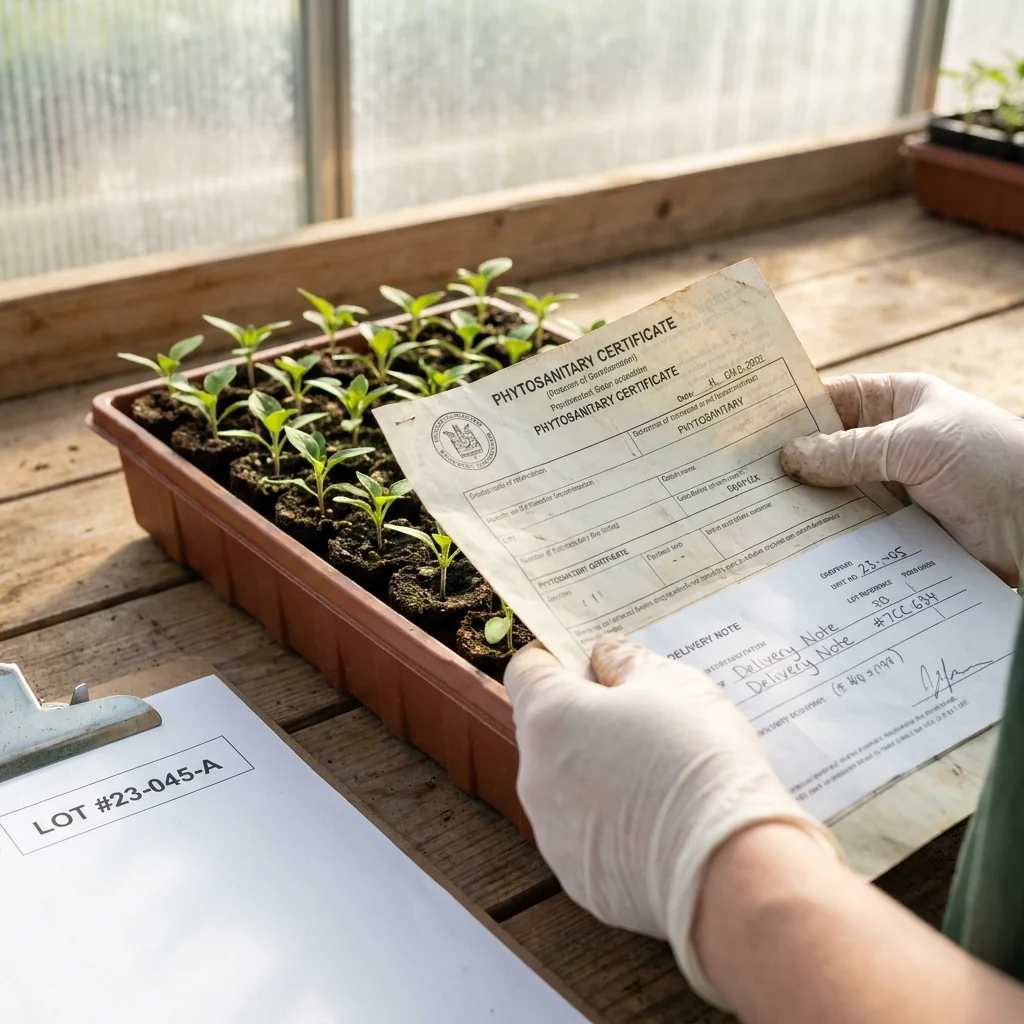
A cross-border consignment travels with a small stack: a commercial invoice, a packing list or delivery note, a transport document, and, for plants for planting, a phytosanitary certificate or plant passport. Each was probably produced by a different person, possibly on a different system, and each restates the same facts in its own words.

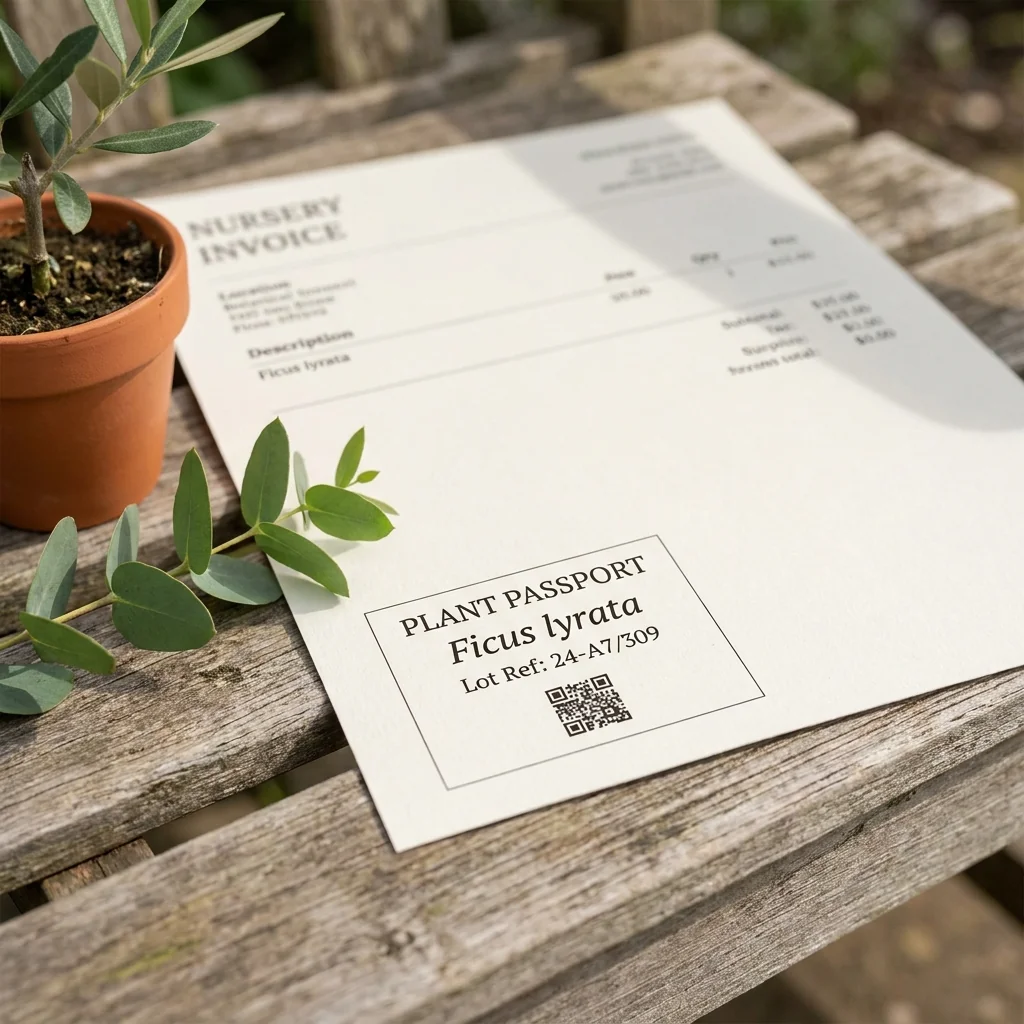
That restatement is where holds are born. The invoice says 480 units, the packing list says 40 trolleys of 12 and someone did the multiplication wrong. The net weight on the transport document is the gross weight from the loading sheet. The botanical name on the certificate is the old synonym; the invoice uses the current one. None of these mean anything is wrong with the plants. All of them mean an officer now has to reconcile two documents by hand, and until they can, nothing moves.

The only durable answer is to stop restating. When the invoice, the delivery note and the passport are generated from one record of what was actually picked, they cannot disagree. There is only one set of numbers, printed several ways.

origin

Origin is a fact about the plant, not a field on a form.

The country you declare has to be the country the plant can be shown to have come from. If the answer is assembled at the moment the form is filled in, it will eventually be assembled differently twice, and two documents in one envelope will disagree about where the same plant grew.

Origin is the field growers most often guess at, and the one that most reliably costs them an afternoon. A finished plant may have been propagated in one country, grown on in a second and held in a third; the customs declaration wants a single answer, and the plant passport wants its own answer to a subtly different question. Fill both in from memory and they will not always match.

They also have to match the physical consignment. Where a load is consolidated from several batches, some bought in and some raised on the nursery, the origin is genuinely different line by line. A single blanket country typed across the whole declaration is quick, and it is a discrepancy waiting to be found the moment anyone traces one line back.

This is why border readiness is a records problem before it is a paperwork problem. If every batch on the lorry carries its own origin, supplier and arrival, the declaration becomes a read-out rather than an act of recall. And when an officer asks where the third line down came from, the answer takes a minute rather than a round of phone calls to the office.

Half the delays are an argument about responsibility.

who clears it, who pays

Half the delays are an argument about responsibility.

A surprising share of stuck loads are stuck because nobody agreed who was doing the clearing. The Incoterm on the sale settles it: who arranges export clearance, who arranges import clearance, who carries the duty and the import VAT, and at what point the risk in a trailer full of living stock stops being yours. Agree it in the quote, print it on the invoice, and the haulier's driver is not sitting at a barrier while two offices work out whose broker to call.

The identifiers matter just as much. The consignee's customs registration, the exporter's own, the authorised operator numbers on the plant-health side: one missing or mistyped identifier will stop a declaration as firmly as a wrong code. These belong on the customer and supplier record, captured once when the account is opened rather than chased by email on the morning of the collection.

And when the duty and clearance fees land, they are a cost of the goods. Spread them back across the units that actually arrived and your true landed cost stops being a comfortable fiction.

A hold you can answer is barely a hold.

when the phone rings

A hold you can answer is barely a hold.

Not every question can be prevented. Officers make spot checks, tariffs change, and sometimes a load is opened simply because it is next. What decides the cost of that inspection is how fast you can answer it.

The nursery that can produce, within minutes, the batch behind each line, its supplier and arrival, its declared origin, the certificate it travelled under and the exact quantities picked for this shipment turns an inspection into a conversation. The nursery that has to reconstruct the load from a picking sheet, three emails and someone's memory turns the same inspection into two days in a bay.

So build for the question you will eventually be asked. Number the consignment. Keep the shipment, its documents and its batch history in one place, reachable by whoever is on the phone at seven in the morning. None of that is a customs strategy. It is just refusing to hold your traceability in people's heads.

atlas core

How Atlas Core keeps a consignment moving

Atlas Core is built so the facts a border asks for are already recorded rather than reassembled:

  • Customs data lives on the catalogue. An Export & Customs schema section holds fields such as the HS code against the product itself. It is a workflow-controlling field that feeds export documentation and customs declarations, so it is maintained once and read everywhere.
  • Documents are generated from one record. The delivery note and the invoice are produced from the delivery's own picked lines, and the delivery note prints the plant passport for every batch on it whose product is passportable. One set of numbers, several documents.
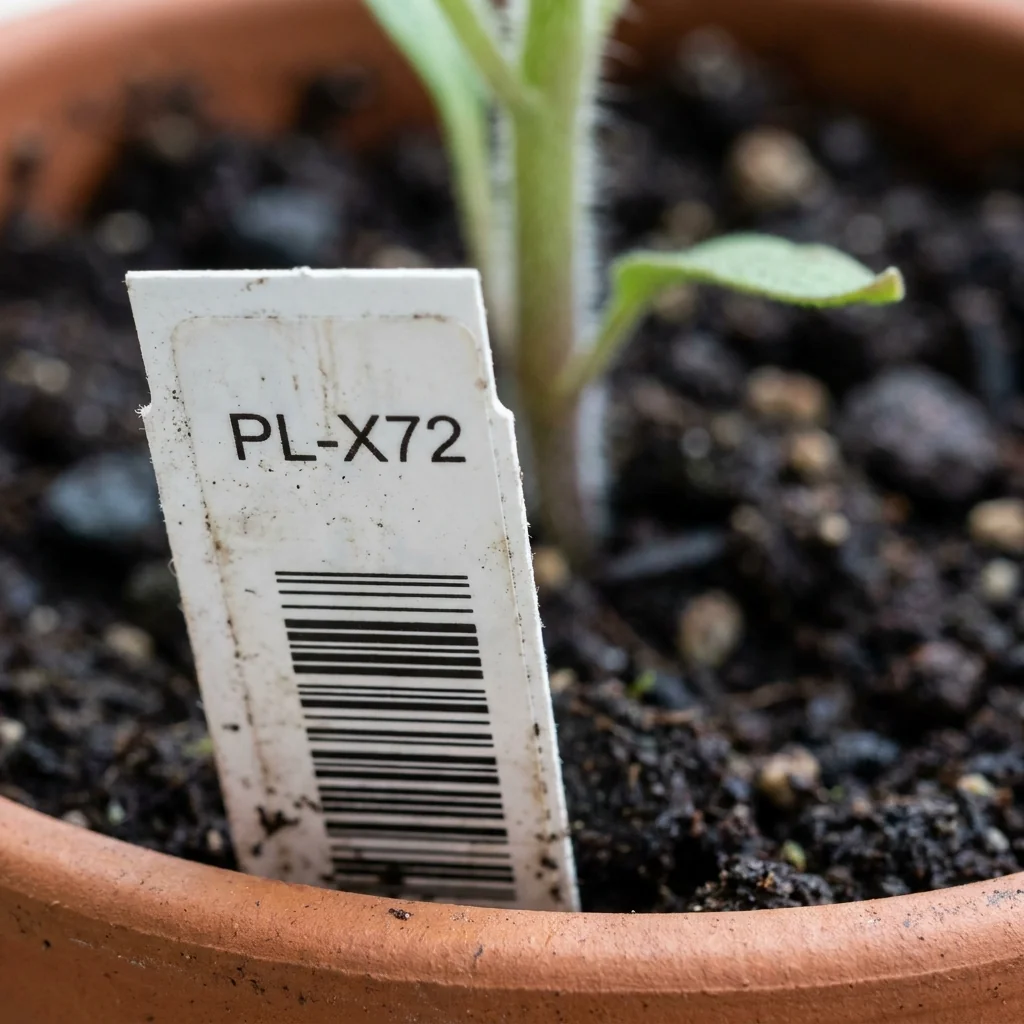
  • Origin is held per batch. Stock lives in batches with their own origin country, supplier and full movement history, and the outbound passport derives its origin field from the batch rather than from anyone's memory.
  • Operator numbers cascade with your sites. A location's phytosanitary registration number is inherited down the location tree, so a bench, a tunnel and the site above it can never carry conflicting registrations.
  • Supplier declarations are kept as received. Inbound supplier passports are recorded per receipt line, several per line where a delivery merged source lots, and stamped to the batch they entered.
  • Incoterms are part of the trade record. They are carried on purchase orders alongside the exchange rate, so clearance responsibility is written down rather than assumed.
  • Duty and clearance become landed cost. Freight, duty, customs clearance, insurance and handling are added to a goods receipt and spread across the units that actually entered stock, by value, quantity, weight or volume.
  • Nothing is overwritten. Every stock movement is a logged transaction and corrections are written as reversals, so the history you show an inspector is the history that happened.

Read further

Every bench is money Field guide · 2026

Every bench is money

An empty bench earns nothing yet costs the same to heat, light and rent as a full one; a bench crammed past its limit grows weaker plants and more loss. The margin lives in the space between those two failures - and you can only manage it if you can see it.

7 min read · Jul 2026 Read →
Returns don't work with living things Field guide · 2026

Returns don't work with living things

Post back a jumper and you resell it; post back a plant and a week has passed, the roots have sat in a dark box, and what arrives isn't the thing that left. The ordinary distance-selling return was built for goods that keep - a living return needs its own playbook.

8 min read · Jul 2026 Read →

Stop losing days in an inspection bay.

Atlas Core keeps codes, origins, certificates and consignment records in one place, so your export documents agree with each other and with the lorry. Talk to us about the cross-border side of your nursery.