library · field guide

Your best customers hate phoning in orders.

The garden centre buyer placing an order at six in the morning, the landscaper building a list from the van, the wholesaler who reorders the same forty lines every week — none of them want to wait for your phone line to open. Give them a portal, and the daily round of emails, voicemails and scribbled order pads becomes orders that land ready to fulfil.

the shift

Let them place the order themselves.

Every order a customer types is an order you did not have to transcribe. Self-service is not a demotion of service — it is service that never closes for the night.

the daily round

The order pad is where margin quietly leaks.

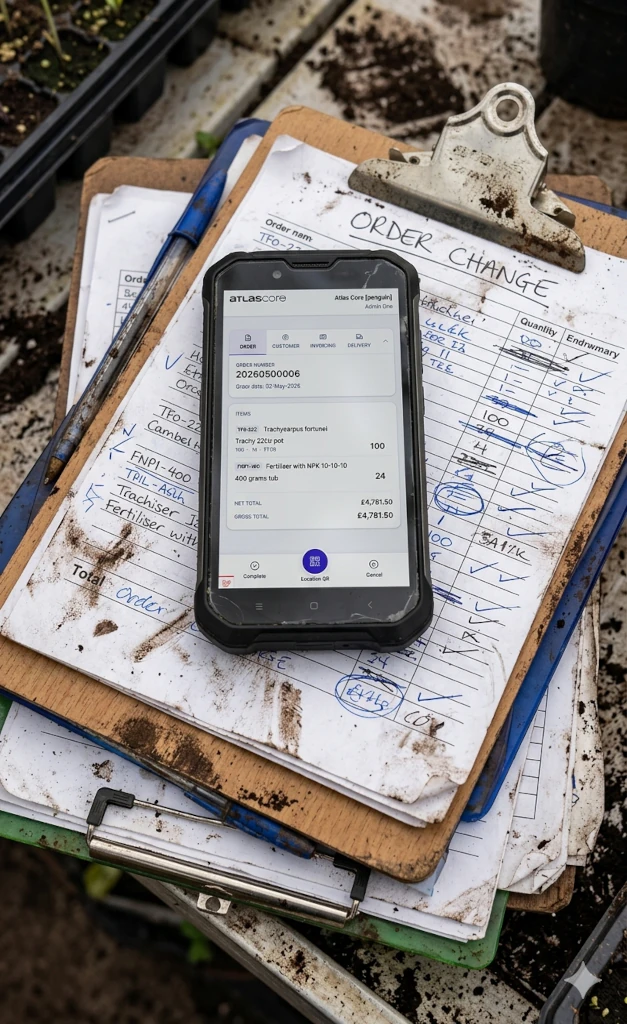
Walk into most nurseries at half past eight and someone is already on the phone taking orders. A voicemail from a buyer who called after hours. Three emails with an attached spreadsheet each in a different shape. A text message that just says "usual order plus a tray of the lavender." Every one of them has to be read, understood, priced and keyed in by hand before a single trolley moves.

That daily round is not free. It eats your best hours, it introduces a transcription error every time a line is re-typed, and it caps how many customers you can serve at the speed of one person's keyboard. Worse, it puts a barrier between the buyer and the order: they can only reach you when you are open, and a buyer who cannot place an order at the moment they think of it is a buyer who orders less.

The buyers themselves rarely enjoy it either. A professional placing a repeat order does not want a conversation — they want to see what you have, tick the lines they need, and get on with their day. The phone call is a courtesy that has quietly become friction.

Every channel arrives in a different shape.

orders as noise

Every channel arrives in a different shape.

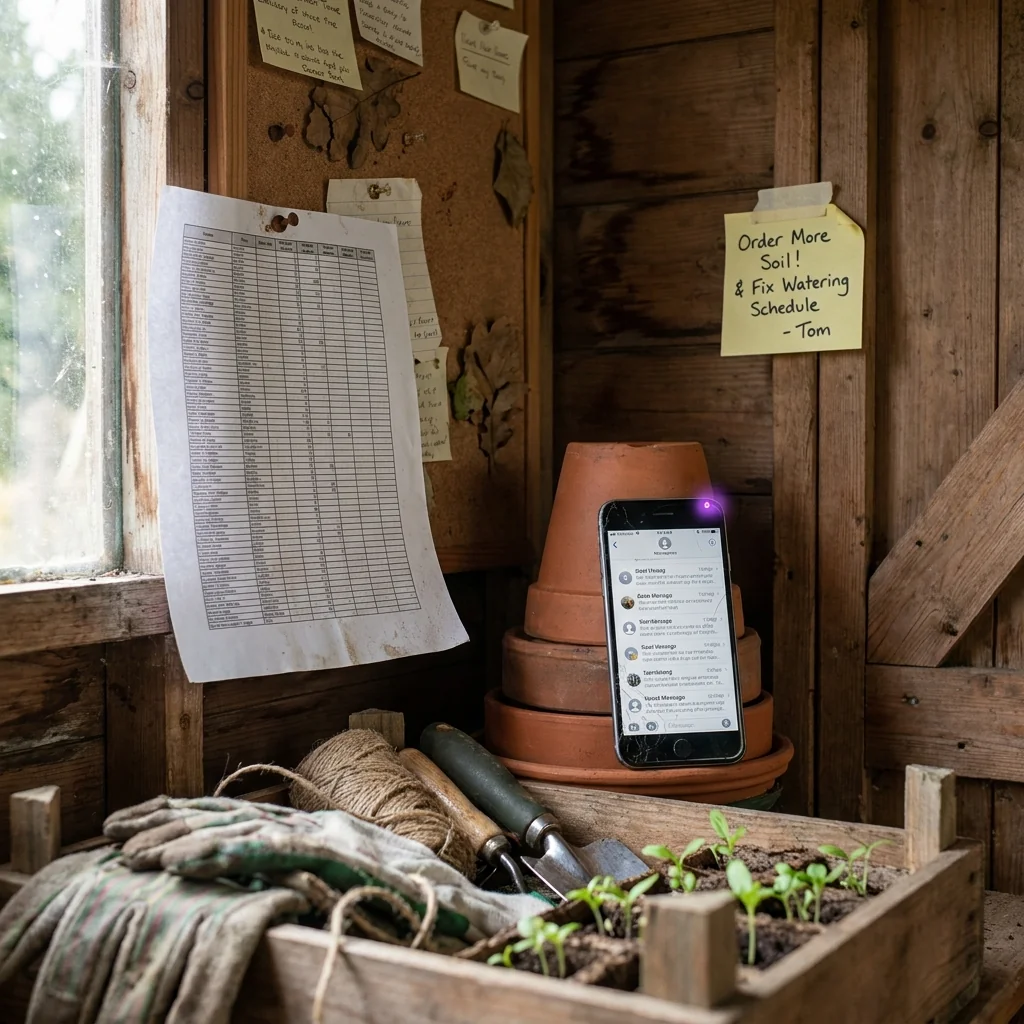
When orders come in by phone, email, text and fax, no two arrive the same way. One buyer gives you product codes, another gives you common names, a third describes the plant and expects you to know. You become a translation layer — turning a dozen dialects of "what I want" into the one language your system speaks.

That translation is where mistakes live. The wrong variant, last season's price, a quantity misheard down a bad line. Each is small on its own; together they are the returns, the credits and the awkward phone calls that follow. A customer typing their own order against your catalogue, your codes and their agreed prices removes the translation step entirely: they pick from exactly what you sell.

Show them what you choose to show them.

a catalogue you control

Show them what you choose to show them.

A trade portal is a curated shop window: only the categories, products and variants you decide to publish, each with its own trade-facing name, description and photograph. The lines you keep for a single key account, the stock you would rather move on the phone, the products still being trialled: none of them appear until you say so.

That control matters more with living goods than with boxed products. You can publish the batch that is ready and hold back the one that needs another fortnight. You can present a plant with the photograph that shows it at its best. The buyer sees a clean, considered range and orders with confidence, because everything on the screen is something you are ready to sell.

one system, not two

The order lands where the stock already lives.

A portal bolted onto a separate website is a second set of books waiting to disagree. When ordering and inventory are the same system, an order becomes real stock movement the moment it is placed.

The trap with online ordering is the gap between the website and the warehouse. Orders pile up on one system and have to be re-entered into another; stock counts drift apart; a buyer orders something that sold out an hour ago because the shop front never heard about it. You have simply moved the transcription problem downstream.

The alternative is to make the portal part of the same system that already holds your stock, your customers and your prices. An order placed online arrives as a real order in your system, ready to be allocated against live free stock, picked and dispatched like any other. There is no second copy to reconcile, because there was only ever one copy. The buyer self-serves, and the work lands on the same workbench your team already uses.

A basket a whole business can share.

built for a trade buyer

A basket a whole business can share.

Wholesale buying is rarely one person in one sitting. A cart gets built over a week, added to by whoever walks past the bench, and checked over before it goes. So the portal basket should be a named, saved list that belongs to the business rather than the browser, visible to colleagues at the same organisation and handed off to whoever finalises it.

There is room, too, for the people who advise but don't buy. A buying agent or a rep can be given read-only access: free to browse the range and see a customer's agreed prices, but without a cart of their own. The buyer places the order; the agent guides it. Everyone sees the same catalogue and the same numbers, so the conversation is about plants, not about whose spreadsheet is right.

The availability list that is never stale.

always current

The availability list that is never stale.

The Monday-morning availability spreadsheet is wrong by Tuesday and embarrassing by Friday. Every line sold since it went out is still on it; every batch that came ready is missing. Buyers learn to phone and check anyway — which puts you right back on the order pad you were trying to escape.

A live portal replaces that ritual. Because it draws from the one catalogue you maintain, what a buyer sees is what you have chosen to offer right now: no attachment to email, no version to keep straight. You publish a batch when it is ready and retire a line when it is gone, once, in one place. The list is current because it is the same list you sell from.

atlas core

How Atlas Core does self-service ordering

Atlas Core's trade portal, Aviso, turns the ideas above into a working front door. It has its own web address but is part of the same system as everything else:

  • A curated catalogue you publish per category, product and variant, each with its own portal-facing title, description and image, so customers see only what you choose to show.
  • Orders that land as real orders in Atlas Core, ready to allocate and fulfil on the same workbench as any other, with nothing to re-enter.
  • Customer logins that transact and agent logins that browse: external users tied to an organisation, with agents given read-only access to the range and a customer's prices.
  • Named, saved carts that belong to the customer's business, visible to colleagues and handed off to whoever checks out.
  • Sales-channel tagging so portal orders show up as their own stream in your reporting.
  • A simple page builder for a homepage, announcements and an about page, so the portal reads as your branded storefront rather than a bare product list. (Aviso places orders; it does not take payment.)

Read further

Too cold to post this week Field guide · 2026

Too cold to post this week

A plant posted into a cold snap can arrive frozen days later, when the sale and the goodwill are already gone. Reading the forecast at both ends, packing against the cold, and knowing when a living thing simply shouldn't go in the post at all.

7 min read · Jul 2026 Read →
Posting a plant is its own craft Field guide · 2026

Posting a plant is its own craft

A parcel network was built to move boxes, not living things. Shipping a plant by courier, alive and undamaged and on time, is a discipline of its own, and the last, most dangerous stretch can undo all the earlier work.

8 min read · Jul 2026 Read →

Give your best customers a front door.

Aviso lets your trade buyers order themselves, against a catalogue you curate, straight into Atlas Core. Talk to us about opening a self-service portal for your nursery.