library · field guide

Repotting can destroy a plant's identity.

A plant rarely stays still. It gets potted on, graded, split across benches and moved between sites — and at every one of those moments its traceability either follows it or quietly snaps. The difference is whether your system treats stock as a number you overwrite or a life you record.

the quiet snap

Identity is the thing most systems lose first.

A plant that changes pot, grade or bench is still the same plant, but on paper it can become a stranger. Traceability is decided by how that change is written down.

the problem

A plant that won't hold still.

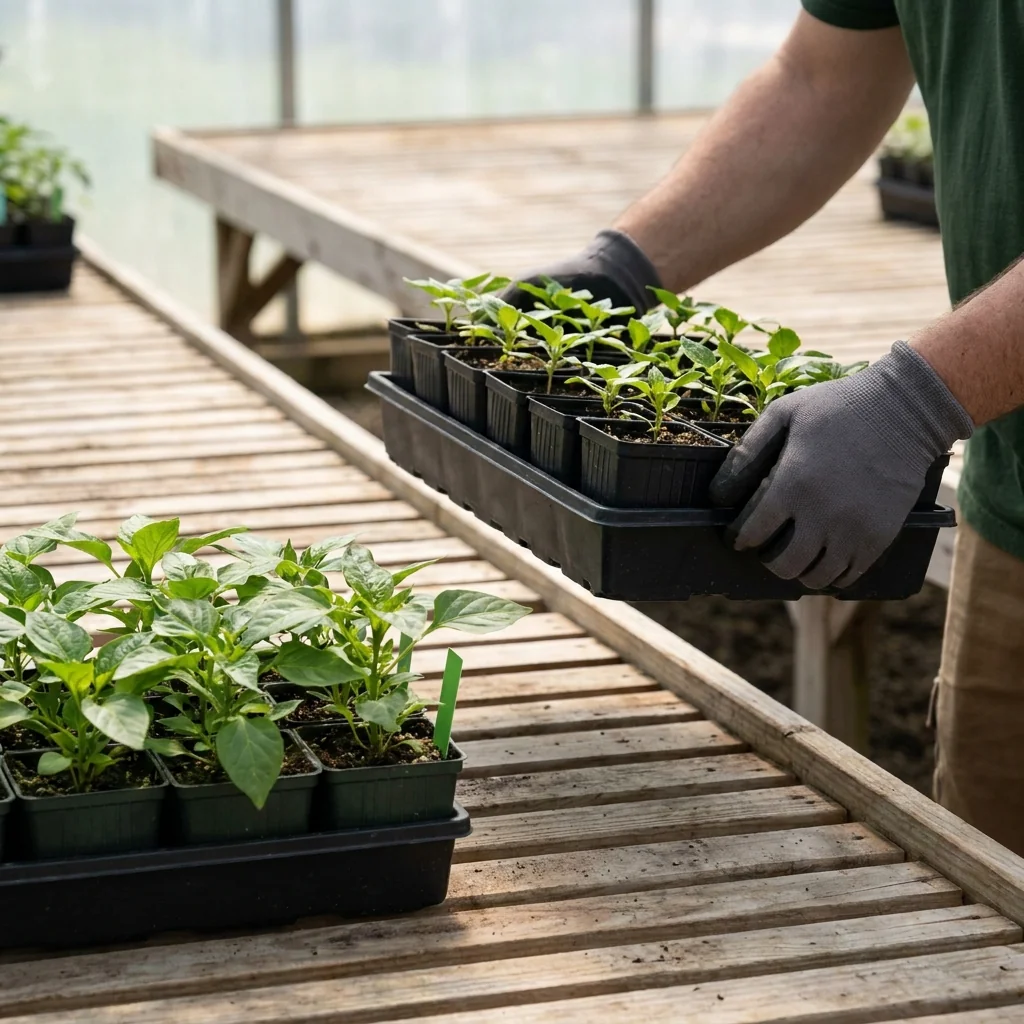
Nothing in a nursery sits where you put it. A plug arrives, gets potted on, hardens off, moves from the propagation house to an outdoor bench, gets graded into firsts and seconds, and is split across two sites to spread the risk. By the time it sells, it has been through a dozen transformations — and not one of them looked like a transaction.

That is exactly where traceability breaks. A plant passport is only as honest as the lot reference behind it, and a lot reference is only meaningful if it still points at the right plants after all that handling. Pot a batch on and call it the same stock, and the link to where it actually came from starts to fray. Split a lot and overwrite one quantity figure, and you can no longer say which half went where.

The trap is treating living stock like a number in a cell. Repot 500 plugs into 500 three-litres and a spreadsheet just changes a label and a count. The plant is now a different sellable thing, with a different price, a different cost and a different passport, but the record pretends nothing happened. The identity didn't transfer. It was overwritten.


A batch is a plant's name.

what identity is

A batch is a plant's name.

Traceability holds only when stock is tracked as batches rather than a single number per product — a batch being one specific variant at one specific location. The same variant on two benches is two batches; each one carries its own cost, its expiry, and whether it's sellable.

That granularity is the whole point. A batch is the unit a plant passport attaches to, the thing a lot reference names, and the level at which origin is tracked. So the question "did the identity survive?" becomes concrete: did the right batch carry on, or should a new one have been born? Answer that correctly at every handling step and traceability holds by construction.

Pot it on and you've made a new plant.

when identity is *made*

Pot it on and you've made a new plant.

A nine-centimetre liner and a three-litre are different variants of the same product, with different prices, weights and codes. So potting on isn't an edit to existing stock; it is production. The output is booked into stock as a fresh batch of the new variant, linked back to the plug it grew from.

That fresh batch gets its own lot identity and its own passport — correctly, because it genuinely is a new sellable thing. But the booking links it back to what it was grown from, so the chain isn't severed: it forks. The plug's history doesn't vanish when it becomes a three-litre; the three-litre simply begins its own, with a documented parent.

the core idea

Nothing is overwritten. Everything is moved.

The systems that keep identity never store "quantity in stock" as a figure you edit. Every change is a logged movement, and the count is the sum of them. That single design choice is why an identity can change without ever being lost.

Ask most systems how much stock you have and they read a number back. Ask a movement-based system and it adds up every movement that stock has ever made (Receive, Move, Scrap, Quarantine, Ship, Reserve, Allocate) and tells you the live total. The figure is never typed in and never overwritten; it is the running sum of a complete history.

This is what protects identity through handling. When a movement has to be undone, the disciplined approach writes a reversal rather than a deletion, so the original stays for audit and the reversal cancels its effect. A plant's record is additive: it only ever grows. You can always answer one step back to where stock came from and one step forward to where it went, because no step was ever quietly erased to make the present look tidy.

Split a lot and the thread holds.

when identity *carries over*

Split a lot and the thread holds.

Spreading a batch across two benches, or two sites, to hedge against a pest or a frost is everyday practice, and it is exactly where a single-number system loses track of which plants are which. The sound way to record it is a Move: part of the batch travels to a new location, which by definition is a new batch there, joined to the original by the movement that created it.

Nothing is guessed and nothing is overwritten. The source batch shrinks by exactly what left; the destination batch begins with exactly what arrived; and the audit trail says, plainly, that one came from the other. Grading down works the same way — culling the weak out of a batch is a Scrap, which reduces the batch without disturbing the identity or history of the plants that remain.

The passport tells the truth about now.

the proof

The passport tells the truth about now.

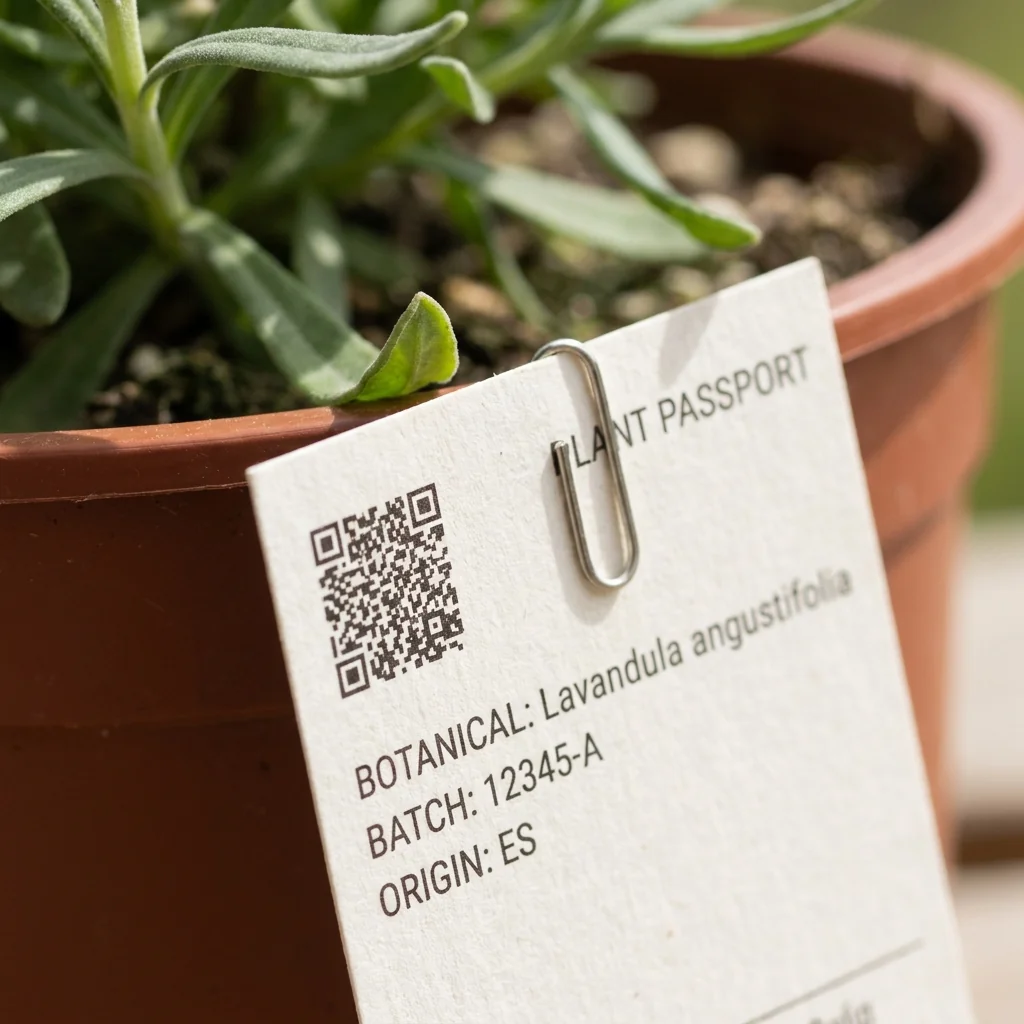
Because identity is kept at batch level, the plant passport can be honest about the plant in front of you. It carries the supplier identity, the lot reference, the botanical name with its EPPO species code and the country of origin — produced per variant or batch, attached to deliveries and printable on invoices.

The subtle part is origin: where the plant was last grown. That claim must be kept current as the plant moves, or the passport quietly lies. So when a plant is potted on into a new batch and moved outside, its passport should reflect its real current life rather than a stale claim copied forward from the plug it used to be.

the rules, in one view

When identity is made, and when it carries.

The whole question, does the code carry over or start fresh, has clear answers once stock is batches and movements rather than a number in a cell:

  • Change the variant and you make a new identity. Potting on, or regrading to a new size or grade, produces a new sellable thing, booked as a fresh batch with its own passport and linked back to its source.
  • Change the location and the identity carries. A move or a split across benches or sites gives the same variant a new batch at the destination, joined to the original by the Move.
  • Take some away and the survivors keep their identity. Cull, scrap or ship: a reducing movement never rewrites the plants that remain.
  • Undo something and nothing is lost. A reversal cancels a movement without deleting it; the history stays whole.
  • Ask at any point and the answer is already written. One step back to the source, one step forward to the customer, because every change was a recorded movement.

Get this right and repotting stops being a threat to traceability and becomes just another logged step in a plant's life. The handling never destroyed the identity. Writing the handling down badly did.

atlas core

How Atlas Core handles repotting and traceability

Atlas Core applies the principles above directly to nursery stock:

  • Batch-level stock: every batch is one variant at one location, carrying its own cost, expiry and sellable status — so each pot size and each bench is a distinct, individually traceable unit rather than a shared running total.
  • Potting-on as production: a growing cycle produces a cycle output booked in as a fresh batch of the new variant, with its own lot and passport, automatically linked back to the plug it grew from — the chain forks instead of snapping.
  • An append-only movement ledger (Receive, Move, Scrap, Quarantine, Ship, Reserve, Allocate): live stock is the running sum of every movement and is never overwritten; undoing a step writes a reversal that preserves the original for audit.
  • Splits, transfers and grade-downs recorded as Moves and Scraps that keep source and destination batches joined — one verifiable step back to origin, one step forward to the customer, at any point.
  • EU plant passports generated per variant or batch with supplier identity, lot reference, botanical name with EPPO code and country of origin, with 'last grown' origin kept current as batches move outdoors — printable on deliveries and invoices.

Read further

The hidden cost of a dozen tools Tech brief · 2026

The hidden cost of a dozen tools

Stock in one spreadsheet, orders in another, deliveries over WhatsApp. Nobody chooses fragmentation. The real bill arrives later - decisions made on numbers nobody trusts. Why one source of truth makes it disappear.

6 min read · Jun 2026 Read →
Switch systems without losing five years Tech brief · 2026

Switch systems without losing five years

The biggest reason nurseries stay on software they've outgrown is the fear of starting over. It's also the most avoidable. How your catalogue, customers, stock and history move across by spreadsheet, in a checked migration rather than a leap of faith.

7 min read · Jun 2026 Read →
That webshop order might be illegal Field guide · 2026

That webshop order might be illegal

Hand a plant across the counter and it needs no passport; post it from your webshop and the law changes. Distance sales pull retail under the plant-passport rule - the carve-out that catches any nursery adding a 'buy online' button.

7 min read · Jun 2026 Read →

See how Atlas Core keeps the thread unbroken.

From plug to sale, a plant can be potted on, split and moved without ever losing its line back to where it began. Talk to us about how Atlas Core fits your nursery.