library · field guide

That webshop order might be illegal.

Hand a rose across the counter to a home gardener and you need no plant passport. Post the same rose to the same gardener from your webshop and you do. The line that decides it is not who buys — it is how. Distance sales pull retail back under a rule most growers think only applies to trade.

the line that moves

Same plant, same buyer — a different rule.

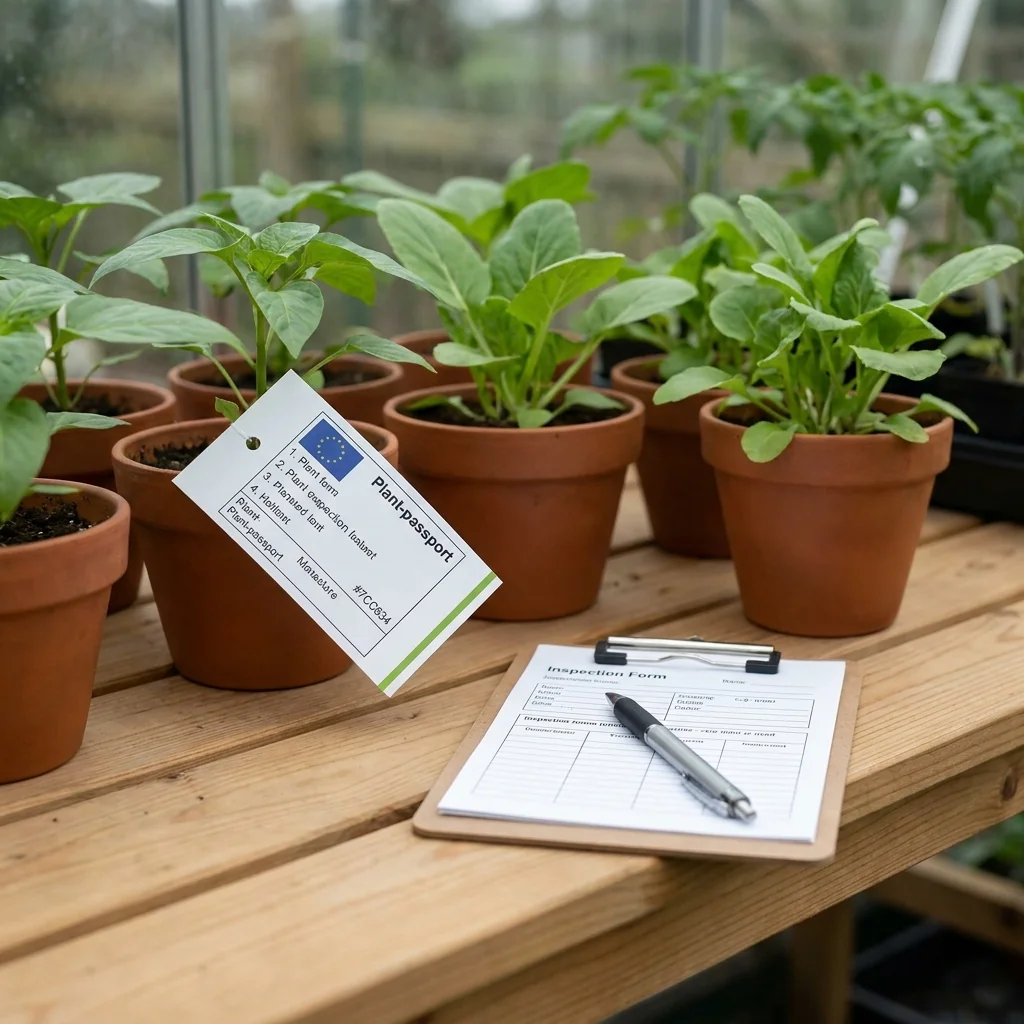
A plant passport is about movement between professionals, with one big exception that gets forgotten the moment a nursery adds a "buy online" button: a sale concluded at a distance does not get the retail exemption.

the exemption, and its exception

Why over-the-counter is exempt and online is not.

The EU plant-health regime, Regulation (EU) 2016/2031, requires a plant passport for plants for planting moved between professional operators. Sell to a final user, a home gardener or a non-professional buying for themselves, and the passport is normally not required. That is the exemption every garden centre relies on: the customer at the till walks out with their plant and no official label.

But the exemption has a carve-out written straight into the law, and it is the one that catches people out: it does not apply to sales by distance contract. When the sale to a final user is concluded at a distance, online, by mail order or over the phone, the plant passport is required after all.

The same rose, to the same gardener, is exempt across the counter and non-exempt through the webshop. Open an online shop and you have quietly stepped from the retail exemption back into passport territory — whether or not anyone told you.
If the customer never stood in front of you, it counts.

what counts as distance selling

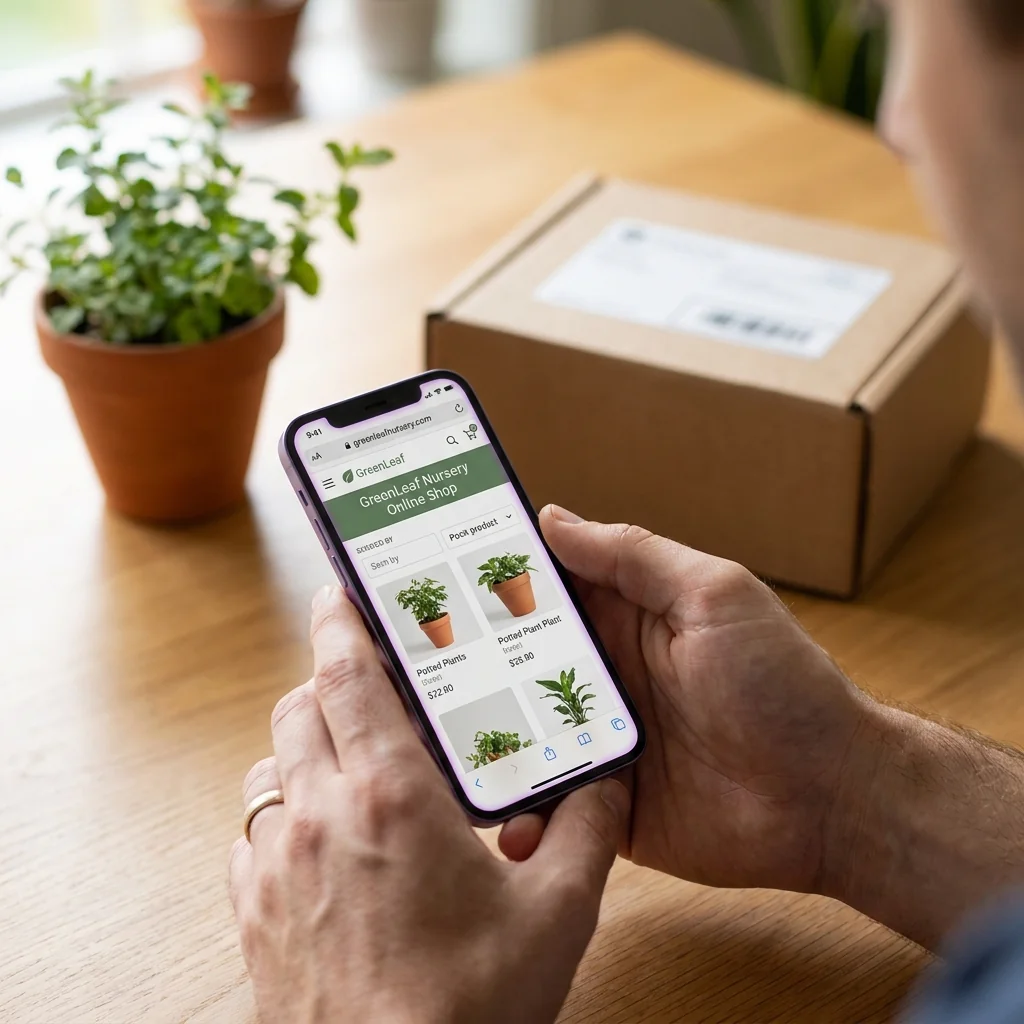
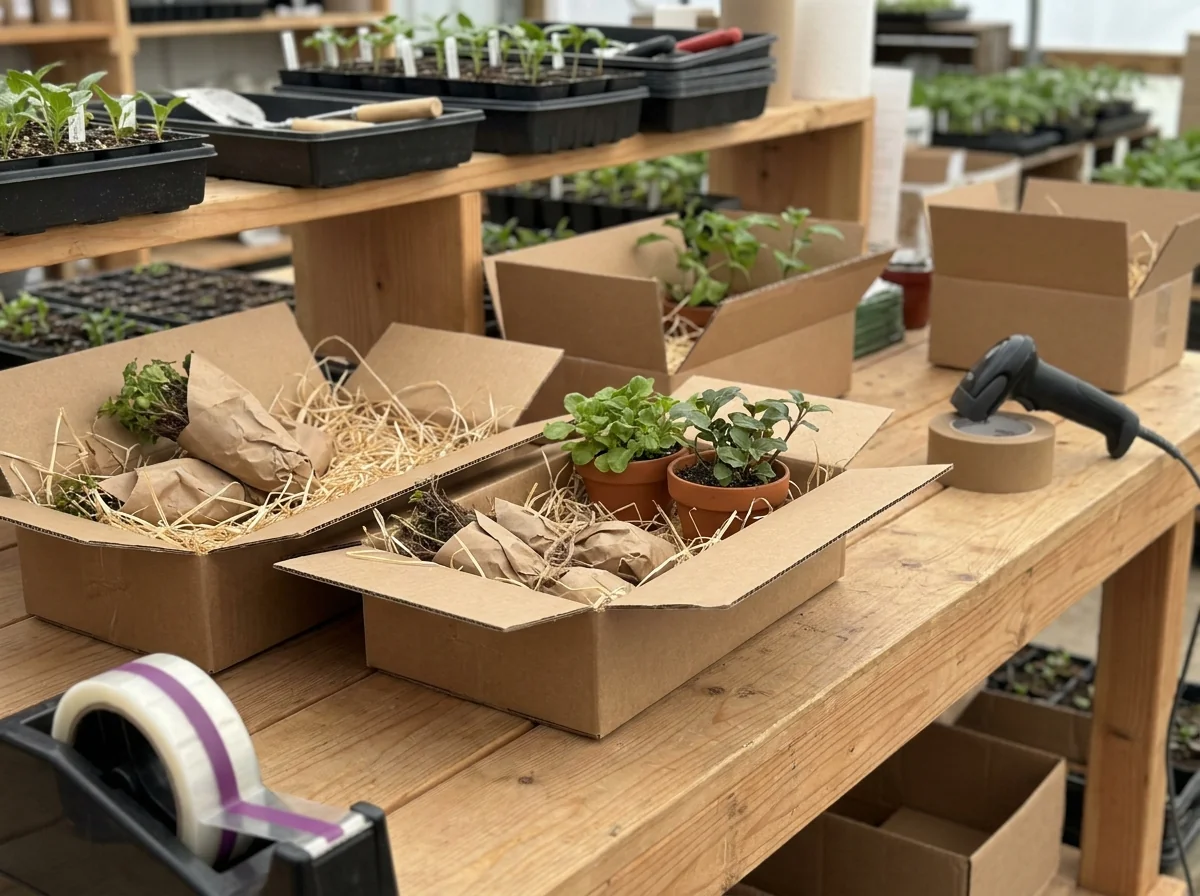
If the customer never stood in front of you, it counts.

"Distance sales" is broader than a slick e-commerce site. It covers any sale concluded without the buyer and seller physically together: your own webshop, a third-party marketplace, a mail-order catalogue, an order taken over the phone or by email. If the plant is going to travel to a buyer who never stood at your bench, you are selling at a distance.

That sweeps in a lot of nurseries that don't think of themselves as online retailers: the grower who posts a few rare plants through a marketplace, the specialist taking phone orders from collectors, the wholesaler who let a "trade" portal quietly start serving hobbyists. The format is irrelevant. The moment the deal closes at a distance, the passport obligation is back on.

The passport rides with the plant.

what has to be on the parcel

The passport rides with the plant.

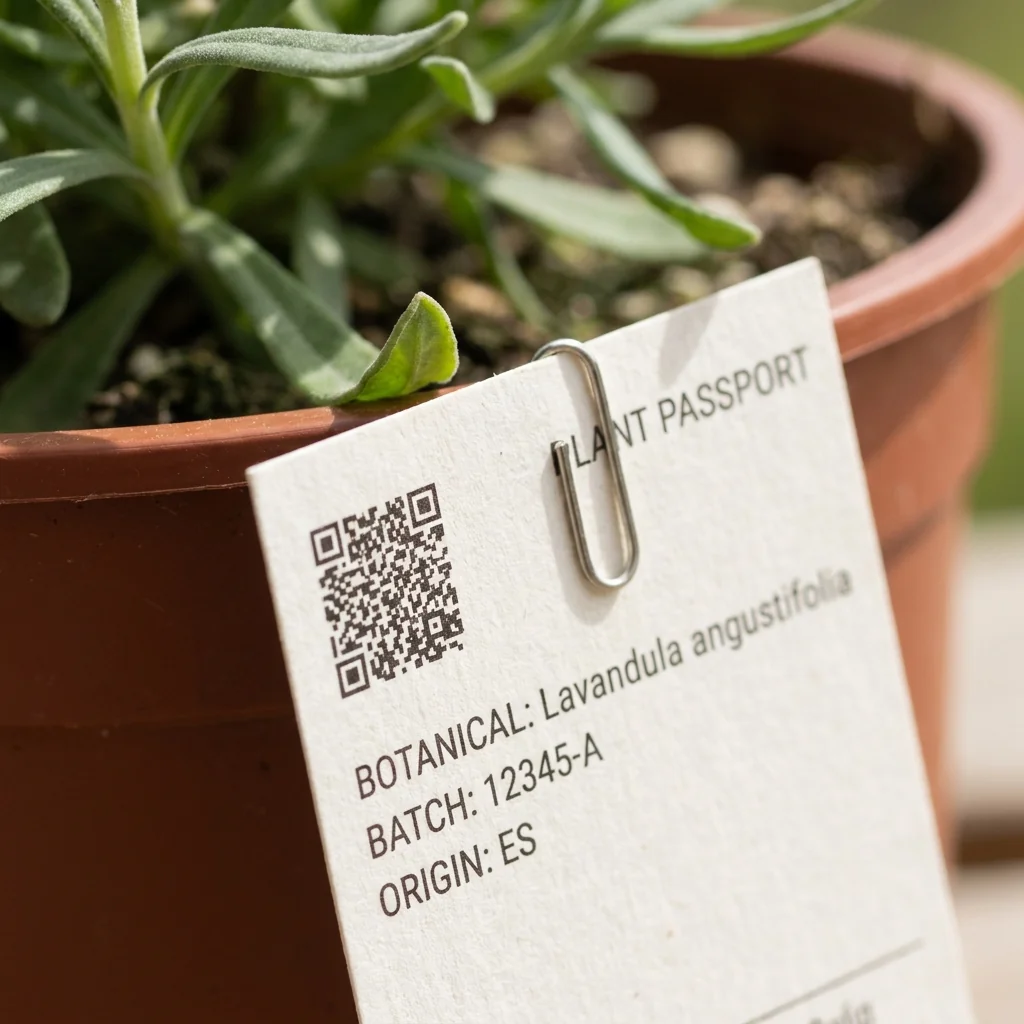
A plant passport travels attached to the plant, its batch or its packaging rather than sitting in a file. For a posted order that means the passport goes in or on the parcel, carrying the same four elements as any other: the botanical name, your operator registration, the traceability code for the batch, and the country of origin.

None of that is exotic for a nursery already issuing passports to trade. The change online retail brings is volume and granularity: instead of one passport on a pallet to a wholesaler, you are producing one for a single plant in a single box, possibly dozens of times a day. That only stays painless if the passport is drawn from records you already keep rather than assembled by hand at the packing table.

the records underneath

The channel changes. The records do not.

Whether an order arrives across the counter, down the phone or through a webshop, the thing that makes a passport honest is the same: a batch whose origin and movements were recorded as they happened.

This is the reassuring part. Distance selling raises the number of passports you issue, but not the kind of work behind them. The same one step back, one step forward traceability still applies: for every batch you must know the operator who supplied it and the buyer you sent it to, and keep those records, commonly for three years.

A home-gardener parcel does not lower that bar, and it does not raise it either. The batch in the box has an origin, a botanical name and a lot code regardless of who ordered it. If those facts were captured when the stock arrived and updated every time it moved, issuing the passport for an online order is a lookup. If they live in a packer's memory and a drawer of delivery notes, every web order becomes a small compliance scramble — multiplied by your order count.

The risk in getting this wrong is not abstract. A passport with a wrong origin, a missing batch code or a botanical name that disagrees with the label is the first thing an inspector notices — and "we didn't realise the webshop counted" is not a defence anyone wants to test.

One parcel or one pallet — the same click.

passports from the record

One parcel or one pallet — the same click.

Any system that tracks every batch individually, with its variant, its location and its full movement history, can produce the plant passport straight from that record rather than by hand: supplier identity, lot reference, botanical name with its species (EPPO) code, and country of origin, optionally with a QR code. The capability to look for is passports generated per variant or batch, attached to deliveries, and printable on paperwork and invoices.

That is exactly what online retail needs. However the order reaches you, by counter, by phone or through an online self-service portal, it becomes an ordinary order, then a delivery, and the passport attaches to that delivery the same way every time. A single plant going to a home gardener is then no more effort than a trolley going to a trade buyer.

Country of origin that updates itself.

the origin claim, kept honest

Country of origin that updates itself.

The trickiest field on a passport is D, country of origin, because for a plant that has been grown on, moved and potted, "where it was last grown" genuinely changes over time. A well-designed record keeps this field honest by deriving the origin claim from live batch location and movement rather than a value typed once and left to drift. Outdoor-kept batches, whose growing environment shifts faster, warrant more frequent review than indoor ones.

So the passport on a posted plant reflects where that plant actually is in its life. Add the optional QR code and a home gardener's parcel carries a label that is both compliant and genuinely informative.

atlas core

How Atlas Core handles plant passports for online sales

Atlas Core turns each web order into a lookup rather than a scramble at the packing table:

  • Passport straight from the batch record. Supplier identity, lot reference, botanical name with EPPO species code and country of origin, so a single-plant parcel to a home gardener is the same one click as a pallet to a trade buyer.
  • Field D kept honest by refreshing the country-of-origin claim automatically on a schedule, with outdoor batches refreshed more often than indoor ones, instead of a value left to drift.
  • Passports attached to deliveries per variant or batch and printable on invoices, so whether the order arrives at the counter, by phone or through the Aviso self-service portal, it becomes an ordinary order with the passport riding along.
  • One-step-back / one-step-forward traceability and ~3-year retention maintained automatically, plus an optional QR code alongside the four required elements for a label that is inspection-ready and buyer-friendly.

Read further

A tree and a pot, same database? Tech brief · 2026

A tree and a pot, same database?

A living field-grown tree and an inert plastic pot share a price list yet share almost no attributes. Why rigid product databases fail horticulture, and how a two-level catalogue lets each line be exactly what it is.

6 min read · Jun 2026 Read →
One system rarely fits every nursery Tech brief · 2026

One system rarely fits every nursery

A wholesale grower and a garden centre barely overlap, yet generic ERPs sell everyone the same slab. Why a modular system shaped around six horticulture business types shows each nursery only the modules that fit how it actually works.

6 min read · May 2026 Read →

Make every web order ship compliant.

Behind every plant sits its batch lineage, origin and health records — so the passport on a single posted parcel is as routine as one on a pallet. Talk to us about selling plants online without the compliance headache.