library · field guide

Your sat-nav has never been here.

The last two kilometres of a plant's journey are the ones nobody planned: an unmarked turning, a gate that's chained until eight, and a driver with a full trolley and nowhere flat to put it.

the last two kilometres

The address is not the place.

A postcode gets a lorry to a village. It does not say which gate, which surface, which hours, or who to ring when nobody answers. Every one of those is a failed delivery waiting to happen.

where this trade actually lives

Nobody in horticulture has a loading dock.

Almost every logistics tool ever built assumes an industrial estate: a numbered unit, a level concrete apron, a dock at deck height, a goods-in office with someone in it between nine and five. Horticulture has almost none of that, at either end of the journey.

The despatching nursery is up a farm track. The receiving garden centre takes deliveries through a service gate round the back that isn't on any map. The landscaper's site is a field with a gate reference and a mobile number. The grower buying your liners has a yard you can only reverse into if you know to swing wide at the barn.

So the last two kilometres get improvised, every time, by whoever happens to be driving. Improvisation is fine right up until the moment it isn't. Then a full trolley of living stock is standing in a lane, the phone is going unanswered, and everybody involved starts losing money because nobody ever wrote down how to get in.
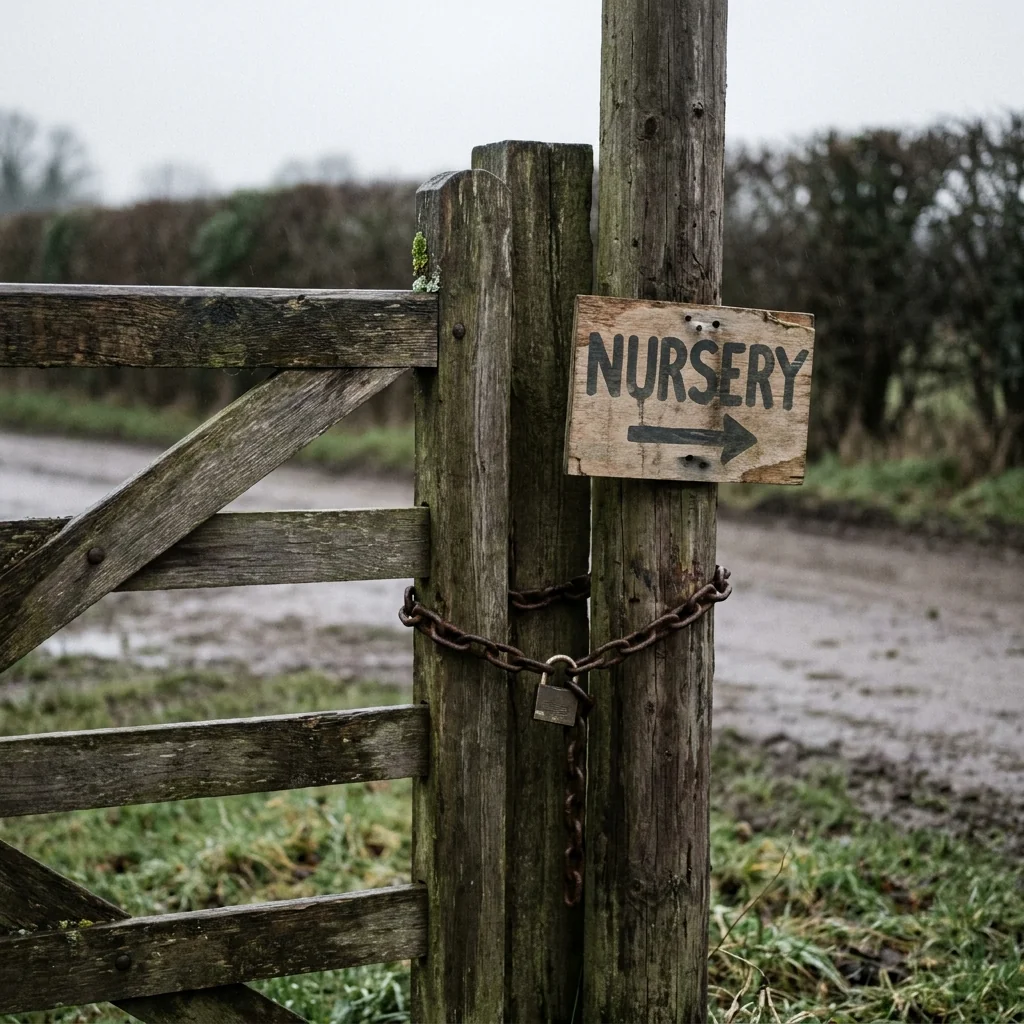
Second attempts are a worse product.

the failed drop

Second attempts are a worse product.

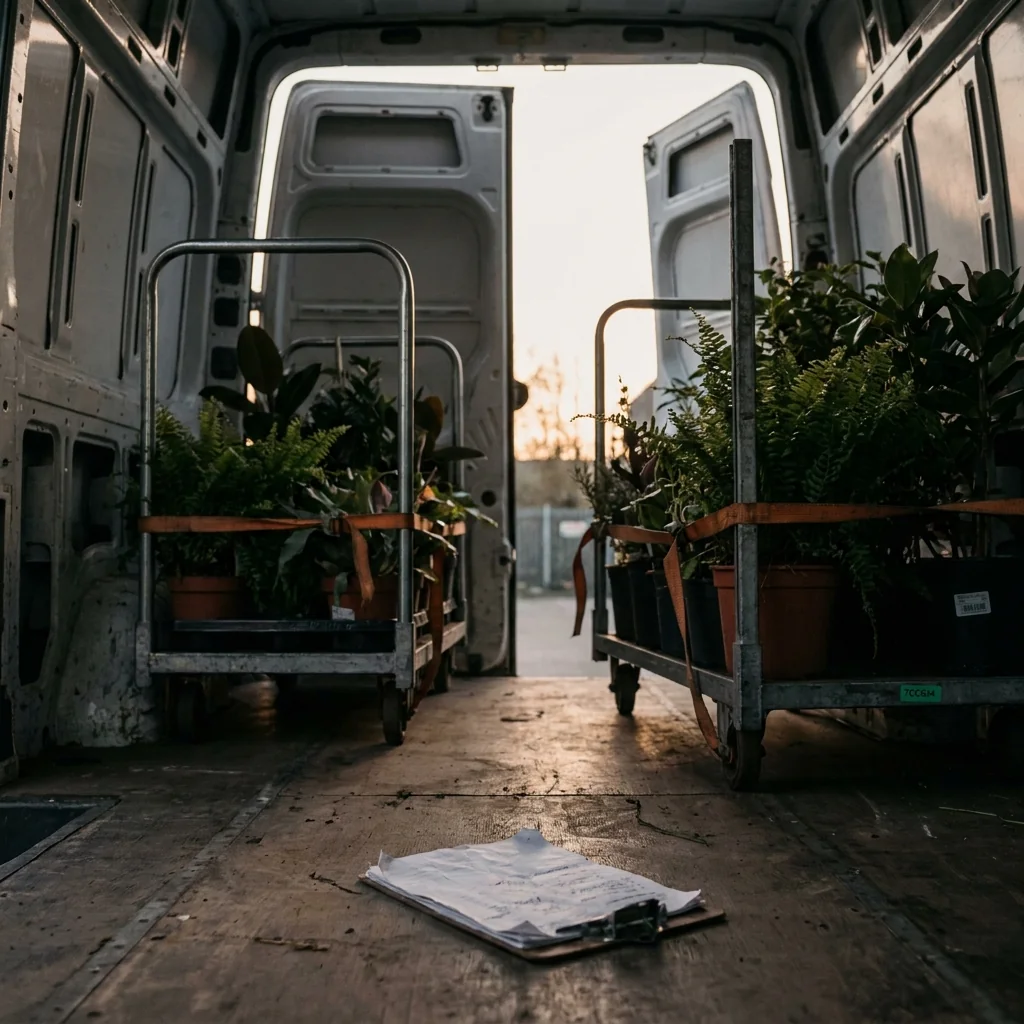
In most trades a missed delivery is an annoyance and a re-run. Here it is a quality event. The stock doesn't wait patiently in a depot. It spends the rest of the day in a warm box on a moving vehicle, then a night in a yard, and it arrives on Tuesday looking measurably less like the plant that was sold on Monday.

Count the whole bill honestly and it is never just the diesel:

  • The re-run: a driver, a vehicle and a slot that were meant for someone else.
  • The condition: a day and a half of extra transit on something perishable, which is how a delivery becomes a credit note.
  • The customer's day: staff rostered to unload, a bench cleared, a weekend promotion now short of stock.
  • The relationship: the expensive one, because it doesn't show up on any report.

And the cause is almost always mundane: a locked gate, a wrong entrance, an absent key-holder, a vehicle too big for the lane.

The gate code lives in someone's head.

access is data

The gate code lives in someone's head.

Ask any despatch office how to get into their twenty most awkward customers and you'll get a good answer — from one person. It is rarely written anywhere. It lives in a memory, a WhatsApp thread, or a note pinned above a desk that means nothing to anyone else.

That knowledge is a business asset, and it belongs on the customer's address record, where every future shipment will find it:

  • the entrance to use, in words a stranger can follow;
  • a map pin on the actual gate, because rural postcodes routinely land a kilometre away;
  • hours and key-holders: when the gate is open, who unlocks it, who signs;
  • the surface and access: gravel, slope, tight turn, no hard standing, weight limit;
  • what's needed to unload: tail-lift, pump truck, two people, nothing at all;
  • a phone number that gets answered, and how far out to ring.

Six short lines, written once. They are the difference between a round that works for the regular driver and a round that works for whoever is actually driving.

the test that matters

Assume a stranger is driving.

The regular driver knows. The agency cover, the new starter and the third-party carrier don't. A delivery plan is only as good as the worst-informed person who might have to carry it out on a wet Friday.

This is the single most useful discipline in rural distribution, and it costs nothing. Before a shipment goes out, ask whether someone who has never been there could find it, get in, put the goods somewhere sensible and prove they did.

If the answer depends on a particular person being at the wheel, the round is carrying a risk nobody has priced. It works for months and then fails on the week that person is on holiday — which is invariably the week of the spring peak, when there is no slack anywhere to absorb it.

The fix is to make the knowledge travel with the shipment. Whatever the office knows about getting in should be printed on the paperwork and visible on the phone, in the order the driver will meet it. And when a driver learns something new at the gate, that the sign is down or the lane is flooded or goods-in has moved, it has to land back on the record before the end of the shift.

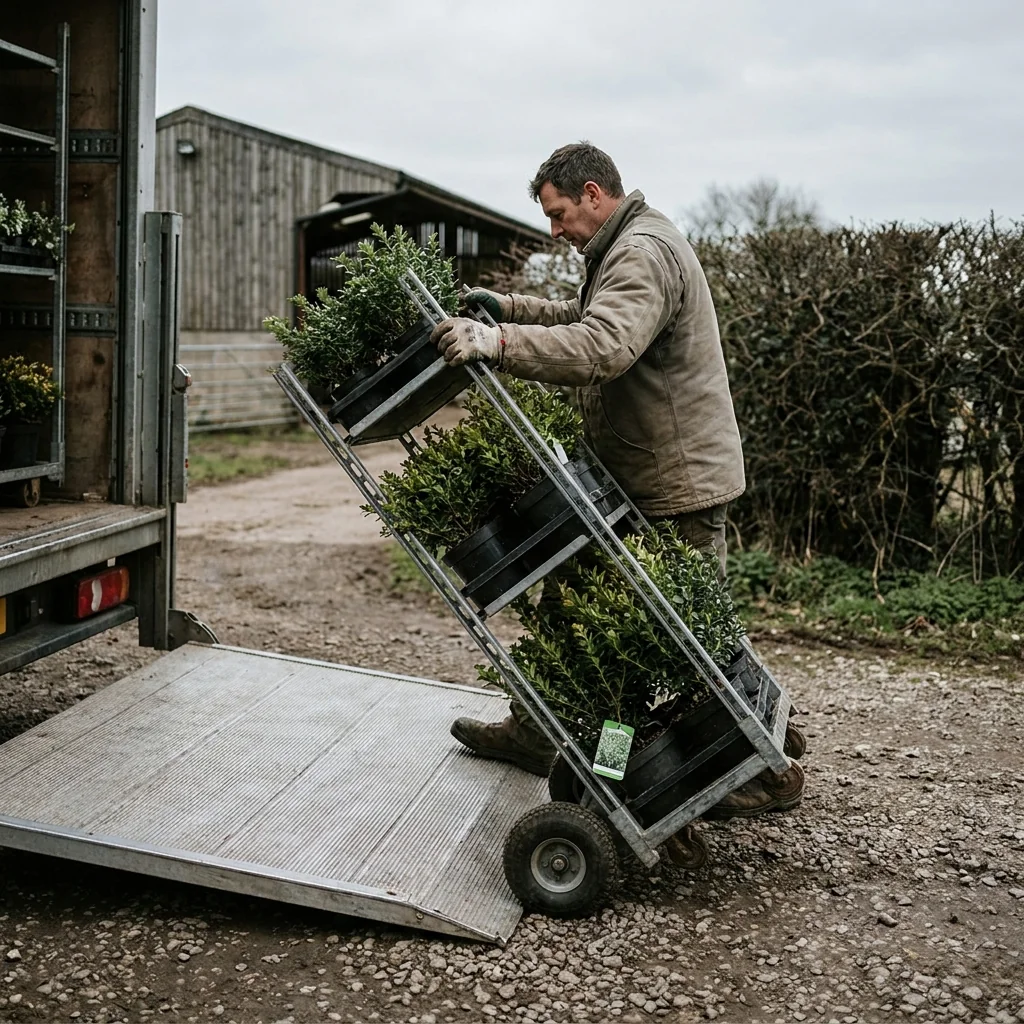
Trolleys don't do doorsteps.

the handover

Trolleys don't do doorsteps.

The hardest ten minutes of a rural delivery happen after the driver has arrived. A Danish trolley loaded with 3-litre stock is roughly the weight of a person and rolls beautifully on concrete, and not at all on gravel, grass, a slope or a cattle grid.

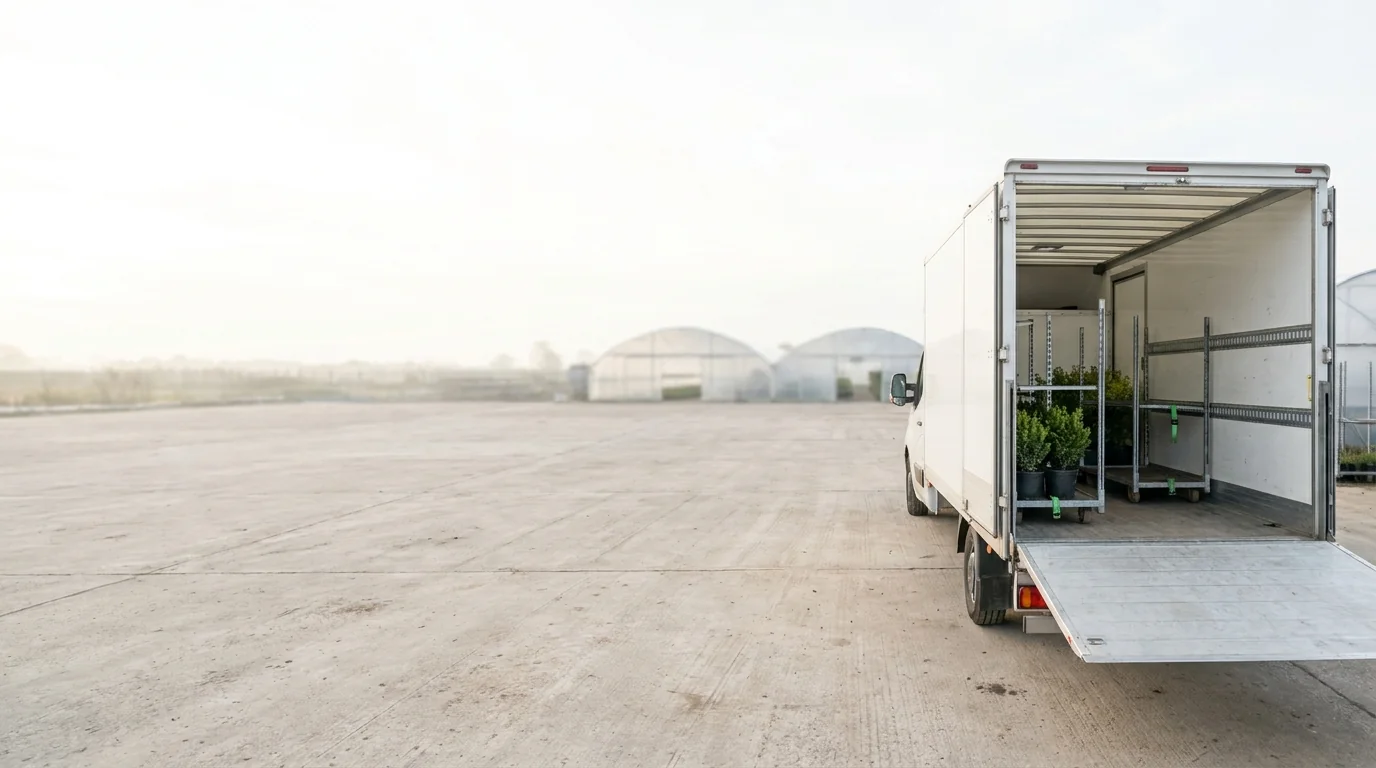
So the vehicle has to be chosen for the address as much as for the load. A big rigid that fills the round efficiently is worthless at a farm it can't turn round in, and the driver who discovers that at the gate has already lost the afternoon.

Settle the handover in advance: what the surface is, who is lifting (the driver alone, or someone at the other end with a pallet truck), and where the goods actually go if the yard is empty when they arrive. A named drop point inside a gate, agreed once with the customer, resolves more failed deliveries than any tracking page ever has.

And while you're there: the empties. Trolleys, cages and shelves are worth real money, and the moment to collect them is the moment you're standing in the yard.

Eight seconds at the gate.

proof

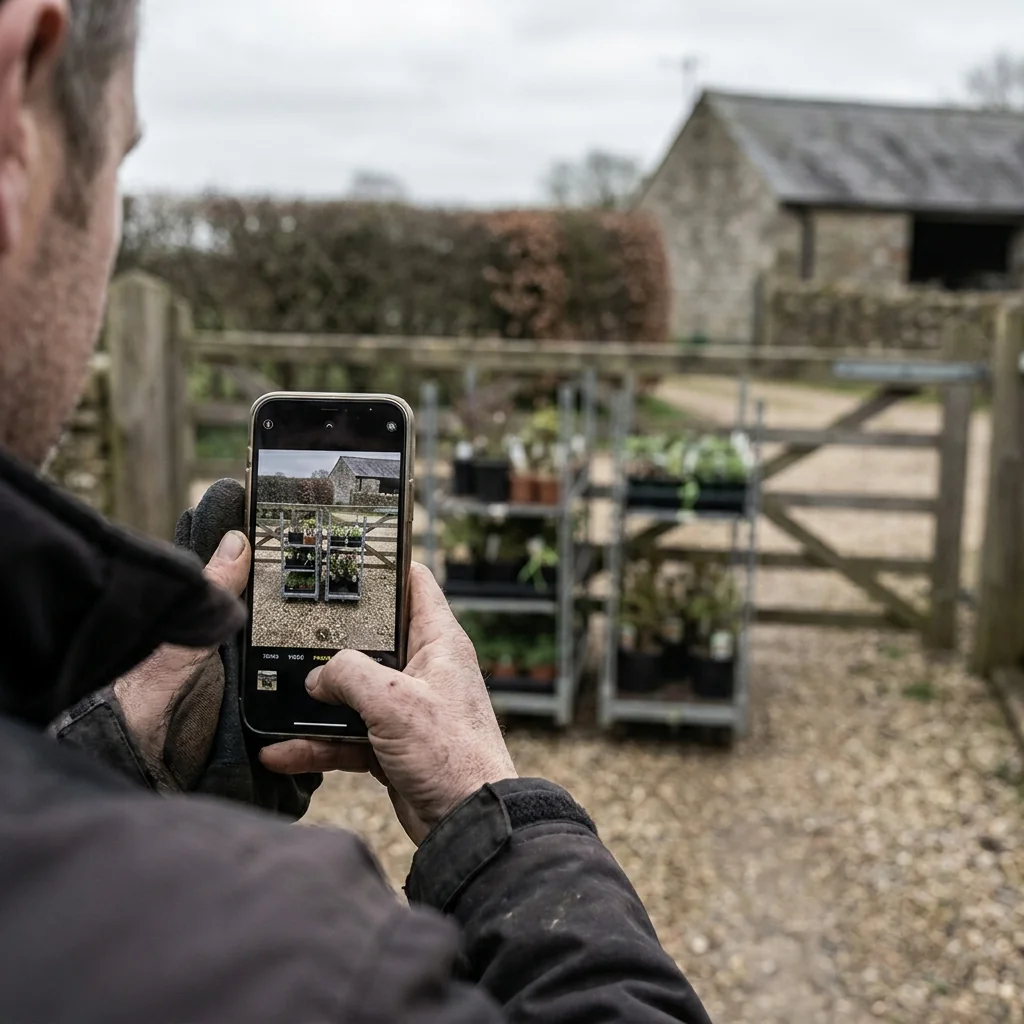
Eight seconds at the gate.

Unattended rural drops are normal in this trade. The yard is empty, the goods are perishable and the driver is not coming back, so the trolley goes inside the gate and everyone hopes.

A signature was never much protection anyway. What settles a dispute is a photograph, a timestamp and a location, captured where the goods were left: two trolleys standing on hard ground inside the gate, in daylight, at 07:52. It is the cheapest insurance in logistics, and it takes eight seconds.

There is a second dividend nobody expects. Do it for a season and you have built, almost by accident, a photographic library of every awkward address you serve: this gate, that turning, this drop point. Hand that to a new driver and the rural last mile stops being a rite of passage and starts being a job with instructions.

atlas core

How Atlas Core handles the awkward last mile

Atlas Core keeps access knowledge on the record and carries it all the way to the gate:

  • Multiple addresses per customer, each with its own type and a single clear default, so the delivery address is never confused with the invoice address.
  • Automatic geolocation of every address, geocoded on creation and re-geocoded when it is edited, so the pin follows the gate rather than the postcode.
  • Contacts with a nominated default: the person a driver or the despatch office should actually ring, held against the customer rather than in a phone.
  • Notes on the delivery itself, alongside picking notes, so entrance, surface, key-holder and drop point ride with the specific shipment.
  • A delivery note PDF rendered in the customer's own language, with plant passports for any passportable batch printed straight onto it.
  • Proof-of-delivery images captured against the shipment and kept with it: the photograph at the gate, filed where anyone can find it later.
  • Every shipment assigned to a courier or one of your own vehicles, through the same lifecycle: pending, scheduled, picking, packed, in transit, delivered. failed is a real status that returns the shipment to the queue instead of losing it.
  • A fleet register with each vehicle's capacity, crew and dated restrictions, so the van that fits the lane is the one that gets the job.
  • Delivery methods that charge by zone, distance, weight, volume or order value, with tiers, so the drop up the track can be priced for what it really is.
  • Atlas Pico, the mobile app for your own drivers and vans, is on the way.

Read further

Right gate, first time.

Address records, geolocation, delivery notes and proof of delivery. See how it fits your nursery.