library · field guide

The van left half-empty.

The driver, the diesel, the wear and the day are all paid for the moment the wheels turn — full load or not. Which makes the empty space on the deck the most expensive thing a nursery ships.

the arithmetic

You pay for the run, not for the drop.

Ten drops or three, the run costs roughly the same. Everything worth improving about own-fleet delivery follows from that one uncomfortable sentence.

why nurseries drive

Nobody buys a van for fun.

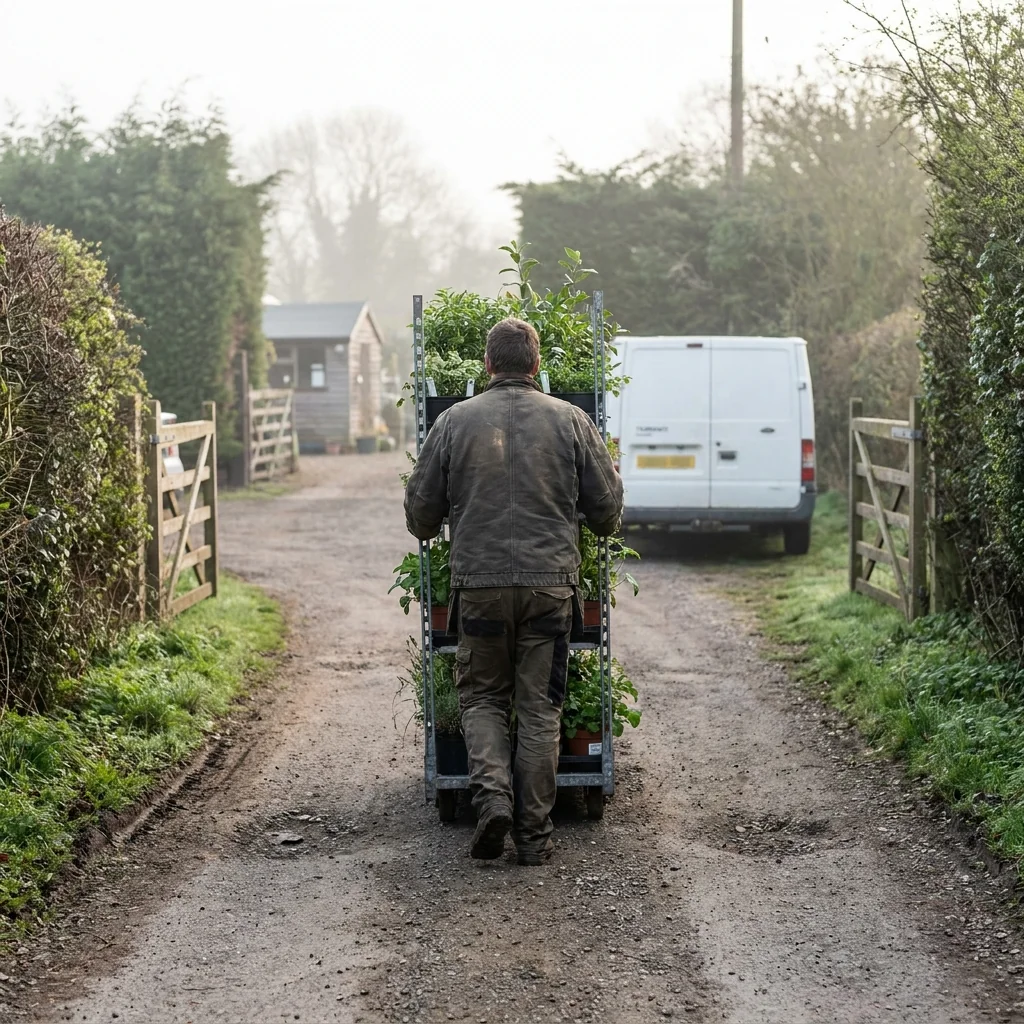
Growers run their own vehicles for good reasons. Plants on trolleys don't survive a general parcel network. Garden centres want stock at a particular gate on a particular morning. A driver who knows the customer will phone ahead, swap a damaged tray and bring the empties back — and that is worth more than any tracking page.

The trouble is that the van is the least-measured asset in the business. Everything else has a number against it. A crop has a cost, a bench has a yield, a pot has a price. The van has a fuel card and a vague sense that "it pays for itself."

Often it does. But it pays for itself on the days it goes out properly loaded, and it quietly loses money on the days it doesn't, and most nurseries could not tell you the ratio. The answer is to treat the run as a unit of production with a capacity, a cost and a plan, exactly like a propagation batch.
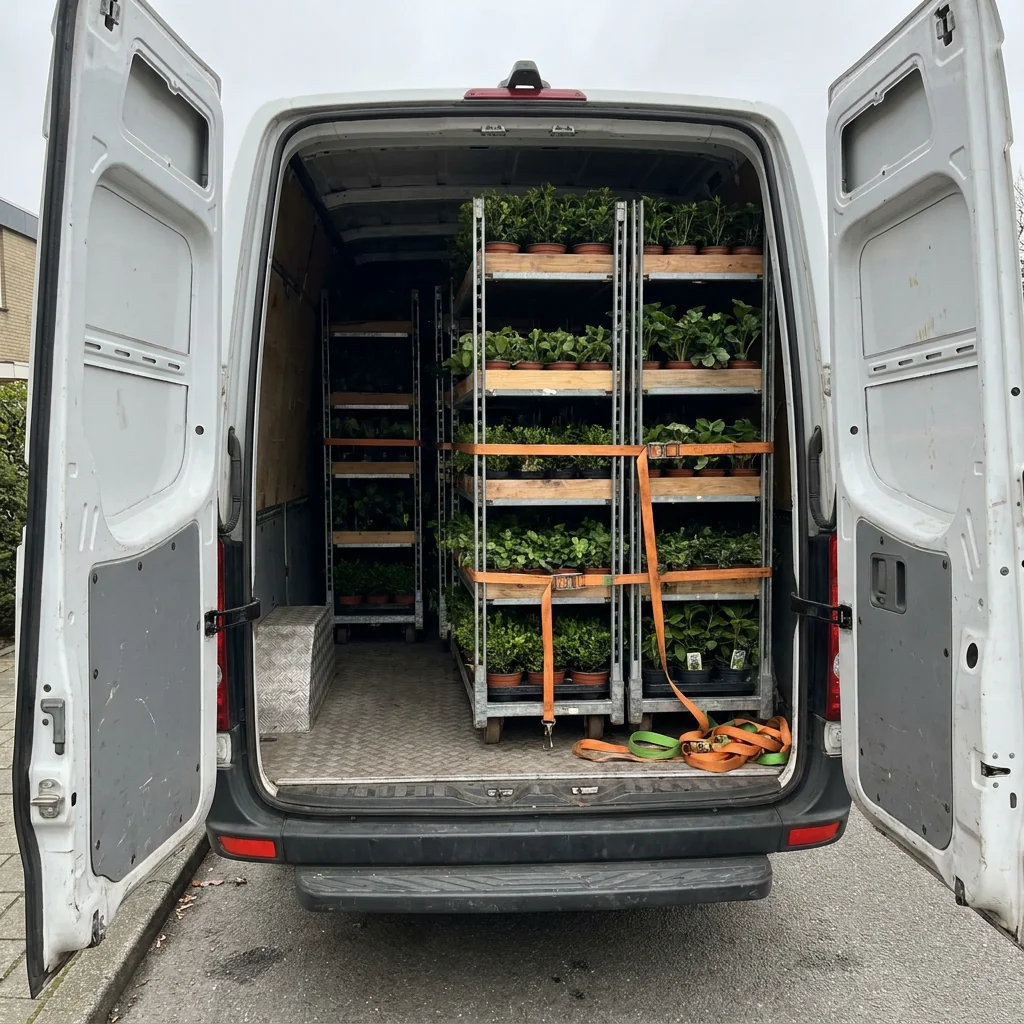

What actually fills the van.

capacity

What actually fills the van.

Ask what a van holds and most people answer in weight. Weight is rarely the thing that fills it. Nursery loads are bulky and light — a trolley of 3-litre shrubs weighs little and takes a great deal of floor.

Three constraints bind a run, and different ones bind on different days:

  • Weight — the legal and mechanical limit, which matters most with pots, compost and heavy specimens.
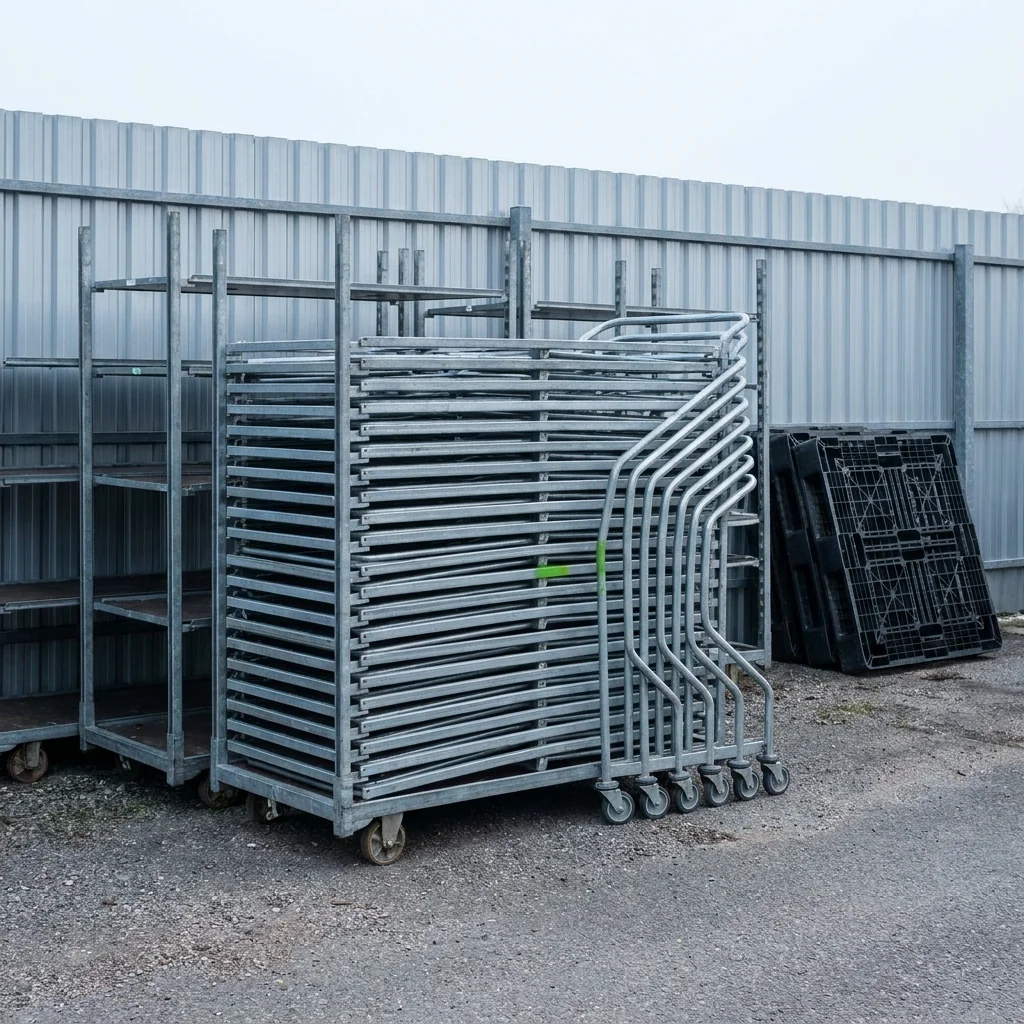
  • Footprint — how many trolleys, pallets or cages fit on the deck, which is what actually runs out on a spring plant round.
  • Time — hours of driving plus minutes per stop, which is what runs out on a round with a dozen small drops.

A plan that only tracks one of the three will keep producing runs that look full on paper and leave at half capacity in reality.

Every promise is a routing decision.

the order shapes the route

Every promise is a routing decision.

Half-empty vans are created weeks earlier, at the point of sale. Someone promises Thursday to a customer sixty kilometres east while everything else going east goes on Tuesdays. That one promise either strands a run or costs a special trip, and nobody connects the two.

The nurseries that load well do something unfashionably simple: they decide the shape of the week before they take the orders. North on Monday, the coast on Wednesday, the city on Friday. Then the sales conversation changes from "when would you like it?" to "we're with you Wednesday — shall I put it on that one?"

Customers accept this far more readily than anyone expects, because a reliable day beats a vague promise. And a delivery date that was chosen rather than inherited is one you can still plan around.

the number that changes minds

Work out what one drop actually costs.

Divide a run's real cost (driver, fuel, wear, the day you didn't spend doing something else) by the number of drops on it. The figure is higher than anyone in the room guessed, and it settles arguments that opinions never could.

Once cost per drop is visible, decisions that felt like matters of loyalty become matters of arithmetic. The tiny order two hours away is the most expensive delivery of the month, and it either needs a minimum order value, a shared run, or a carrier.

The same number tells you where your own fleet genuinely wins. Dense rounds, bulky trolley loads, customers who need the empties collected — that is where a van beats a courier comfortably. Thin, distant, awkward drops are where a third party is cheaper and better, and there is no shame in saying so.

Most growers who do this exercise end up running their own vehicle on fewer, fuller routes and handing the scattered work out. The fleet shrinks slightly. The utilisation, and the margin, go up.

The driver isn't the database.

the run sheet

The driver isn't the database.

An enormous amount of delivery knowledge lives in one person's head: which gate is unlocked before eight, which yard needs the small van, who signs, which customer wants a call thirty minutes out. It works beautifully until that person is on holiday, and then a whole round runs badly.

Getting it written down is insurance. Access notes, contact, unloading constraints and the sequence of stops belong on the record, and they should print, or appear on a screen, in the order the driver will meet them.

The same discipline pays off at the other end of the day. If the run sheet is real data rather than a scribbled list, then what came back (a refusal, a shortage, an empties count) lands back in the system instead of on the back of a delivery note in the footwell.

Half of every round is the way home.

the return leg

Half of every round is the way home.

A van that goes out full and comes back empty is running at fifty percent utilisation by definition, and almost nobody counts the return leg at all.

There is usually something to put on it. Empty trolleys and cages, genuinely valuable and quietly expensive when they never come home. A collection from a supplier on the same road. A customer return that would otherwise sit for a fortnight waiting for someone to be nearby. Even a delivery to a neighbouring grower who ships the other way on a different day.

All of it comes down to knowing, at planning time, what else exists along a route you were driving anyway. The only reason it doesn't happen more is that the run and the collection live in two different lists that nobody reads together.

atlas core

How Atlas Core supports your own fleet

Atlas Core treats your vehicles as first-class logistics assets alongside third-party couriers:

  • A fleet register under Logistics — each vehicle with its registration, make, model, year, load capacity and notes, and an active flag so a van off the road stops appearing in plans.
  • Crews on the vehicle — drivers and assistants assigned to each van, plus dated vehicle restrictions recording servicing, tests and days a vehicle isn't available.
  • Every delivery assigned to a courier or one of your own vehicles, so both kinds of shipment run through the same lifecycle: pending, scheduled, picking, packed, in transit, delivered.
  • A per-vehicle deliveries panel filtered by status and ship-on date, so you can see exactly what a given van is carrying next Tuesday.
  • Estimated and calculated weights built from each variant's packed weight plus the packaging tare on every pack — a real load figure to check against the vehicle's capacity before picking starts.
  • An awaiting-delivery worklist of open orders where what was ordered still exceeds what has shipped, ordered by required date — the raw material for building the week's rounds.
  • Delivery methods with charge components by zone, distance, weight, volume or order value, with tiers — so "Local van" prices a round honestly instead of guessing.
  • Delivery notes and proof-of-delivery images captured against the shipment, with a mobile app for own drivers and vans, Atlas Pico, on the way.

Read further

Nobody pays the list price Field guide · 2026

Nobody pays the list price

There is a price list, and then there is what each customer is actually charged - and the two stopped matching years ago. The deals are all sound. The trouble is they live in a spreadsheet and somebody's memory.

7 min read · Jul 2026 Read →

Fewer runs, fuller vans.

Fleet records, load weights, delivery rounds and cost per drop — see how it fits your nursery.