library · industry news · Italy

The quaderno stops being a notebook.

From 1 January 2027 the Italian treatments register has to be electronic and machine-readable. The obligation is not new; the format is. And the format was designed around a field of one crop.

the date

1 January 2027.

Brussels set the content and the file format. Rome set the scope, and it is wider. Between them sits one year and a data model that was not drawn with container stock in mind.

what actually changed

The obligation is old. The format is new.

Keeping a record of what you spray is not a new duty. Article 67 of Regulation (EC) 1107/2009 has required professional users of plant protection products to keep records of their use for years, and in Italy that record has a name everyone knows: the quaderno di campagna.

What changed is that the record stopped being a private document and became a defined data structure. Commission Implementing Regulation (EU) 2023/564 fixed exactly what has to be in each entry and, this is the part that matters, required that it be held in an electronic format that is machine-readable, in the sense of the Open Data Directive. Not a PDF of a scanned page. Not a spreadsheet whose columns mean whatever the person who made it decided they mean.

That obligation was due to bite on 1 January 2026. It did not, because Regulation (EU) 2025/2203 amended it to let Member States accept non-electronic records for applications made before 1 January 2027. Italy took the extra year. The instrument it will be taken with is the QDCA (Quaderno di Campagna dell'Agricoltore), which already exists inside SIAN and which several regions have been running on voluntary adhesion through 2026.

So the deadline moved once. It is worth reading that as a reprieve rather than a pattern.
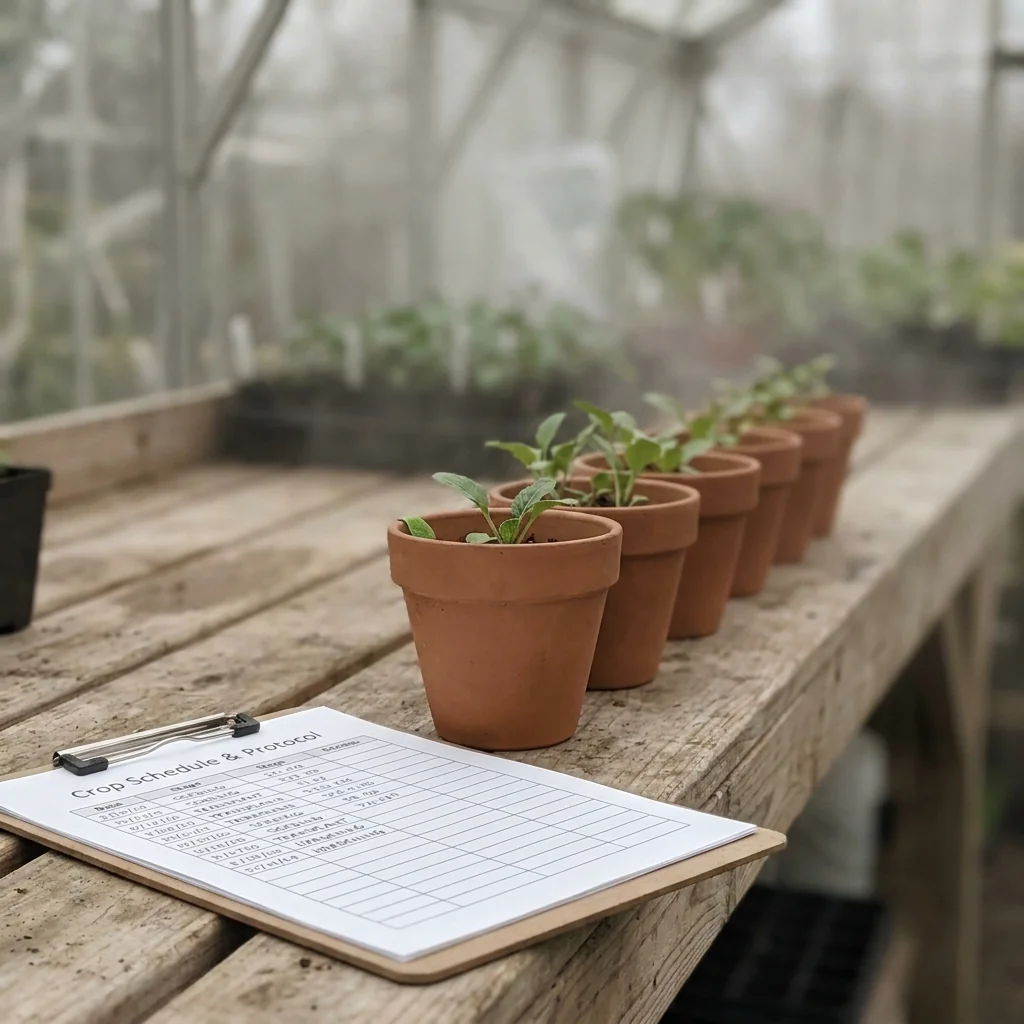
Three kinds of entry.

the three records

Three kinds of entry.

The detail most summaries skip is that Regulation 2023/564 does not describe a single kind of entry. It describes three, by where the product goes.

On a surface — the field case. Product name and authorisation number, date of application, dose, the land parcel or an equivalent way of identifying where it happened, the treated area in hectares, and the crop with its growth stage, expressed with an EPPO code and the BBCH scale.

In an enclosed space — the glasshouse and tunnel case. Dose per cubic metre or square metre, identification of the structure, its volume or surface.

On seed and propagating material — dose per kilo, per tonne or per seed count, the quantity treated, and the lot number.

An arable holding lives in the first of those. A nursery routinely lives in all three in the same week — and often applies all three to the same plant, as it moves from a propagation bench to a tunnel to a container yard.

Brussels asks about the spray. Rome asks about the year.

the italian scope

Brussels asks about the spray. Rome asks about the year.

The European text is narrow on purpose: it is about plant protection products. Italy's implementation is not narrow.

The QDCA sits on top of the fascicolo aziendale and the piano colturale grafico, and the national system reaches past the spray record into fertilisation, sowing, irrigation and harvest — down to identifying the equipment used, the date of its controllo funzionale, and who operated it.

The practical consequence is a reconciliation problem more than a typing problem. A treatment has to land on a parcel and a crop that the graphical crop plan agrees exist. Where the register and the crop plan disagree, that disagreement is now legible to someone who did not visit your nursery.

the mismatch

A nursery is not a field.

One parcel, one crop, one growth stage is a reasonable description of a wheat field and a poor description of a container yard holding four hundred taxa that were somewhere else last month.

Look at what the record asks for and then at what a nursery actually is, and the friction is not hard to find.

The record wants a crop and a growth stage, coded. That is a clean question on a hectare of maize. On ornamentals it is much less clean: a single site may carry hundreds of taxa at once, many of them without a meaningful BBCH monograph, and the honest answer to "what growth stage" for a mixed bench of container shrubs is not a number.

The record wants a location — a parcel, or an equivalent identifier. Container stock does not hold still. A batch is propagated in one house, potted on into a tunnel, stood down outside for the summer and pulled back under cover for winter. The place a treatment happened and the place the plant is now are frequently different places, and a register organised by parcel quietly assumes they are not.

And the record wants area treated in hectares — a unit that describes ground, while a nursery's density describes a bench.

None of this makes compliance impossible. It makes the unit of record a decision, and one worth making deliberately rather than discovering at the first inspection.

The lot was already the answer.

the convergence

The lot was already the answer.

There is a quiet piece of good news buried in the third record type. When the product goes onto propagating material, the regulation does not ask for a parcel. It asks for a lot number.

Italian nurseries are already keeping lot lineage, for a completely different regulator. The plant passport regime, Regulation (EU) 2016/2031, transposed in Italy by D.lgs. 19/2021, runs on the traceability of the lot and the registered operator's RUOP code.

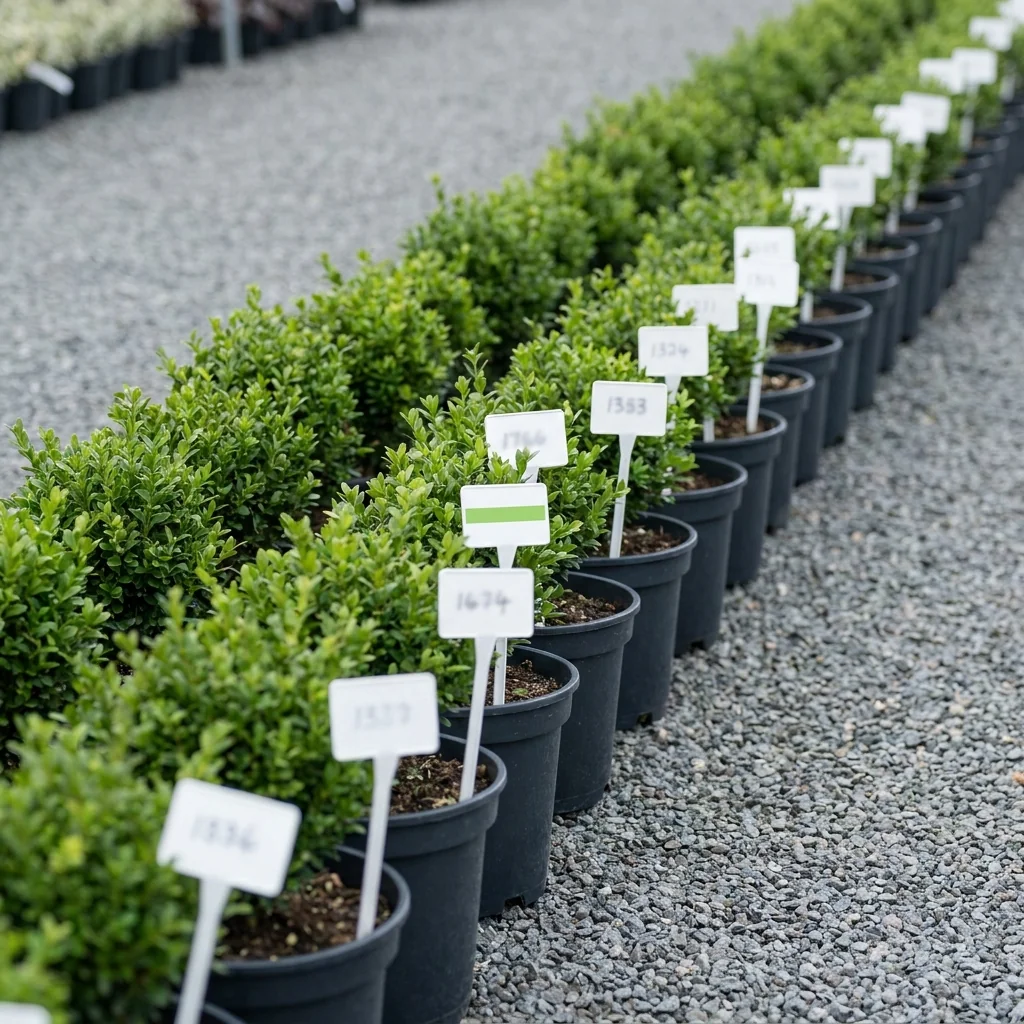
So two separate obligations, written by two different authorities for two different purposes, are converging on the same primitive: the batch. A nursery that already knows which plants came from which lot, and where that lot has been, is much closer to a defensible treatments record than it feels. A nursery that records treatments as "tunnel 4, Tuesday" is further away than it feels — because that entry cannot be resolved back to a plant once the tunnel has been emptied and refilled.

Write it down now, not in January.

the thirty-day clock

Write it down now, not in January.

Two timing details in Regulation 2023/564 change the working habit more than the deadline itself does.

Each application has to be recorded without undue delay. And where the record was not created electronically in the first place, it has to be converted into the required format within 30 days of the use.

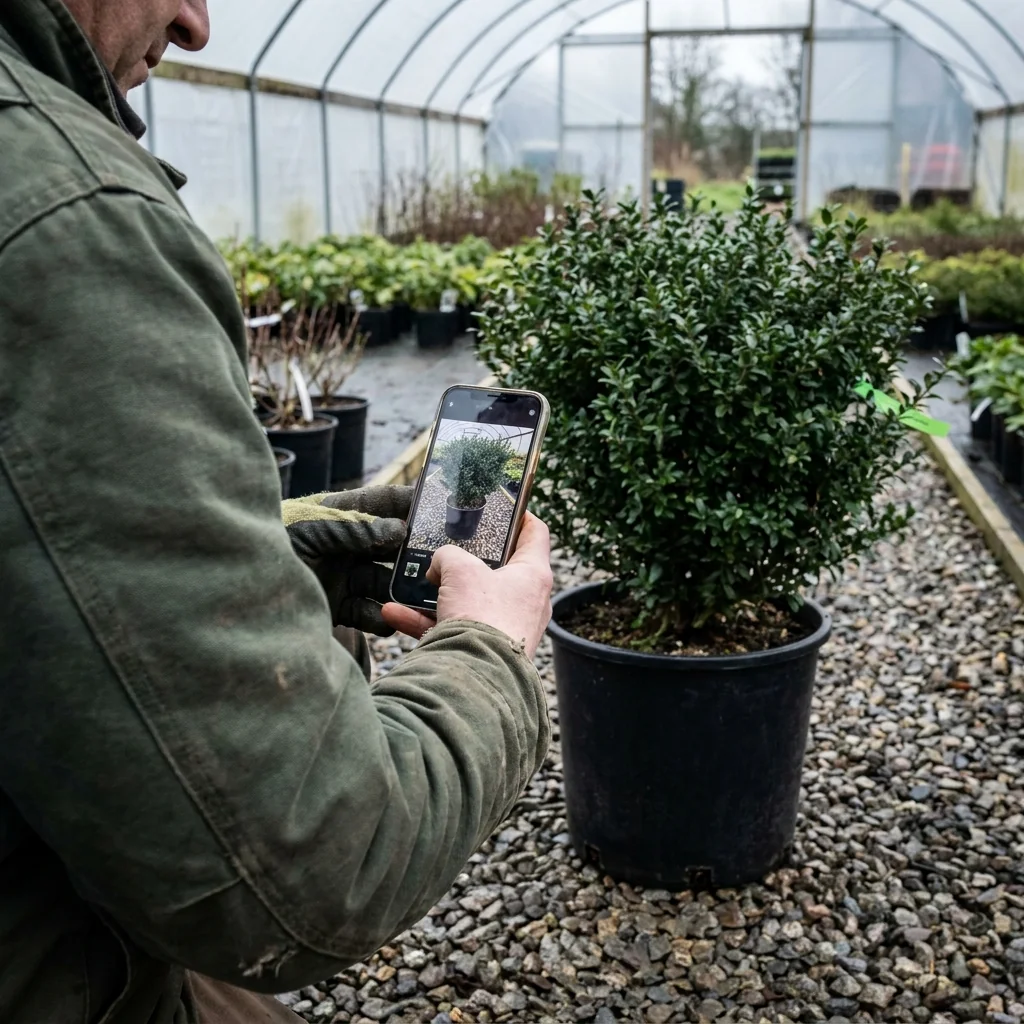
That is the end of a familiar rhythm — jot it on the wall of the shed, write it up properly when the season quietens. Thirty days in April is not the quiet season. The practical reading is that whatever captures the treatment has to be the thing that captures it at the moment it happens, in the place it happens, and it has to be able to hand out a machine-readable file afterwards without a person retyping anything.

Read further

A plant remembers a cold lorry Field guide · 2026

A plant remembers a cold lorry

Plants never complain on arrival. They look fine at the gate, then bronze, drop leaves and stall three weeks later on someone else's bench - and the claim comes back to you, long after the lorry has been forgotten.

8 min read · Aug 2026 Read →

One season to decide.

Whether your treatments record hangs from a parcel or from a lot is a decision worth making before January 2027 makes it for you.