library · field guide

Production protocols: the recipe behind every crop.

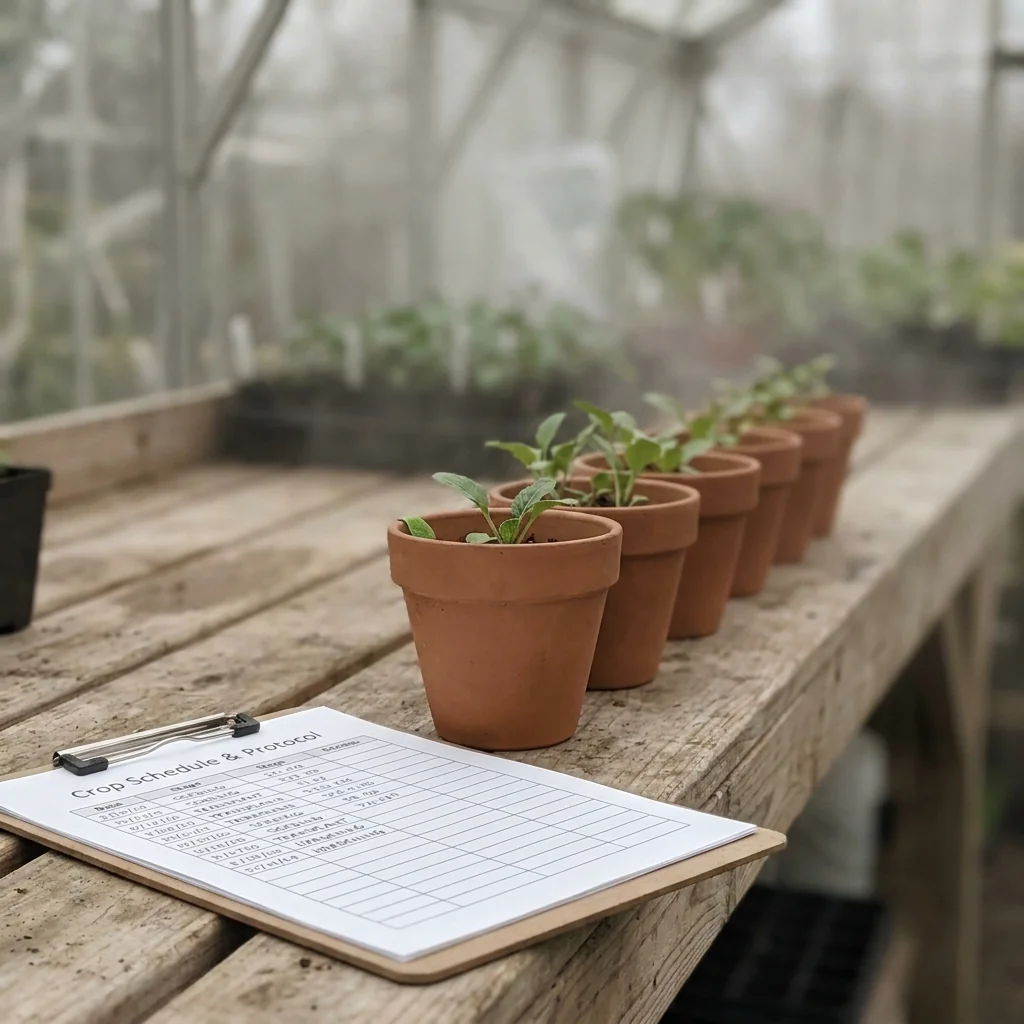
A production protocol is the documented recipe for a crop — the stages, timings, tasks, inputs and quality checkpoints that take input material to a finished, saleable plant. Write it down once and the same crop comes out to the same standard every time, no matter who grows it.

the core idea

A recipe, not a guess.

The best growers are following a recipe they have refined over years. A protocol simply writes that recipe down so it belongs to the whole nursery.

what a protocol is

The recipe behind a finished plant.

Every crop you sell is the result of a sequence of decisions: what you started with, when you potted it on, how warm and how wet you kept it, when you pinched or fed or spaced it, and what "ready" finally looked like. A production protocol is that sequence written down — the stages, timings and tasks, the inputs (media, pots, feed, plant growth regulators), the environment (temperature, light, irrigation) and the quality checkpoints that take a tray of cuttings to a bench of saleable plants.

In most nurseries this recipe already exists; it just lives in one experienced grower's head. That is the problem. Tribal knowledge is fragile. It walks out of the door when someone retires, it bends slightly every time it is retold, and it cannot be planned against because no one else can see it.

Writing the recipe down changes that. The protocol becomes a shared asset the whole nursery can follow, measure and improve.

The same crop, every time.

repeatable quality

The same crop, every time.

The point of a protocol is consistency. When the stages, timings and inputs are fixed, the crop comes out to the same grade and the same ready-date whether your most experienced grower ran it or a member of staff who started last month. Quality stops depending on one person's memory and good day.

That repeatability is what lets you make a promise to a customer and keep it. A batch grown to a written recipe is a batch you can describe before it exists, same size, same finish, same week, because every run is measured against the same baseline rather than reinvented from scratch.

Craft that survives staff turnover.

knowledge capture

Craft that survives staff turnover.

A protocol turns tacit craft into institutional knowledge. The hundred small judgements a skilled grower makes (when to wean, how hard to pinch, what the first sign of trouble looks like) stop being unwritten habit and become something the nursery owns and can pass on.

That is what makes onboarding fast. A new hire does not have to absorb years of instinct before they can be trusted with a crop; they follow the recipe, and the recipe carries the experience. When a key grower moves on, the knowledge does not leave with them. It stays on the bench, in the protocol.

plan, cost, predict

Plan, cost, and predict ready-dates.

A recipe you cannot see is a recipe you cannot plan against. Once the stages, durations and inputs are written down, the whole production calendar comes into focus: labour, space, ready-dates and true cost.

The moment a protocol exists, it stops being only about quality and starts being about planning. If you know a crop takes nine weeks across four stages, you know when to start it to hit a delivery date, and you can work backwards from the week a customer needs it to the week you must stick the cuttings.

The same written stages tell you what the crop will demand and when. A potting-on week is a labour week; a spacing stage is a space-on-the-bench week. With the recipe in front of you, you can schedule people and square metres deliberately instead of being surprised by them, and spot the weeks where three crops all want the same hands at once.

And because the inputs are listed (the media, the pots, the feed, the hours), you can finally answer the question most nurseries struggle with: what does this crop actually cost to grow? It is the sum of the recipe. A protocol is the difference between hoping a line is profitable and knowing it.

Every step is part of the recipe.

propagation, step by step

Every step is part of the recipe.

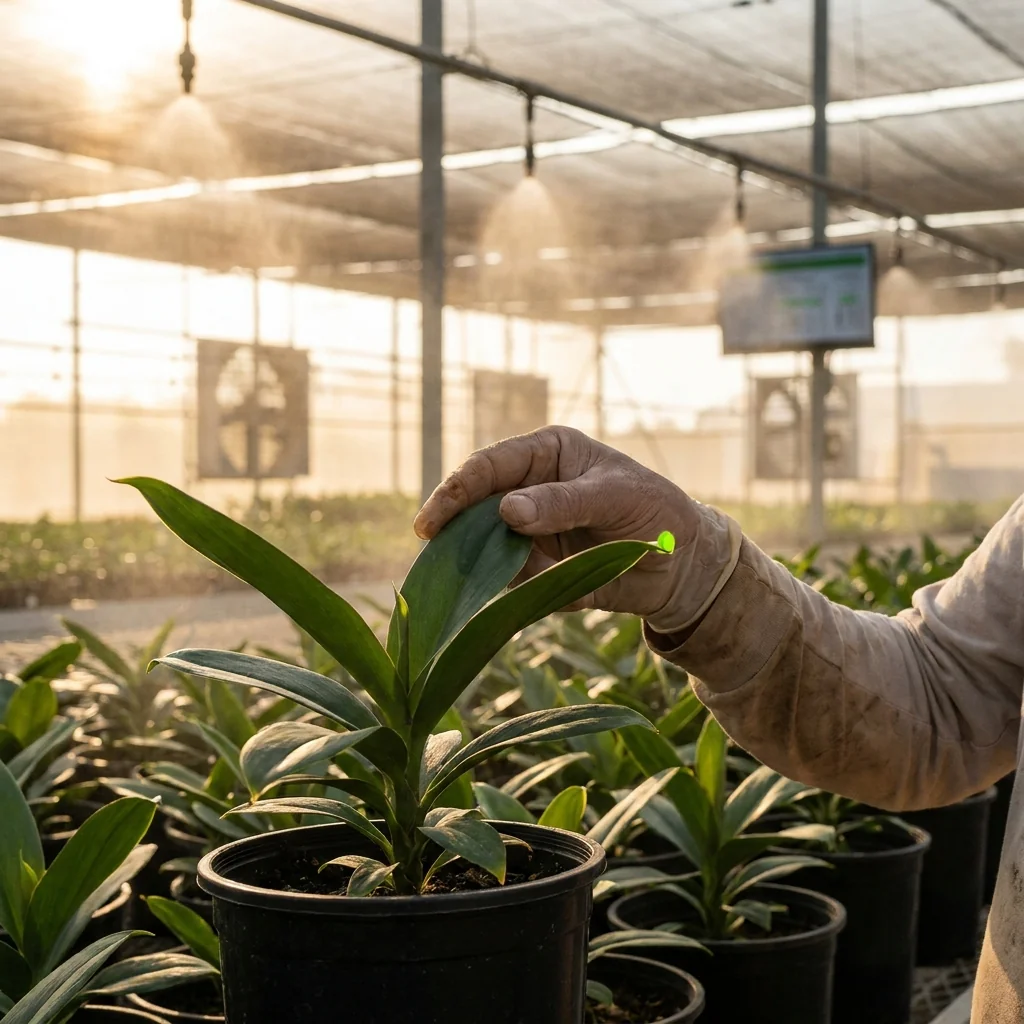
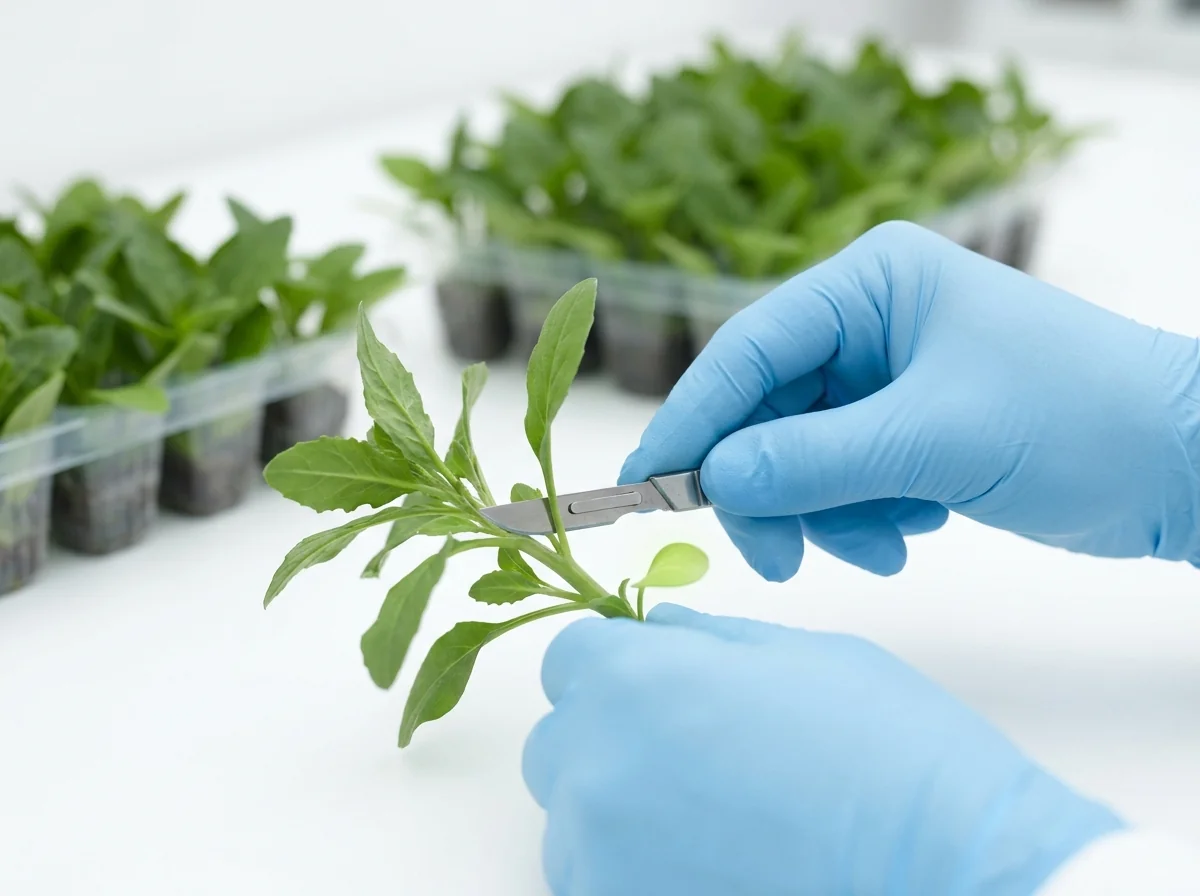
Nowhere does a protocol earn its keep more than in propagation, where the margins are tight and the steps are unforgiving. Sticking or sowing, the rooting environment (mist or fog, bottom heat), weaning off support, potting-on, spacing and hardening off are each a discrete step with its own timing, its own conditions and its own pass-or-fail checkpoint.

Get the sequence and the cadence right and rooting is reliable; get them vague and you lose trays to disease, drought or a missed weaning window. A written recipe is what turns propagation from an anxious art into a repeatable process — each stage triggered on time, each transition made on a clean result rather than a hunch.

A baseline you can sharpen.

continuous improvement

A baseline you can sharpen.

A written protocol is a baseline you measure against. Because the recipe is fixed, any change is visible: when losses fall, when a timing tightens, when grade-out rates climb, you can see which adjustment did it and decide whether to keep it.

That is how a crop gets better season on season. You run the protocol, record what actually happened against what was planned, and feed the lessons back in — a shorter rooting window here, a different feed there, one less wasted week. Without a baseline you are guessing each year. With one, every season's experience is banked into the recipe instead of lost.

what good looks like

The anatomy of a good protocol.

A protocol does not need to be elaborate to be powerful. It needs to capture the recipe completely enough that someone else could follow it — and that comes down to a handful of elements, applied consistently:

  • Stages — name each step of the crop, from input material to finished plant, in the order they happen.
  • Timings — give every stage a duration, so the whole crop adds up to a ready-date you can plan from.
  • Tasks — spell out what to actually do at each stage: stick, wean, pot on, pinch, space, harden off.
  • Inputs — list the media, pots, feed and plant growth regulators each stage consumes, so the crop can be costed and ordered for.
  • Environment — set the temperature, light and irrigation each stage needs, so conditions are deliberate, not whatever the house happened to be.
  • Quality checkpoints — define what "good" looks like at each transition, so a stage is only passed on a clean result.

Get those six right and the protocol stops being paperwork. It becomes the thing that makes quality repeatable and lets you plan, cost and predict every crop you run.

atlas core

How Atlas Core handles production protocols

Atlas Core turns the written recipe into the way work actually runs on the bench.

  • Define once, reuse always — set a production cycle's stages, durations, tasks and inputs once, then use it as the template for every batch of that crop, so the recipe lives in the system, not in one grower's head.
  • Ready-dates fall out of the plan — schedule forward from a stick or sow date, or backward from a customer delivery week, as stage durations roll up automatically instead of being estimated by hand.
  • Every batch runs against its protocol — tasks are generated and tracked per stage for a live planned-vs-actual view that flags missed transitions (weaning, potting-on, spacing) before trays are lost.
  • True cost and procurement — listed inputs (media, pots, feed, plant growth regulators, labour hours) roll up into a real per-crop cost and a purchasing forecast, turning "is this line profitable?" into a sum.
  • Labour and space, levelled — demand aggregates across all live batches, so the weeks where several crops need the same hands or the same square metres are visible and can be levelled deliberately.
  • Improvements banked — recorded actuals feed back into the protocol as a measurable baseline, so a tighter rooting window or a better feed is kept in the recipe season on season rather than lost.

Read further

Run every batch against the recipe.

Write the protocol down once and every crop you run gains a plan you can schedule, cost and improve against. Talk to us about how Atlas Core fits your nursery.