library · tech brief

Integrating AI into horticulture.

The interesting question is no longer whether AI can write a paragraph. It is what happens when software is connected to a real nursery, with its live stock, batches, production cycles, mother plants, sales and losses, and asked to help manage the crop.

the point of difference

Grounded in your nursery, not the internet.

A model that can read your own operational data, what is actually on the benches today, is a different tool from a chatbot answering from the public web. One knows your nursery. The other is guessing.

two very different things

A chatbot and a connected assistant are not the same tool.

Most people's first encounter with AI is a chat box that answers from the public internet. It is articulate, occasionally useful, and completely blind to your business. Ask it whether you have enough 3-litre Photinia for next week's order and it cannot know — it has never seen your stock. It can only generalise.

That gap is the whole story. A generic model is trained on the world's text; it knows horticulture in the abstract but nothing about your nursery in particular. It does not know which batches are ahead of protocol, which mother plant is quietly losing vigour, or that a confirmed order leaves you forty plants short. None of that lives on the public internet. It lives in your records.

The shift worth paying attention to is grounded AI: an assistant connected to your real operational data, the live picture of stock and grades, batches and production cycles, mother plants and their lineage, sales, bookings and losses. A model that can read what you already hold beats a generic tool every time, because it is answering about your nursery rather than nurseries in general.
It reads your live data and surfaces what matters.

the centrepiece

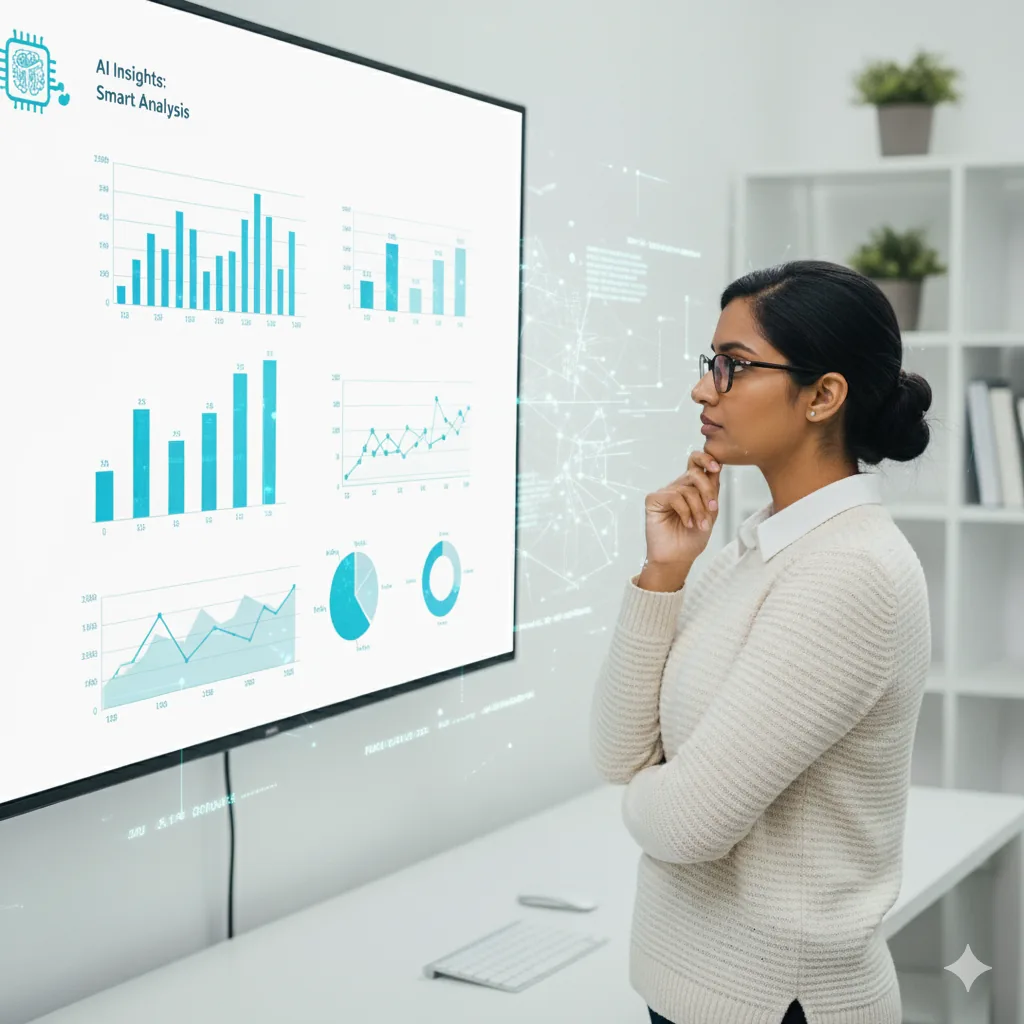
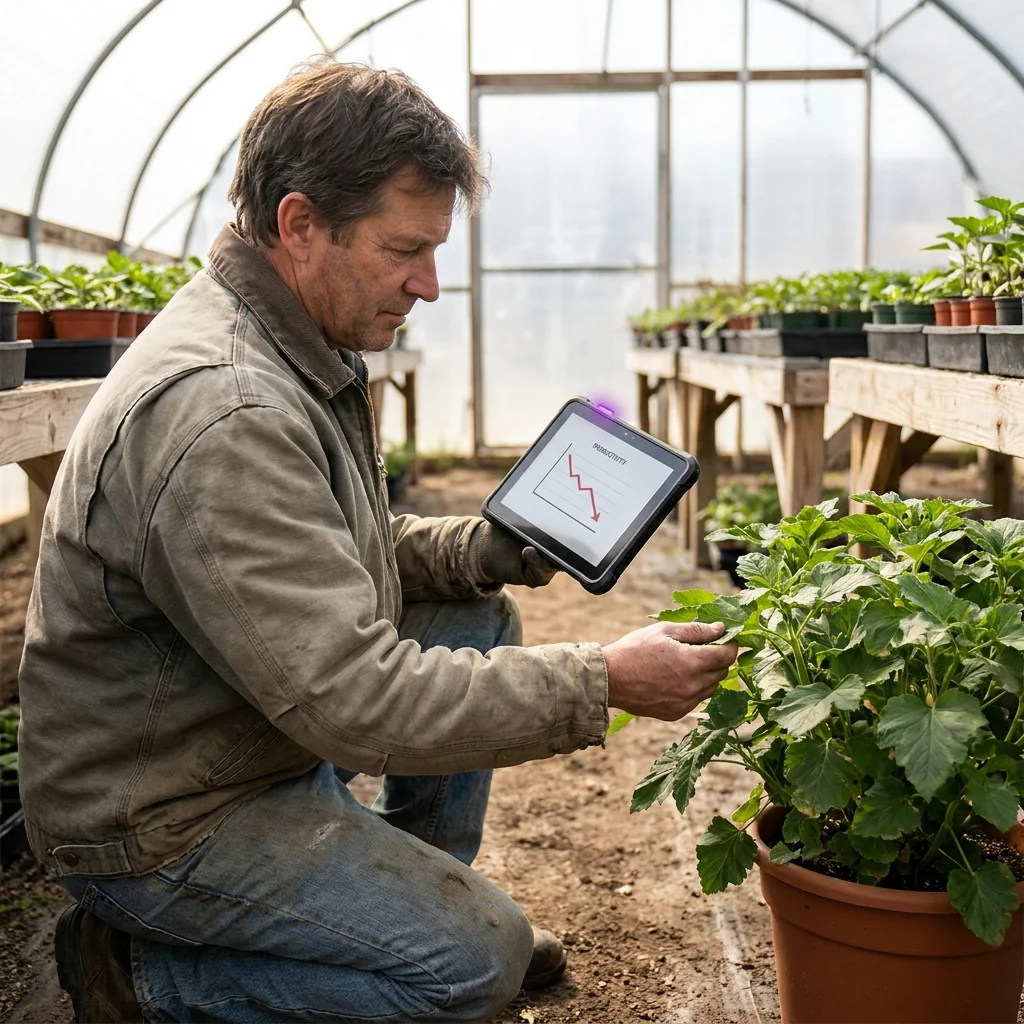
It reads your live data and surfaces what matters.

The most valuable thing an assistant grounded in your nursery can do is analyse: read across the data you already hold and tell you what deserves your attention today.

A grounded assistant's job is to look. It works through live stock, batches, production timings, mother plant records, sales and losses, and turns that quiet pile of data into decisions and early warnings. The information was always there. What changes is that something is now reading all of it, at once, on a schedule you never had time to keep.

This is the difference between data you store and data that works for you. A nursery generates far more signal than any one person can watch. The assistant's job is to keep watch across the whole operation and raise its hand when a number starts to drift, so a problem reaches you as an early warning rather than a surprise at dispatch.

Insight you can act on, in plain terms.

what that looks like

Insight you can act on, in plain terms.

A few of the things an assistant reading your live data can surface:

  • A mother plant losing productivity over recent cycles, flagged while there is still time to rest or renew the line.
  • Stock at risk — a batch overgrowing its grade, or a confirmed order that current numbers can't cover, caught before it becomes a shortfall.
  • Demand signals by category — what is actually moving, and where interest is building, read from real sales rather than gut feel.
  • Crops drifting off their protocol timings, so a batch running early or late is noticed while a correction still helps.
  • Margin and pricing anomalies — a line selling below its usual margin, or a cost that has crept, raised as a question in March rather than discovered at year end.

None of these are predictions plucked from the air. Each one is your own data, read carefully.

the right relationship

AI that augments the grower.

The assistant reads the numbers and flags the pattern. Deciding what to do about it is still the grower's call, and should be. Good AI sharpens horticultural judgement.

A tool that watches your whole operation only earns its place if you can trust it. That trust rests on a few plain commitments.

Your data stays yours. The value here comes from a model grounded in your nursery's own records, and those records remain the nursery's. An assistant that surfaces a declining mother plant or a looming shortfall is only useful if the grower understands why it raised the flag, so insight should come with its reasoning attached, traceable back to the numbers that prompted it.

The same assistant can hold a conversation or take a routine task off your hands, and it will. But that is the smaller story. The reason to connect AI to a living nursery is to have something read the data you already hold and tell you, early, what needs a grower's attention.

what to look for

Adding AI to a nursery, without the hype.

Horticulture makes this genuinely hard, which is exactly why it is worth doing well. Biological data is messy, seasonal and never stops changing: a plant grades up overnight, a batch is lost to weather, demand swings with the season. Software that runs on a spreadsheet snapshot is out of date the moment it is saved.

If you are weighing up AI for your nursery, a short, unglamorous checklist is worth more than any demo:

  • Is it connected to your real operational data, or answering from the public internet? Grounding is the whole game.
  • Does it analyse, or just chat? Ask what it surfaces unprompted: declining lines, stock at risk, demand shifts.
  • Does it explain itself? Every flag should trace back to the data that triggered it, so you can check its working.
  • Whose data is it? Confirm your records stay yours and are not quietly feeding someone else's model.
  • Does it respect the grower? The best outcome is sharper decisions in fewer hours.
atlas core

How Atlas Core handles grounded AI in the nursery

Everything above is the general case. Here is how Atlas Core puts it to work:

  • Grounded in your nursery. Navigator, Atlas Core's assistant, is connected directly to your live operational data: stock and grades, batches and production cycles, mother plants and lineage, sales, bookings and losses. It answers about your own nursery.
  • Analysis on a schedule you couldn't keep by hand. It works unprompted, flagging a mother plant losing vigour, a batch overgrowing its grade, or a confirmed order your current numbers can't cover.
  • Transparency built in. Every flag traces back to the records that triggered it, so a grower can check the working.
  • Your records stay yours. The model is grounded in your own data and is never used as fuel for someone else's product.
  • Built for messy, living data. It reads the operation directly instead of a stale spreadsheet snapshot, and augments the grower's judgement rather than trying to replace it.

Read further

See what your own data already knows.

Point a grounded assistant at your live stock, batches, mother plants, sales and losses, and it turns them into early warnings. Talk to us about what that would look like for you.