library · field guide

In Italy, your invoice is a legal document.

Almost everywhere else an invoice is a request for payment. In Italy the fattura is a fiscal record filed with the State the moment you issue it, and it can carry the plant passport as well. Two jobs most software keeps in separate tools, stapled onto one document that has to be right.

the shift

A receipt you send. A record the State keeps.

In most countries an invoice is a private note between you and your customer. Italy made it a public act: transmitted, validated and preserved through the tax authority. That change raises the stakes on every line.

two jobs, one document

Invoicing and labelling were never separate.

Most business software treats two jobs as if they live in different worlds. Invoicing belongs to finance: prices, VAT, payment terms, a PDF emailed to the customer. Labelling and passporting belongs to the nursery: botanical names, lot references, the plant passport stapled to the delivery. Two tools, and two documents that never quite meet.

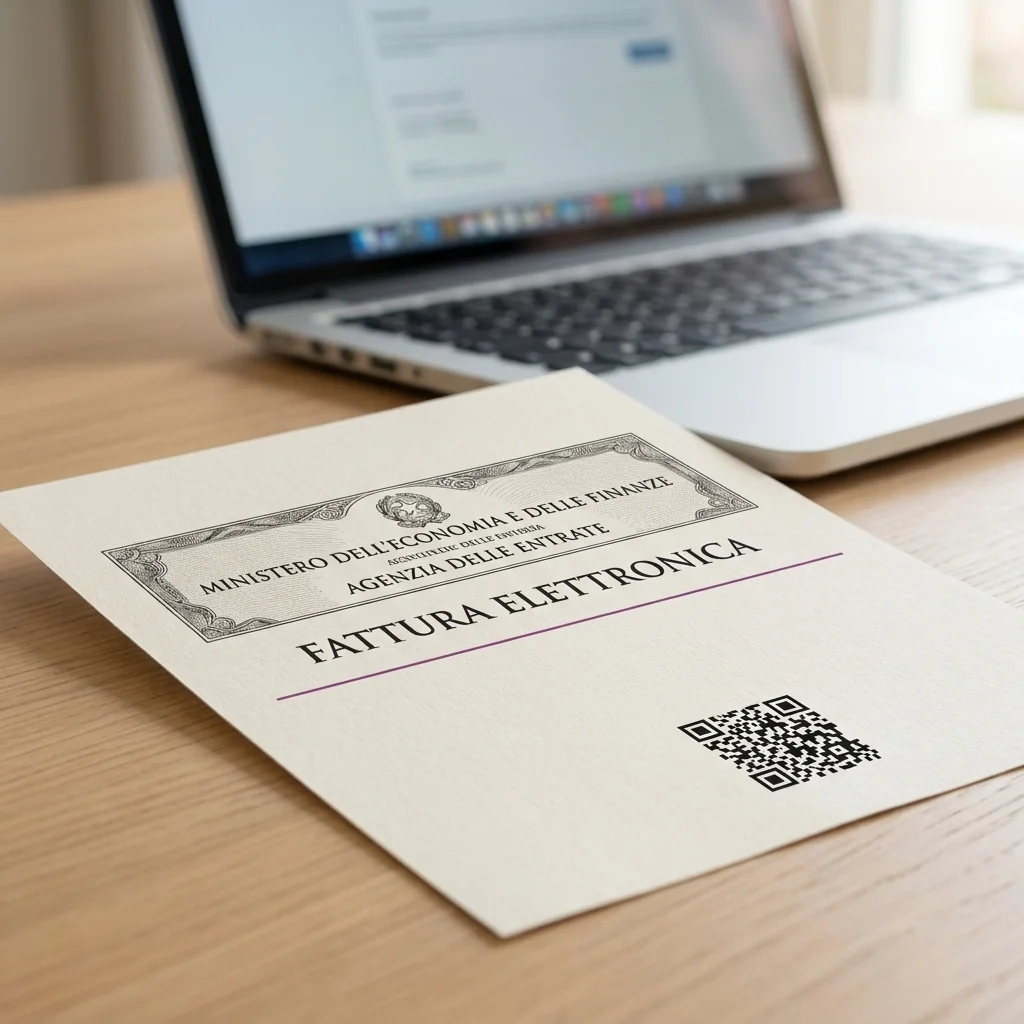
Italy quietly refuses that separation. The fattura elettronica is not a letter you post; it is a structured fiscal document sent to the Italian Revenue Agency, validated, and kept as the official record of the sale. And because a plant sale in the EU also has to travel with a plant passport, that one transaction answers to two authorities at once: the taxman and the plant-health inspector.

Treat invoicing and labelling as separate jobs and you do the work twice, keying the same customer and the same figures into two systems that disagree by Friday. Treat them as one, and the document that satisfies the State carries the paperwork that satisfies the inspector.
The fattura goes to the State, not the post.

the fiscal side

The fattura goes to the State, not the post.

When e-invoicing is switched on, every invoice you issue goes to Italy's SDI (Sistema di Interscambio), the Revenue Agency's exchange system, in the FatturaPA format the law requires. The seller's system never talks to SDI directly. An accredited intermediary produces, signs and transmits the document, and SDI's verdict comes back onto the invoice: delivered, not delivered, or rejected.

So an invoice has two lives at once. Its commercial status (Draft, Sent, Paid) is the story you tell the customer. Its fiscal status is the story you tell the State: has the tax authority accepted it. A system that takes the fattura seriously keeps the two apart, so "the customer has it" is never confused with "the taxman has accepted it." The record stays with the seller; the intermediary only carries the message.

The passport can ride on the invoice.

the traceability side

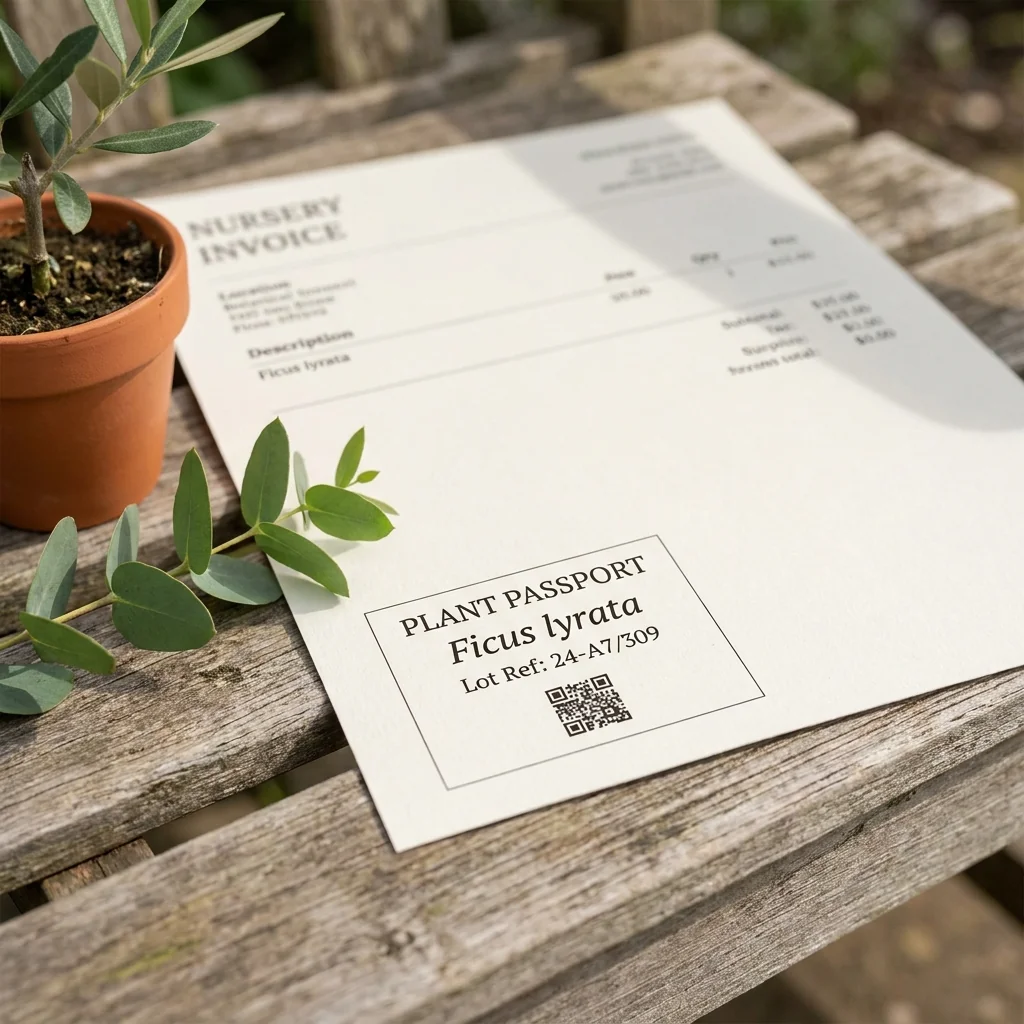
The passport can ride on the invoice.

Switch on include the passport on the invoice and the PDF grows a plant-passport block: the supplier identity, the lot reference, the botanical name with its EPPO code, the country of origin, and an optional QR code. The same sheet that bills the customer now certifies the plants.

This works only because the invoice is drawn from the same live records as the stock. Each line traces back through its batch to the origin and movements behind it, so the passport is read straight from the plant's own history rather than retyped. One document leaves your nursery and satisfies the finance office and the phytosanitary inspector in a single pass.

nothing is left implicit

Every zero has to explain itself.

A fiscal document filed with the State can't just show a blank where the tax should be. When a line carries no VAT, the law wants to know why, and a system that takes the invoice seriously has that reason ready.

On an ordinary invoice a zero-rated line is unremarkable. On a fattura it is a claim the tax authority will read, so it has to state its reason. That reason is recorded as a Natura code, the fiscal shorthand for why a line is exempt, reverse-charged, out of scope or an export. Italy's e-invoicing rules require it, so a zero is never just a blank.

That reason does not come from nowhere. Each customer carries a VAT Treatment: standard-rated, intra-EU, reverse charge, exempt, export. Each one means something different downstream, so sell to a wholesaler in Germany and the treatment shapes both the tax and the words on the document. And because the fattura is a legal record the customer must be able to read, the PDF should be issued in the customer's own language — Italian, English, Romanian or Spanish, as the account requires.

A legal record you can't quietly rewrite.

kept, not edited

A legal record you can't quietly rewrite.

A document filed with the State is not one you get to edit later. Once an invoice is issued its fiscal original is fixed, preserved exactly as sent, along with the preservation receipt that proves it was transmitted. Correct a mistake and you issue a credit note, a new signed document; you never overwrite the old one.

Even the small conveniences respect that line. Print a paid copy for a customer and it comes out watermarked as a copy, a stream rather than a new original, leaving the fiscal record untouched. Nothing is silently replaced, because with a legal document the history is the point.

atlas core

How Atlas Core handles the Italian fattura and plant passport

Atlas Core treats the fattura as the legal record it is, so one transaction answers to both the tax authority and the plant-health inspector:

  • Issues the fattura to SDI in FatturaPA format through an accredited intermediary, with every SDI response (delivered, not delivered, rejected) recorded against the invoice automatically.
  • Separates fiscal from commercial status — acceptance by the tax authority tracked apart from Draft, Sent, Paid, so an unaccepted fattura is never mistaken for a settled sale.
  • Prints the plant passport on the same invoice: supplier identity, lot reference, botanical name with EPPO code, country of origin and optional QR, read straight from the batch's own history rather than retyped.
  • Enforces a Natura reason on every zero-VAT line, driven by each customer's stored VAT Treatment (standard, intra-EU, reverse charge, exempt, export), so no exempt line ships as an unexplained blank.
  • Preserves the fiscal original and its receipt unaltered, handles corrections as signed credit notes, and renders each legal PDF in the customer's own language: Italian, English, Romanian or Spanish.

Read further

What if your software vendor disappears? Field guide · 2026

What if your software vendor disappears?

Vendors get acquired, pivot or quietly switch off the servers. The question worth asking before you commit years of your business isn't whether they'll vanish. It's whether you could leave with everything intact. A plain-English look at data ownership.

6 min read · Jun 2026 Read →

One document, every authority satisfied.

In Italy, invoicing and traceability were always one job: the document that satisfies the taxman can carry the paperwork that satisfies the inspector. Talk to us about getting it right.