library · field guide

You're on the hook for three years.

Plant-health law asks you to issue a passport, and then to prove, years later, where a plant came from and where it went. "One step back, one step forward", kept for at least three years. Here is what that obligation really means, and why it is far easier to meet as a living ledger than a drawer full of paper.

the obligation

Three years, on demand.

The records behind a plant passport are not a formality you file and forget. The law expects you to keep them for at least three years and produce them when an inspector asks, for any plant you have handled.

the rule in plain terms

What the law actually asks of you.

The EU plant-health regime, Regulation (EU) 2016/2031, turned traceability from good manners into a legal duty. Every professional operator who deals in plants for planting has to be able to answer two questions about any stock they have handled: where did it come from, and where did it go?

That is the whole of "one step back, one step forward". One step back is the supplier, lot or production source that put the plant in your hands. One step forward is the next professional operator, or the delivery, that took it away. You are not asked to trace the entire chain, only to hold your own two links of it, cleanly.

The part growers underestimate is the time. Those records must be kept for at least three years, and produced on request. An inspection rarely concerns the plant in front of you today. It concerns a batch you shipped eighteen months ago, to a customer you half remember, under a passport you printed and forgot. The obligation is to have written it down, and to still be able to find it.

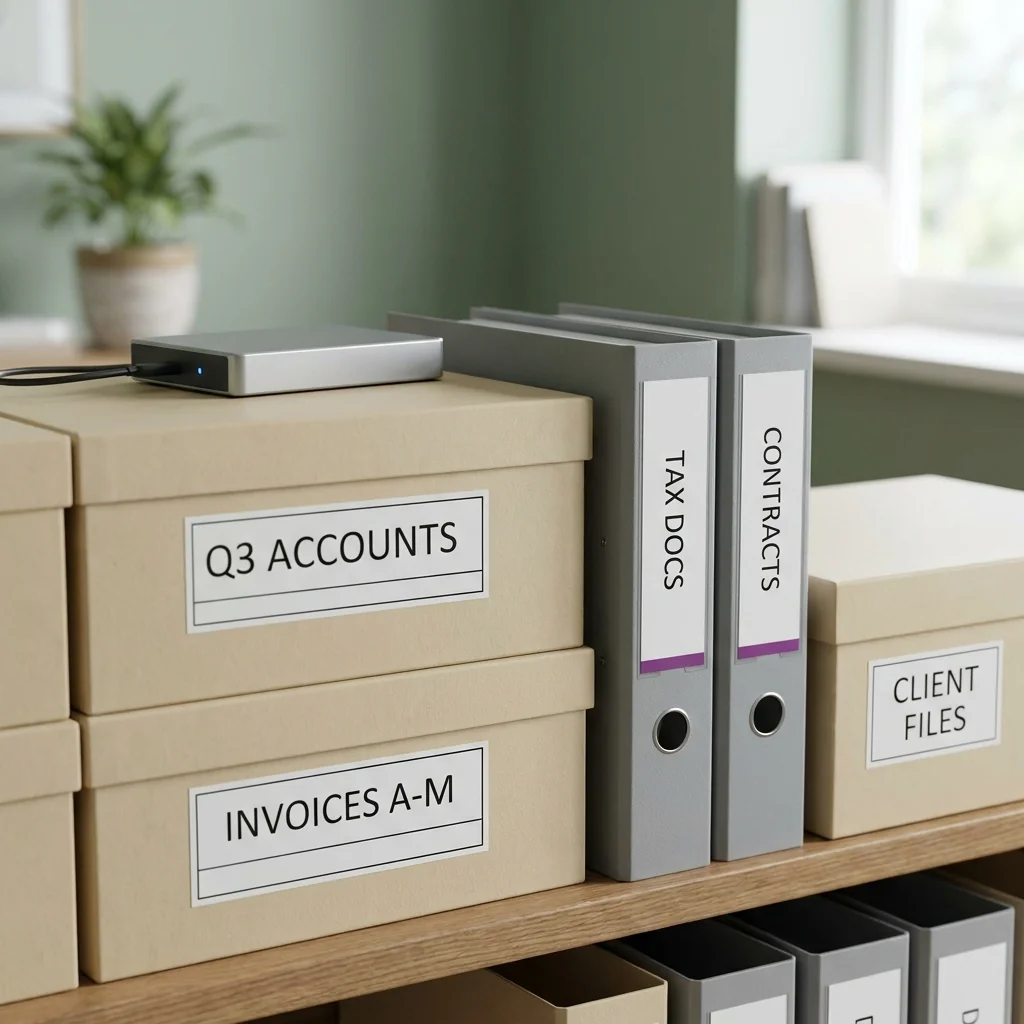
Two links, kept honestly.

one step back, one step forward

Two links, kept honestly.

A passport is only the visible tip of a record. Behind it sits the lineage that makes it true: the supplier and lot the plants arrived on, the botanical name with its EPPO species code, the country of origin, and the deliveries that carried them out.

A sound record holds those two links as data rather than memory. Every batch is tied to the goods-receipt or production source it came from (your step back) and to the deliveries and orders that took it out (your step forward). Do that, and asking "where did lot 4471 go?" is a query, not an afternoon in the archive.

Paper remembers badly.

the filing-cabinet problem

Paper remembers badly.

The traditional way to meet a three-year duty is a drawer: passport stubs, delivery notes, a diary of what went where. It works right up until the moment it is tested. Paper gets misfiled, coffee-stained, taken home, thrown out in a clear-out. The one document you need is the one that went missing.

A record you cannot retrieve is, for an inspector, a record you do not have. A bigger filing cabinet will not fix that, and nor will a stricter clerk. The fix is to stop keeping the audit trail as a separate chore and let it fall out of the work you already do when you receive, move and ship stock.

how the record is kept

The ledger that never forgets.

The sound way to keep stock records never stores "quantity in stock" as a number you overwrite. It stores every movement and adds them up, so the figure you see IS the audit trail and the two cannot drift apart.

This is the quiet idea that makes three-year retention painless. In an append-only ledger, each receipt, move, reservation, shipment, scrap and quarantine is recorded as its own transaction: a logged movement, stamped and kept. Current stock is the sum of those movements, worked out live.

Because nothing is a snapshot, nothing has to be reconstructed. The history of a batch is the record. When an inspector asks how a quantity came to be what it is, the movements explain it line by line (receive, move, allocate, ship) with nothing silently overwritten in between.

Mistakes are corrected, not erased.

nothing is deleted

Mistakes are corrected, not erased.

The temptation in any stock system is to delete the wrong number and type the right one. That is exactly what destroys an audit trail. The moment a record can be quietly changed, it can no longer be trusted.

A trustworthy trail never deletes. When a movement has to be undone it writes a reversal: the original stays for the audit, and a second entry cancels its effect. The trail shows both the mistake and the fix, in order, with timestamps. Three years later, "why did this batch change?" has an answer that reads forward in time and never hides anything.

Even what you destroyed stays on the record.

the whole life, kept

Even what you destroyed stays on the record.

Traceability is not only about what you sold. An inspection may turn on a batch you scrapped, a mother plant you destroyed on a positive test, or stock you moved into a quarantine area and never released. Lose those records and you cannot show that you acted, which is often the thing being checked.

So the history is kept whole. Retired and destroyed stock does not vanish from the ledger; its movements remain, with the reason and the date. The plant is gone from the bench, but its account stays open for as long as the law, and your own defence, needs it.

atlas core

How Atlas Core handles three-year traceability retention

Atlas Core builds the retention duty into the way stock is handled, so the audit trail is a by-product of normal work:

  • Append-only movement ledger: every receipt, move, reservation, shipment, scrap and quarantine is a stamped transaction, and current stock is the live sum of them, so the figure on screen is the audit trail and the two can never drift apart.
  • One step back and one step forward, as data: each batch links to the goods-receipt or production source it arrived on and to the deliveries and orders that carried it out, so "where did lot 4471 come from and go?" is answered by a query in seconds, years later.
  • Reversals instead of edits: mistakes are corrected by a cancelling entry that leaves the original in place with timestamps, so the history reads forward and nothing is silently overwritten.
  • The whole life of a batch is retained. Scrapped, quarantined and destroyed stock stays on the ledger with its reason and date, so you can prove you acted.
  • Passports link back to source. Records persist for the full retention window, turning a three-year obligation into a search box rather than a scramble through a filing cabinet.

Read further

What if your software vendor disappears? Field guide · 2026

What if your software vendor disappears?

Vendors get acquired, pivot or quietly switch off the servers. The question worth asking before you commit years of your business isn't whether they'll vanish. It's whether you could leave with everything intact. A plain-English look at data ownership.

6 min read · Jun 2026 Read →

See how Atlas Core keeps you audit-ready.

Batch-level traceability that fits the rhythm of a working nursery. Talk to us about how Atlas Core makes three-year retention something you never have to think about.