library · field guide

Running a nursery inside a quarantine zone.

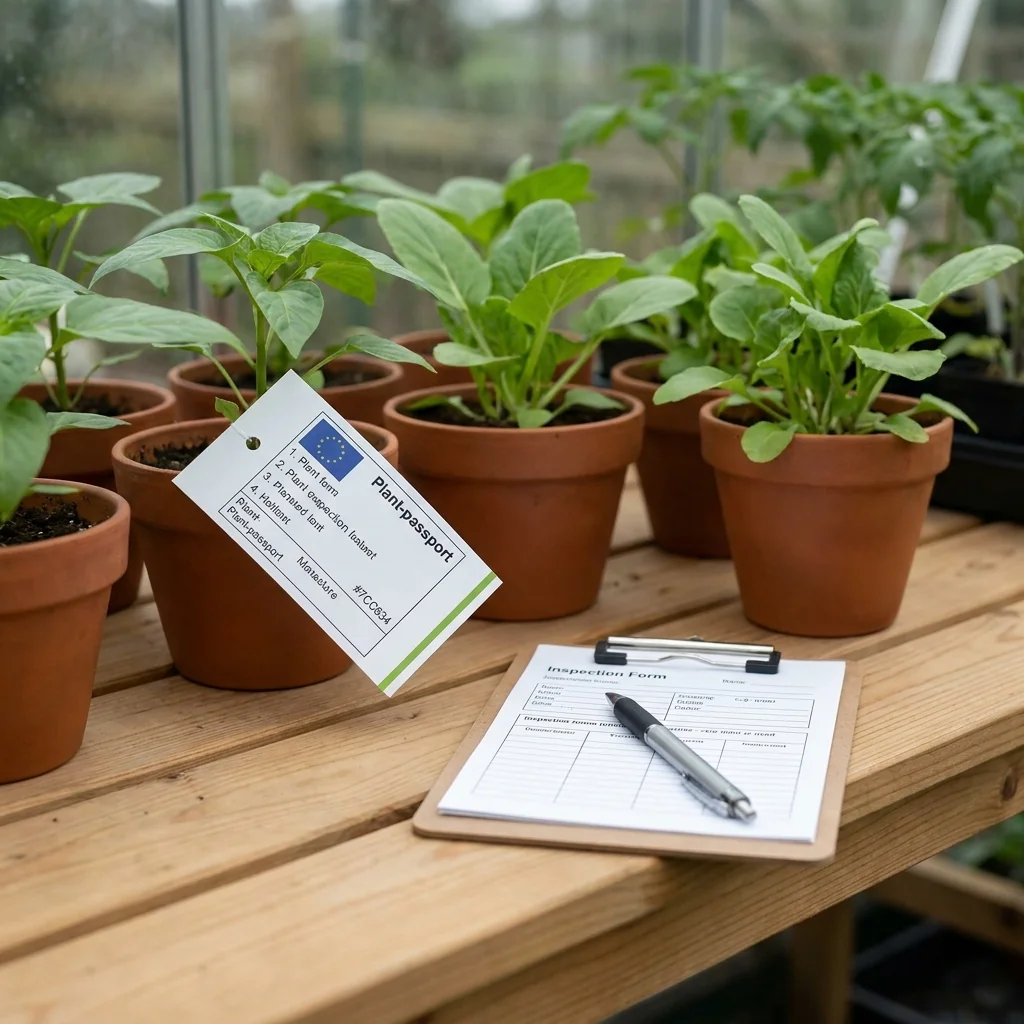
When a pest like Xylella is found, the authorities draw a line on the map, and a nursery that happens to sit inside it becomes an authorised operator in a demarcated zone, where testing, zoning, movement controls and a passport for every plant that leaves become the daily price of trading at all.

the demarcation

A line on the map changes everything.

A demarcated zone is law drawn geographically. Inside it, where a plant sits, what has been tested, and what is allowed to move are decided by your position relative to a boundary you did not choose.

life inside the line

When the outbreak is on your doorstep.

When a quarantine pest is confirmed, the response is geographic. Xylella fastidiosa in the olive groves of Puglia is the case everyone knows, but it could be any regulated organism, anywhere. The authorities define a demarcated zone: an infected zone around the finding, and a buffer zone ringing it. From that moment, every nursery inside the line trades under special rules.

For an authorised grower, the obligations are concrete. Susceptible host plants can only be moved out of the zone under strict conditions: typically after testing, while held in an insect-proof site, and always accompanied by a plant passport. Inspectors visit. Samples are taken on a cadence. And the burden of proof sits squarely with you: you must be able to show which plant was grown where, what was tested, and how a consignment qualified to leave.

None of that is impossible, but it is unforgiving of a business that keeps its records in its head. The difference between a smooth inspection and a shutdown is whether your records already know where every plant is, and can prove it.
Put the boundary into the system.

zoning, drawn to scale

Put the boundary into the system.

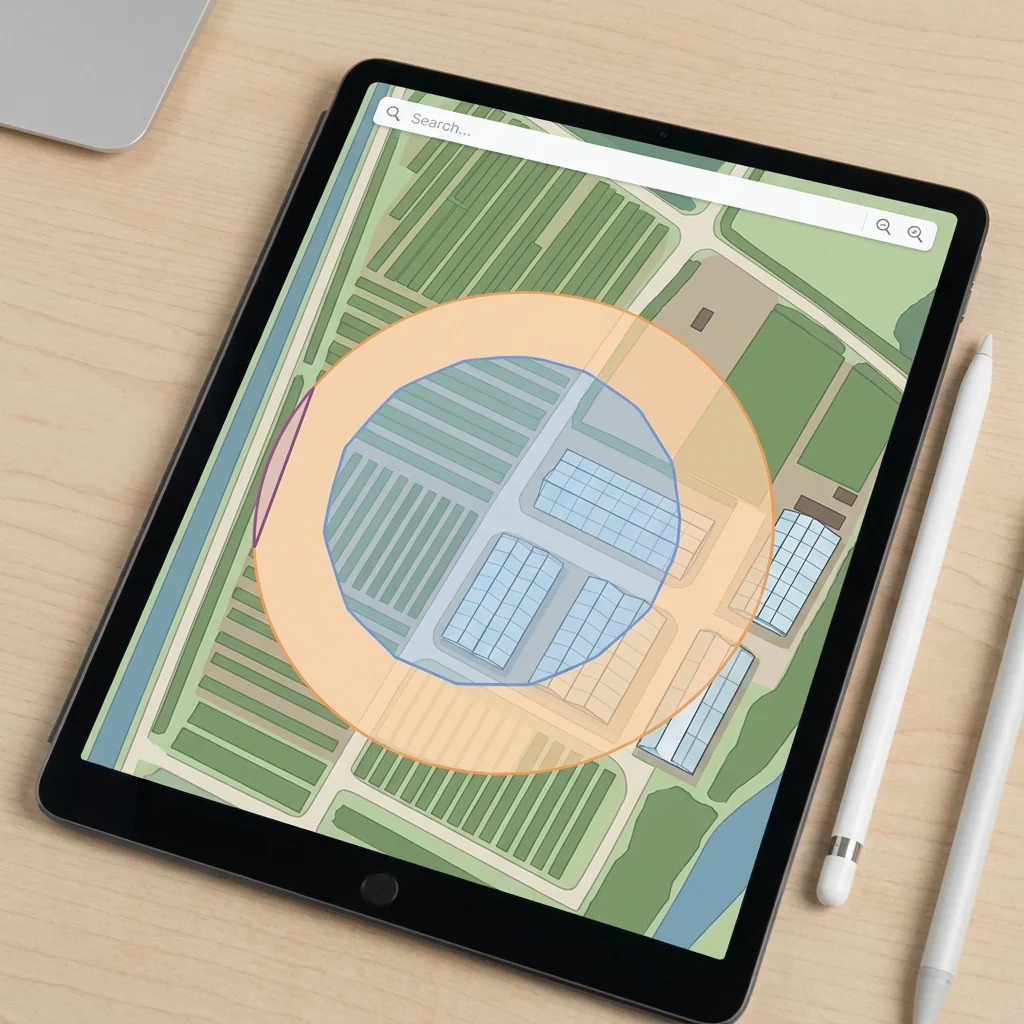
A demarcation is a shape on a map, so the first move is to make your own map agree with it. Any capable nursery system should let you draw every location (a site, a field, a glasshouse, a single insect-proof tunnel) as a GeoJSON polygon over satellite imagery and flag it for restricted access or a quarantine usage.

That turns an abstract rule into something your records understand. A bench inside the infected zone and a tunnel in the buffer are two areas with different standing. When you know exactly which located batches fall inside which polygon, "is this stock allowed to move?" stops being a judgement call and becomes a property of where it sits.

Proof that a plant is clean.

testing, on a cadence

Proof that a plant is clean.

Authorisation runs on evidence, and evidence has a shelf life. Host plants need testing on a schedule, and the result has to be findable a year later.

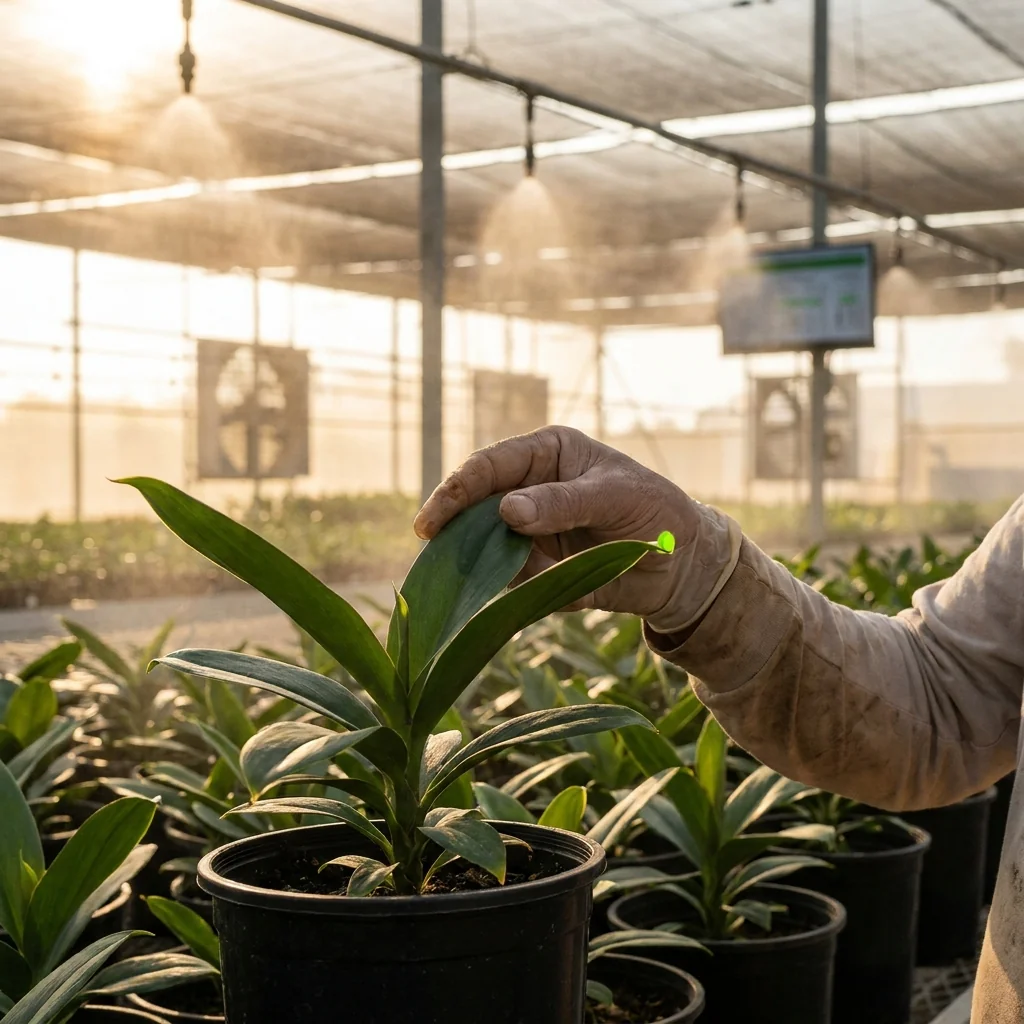
The evidence belongs where it can be found again: on the plant. A mother plant under suspicion should be held under a status that blocks propagation until a clean result clears it, with a health record logging every inspection, sample and treatment and its date. A growing protocol builds the pest-management plan and its checks into the recipe itself, so testing is a scheduled stage rather than a thing someone hopefully remembers. The certificate behind a clean claim is attached to the plant, not lost in an inbox.

movement controls

Nothing leaves unaccounted for.

Inside a zone, a movement is a regulated act. Every batch carries its location and its full history, so what is allowed to leave is never a guess.

The discipline a quarantine zone demands is exactly the discipline a movement ledger already enforces. Treat stock as a batch at a specific location, whose quantity is the sum of every logged movement: receive, move, quarantine, release, ship. Move suspect stock into a quarantine area and that act is a recorded transaction rather than a note on a clipboard.

Because the location travels with the batch, such a record can answer the question an inspector actually asks: what came from the infected zone, and where did it go? The trail reads forward in time, nothing overwritten — your one-step-back to the source, your one-step-forward to the delivery, for every plant that ever crossed the line.

Your registration number, on every area.

authorisation, inherited

Your registration number, on every area.

An authorised operator trades under a phytosanitary registration number, and inside a zone that authorisation has to be attached to the places stock is grown and held. Setting it on each bench by hand is exactly how a gap appears.

So set it once and let it flow. Give a parent site its phyto registration number and every sub-location beneath it, every field, tunnel and bench, should inherit that authorisation automatically, and stay in step if it ever changes. The branch of your nursery that sits inside the demarcation then carries its authorisation top to bottom, without anyone re-keying it.

A passport behind every plant that leaves.

the paperwork, automated

A passport behind every plant that leaves.

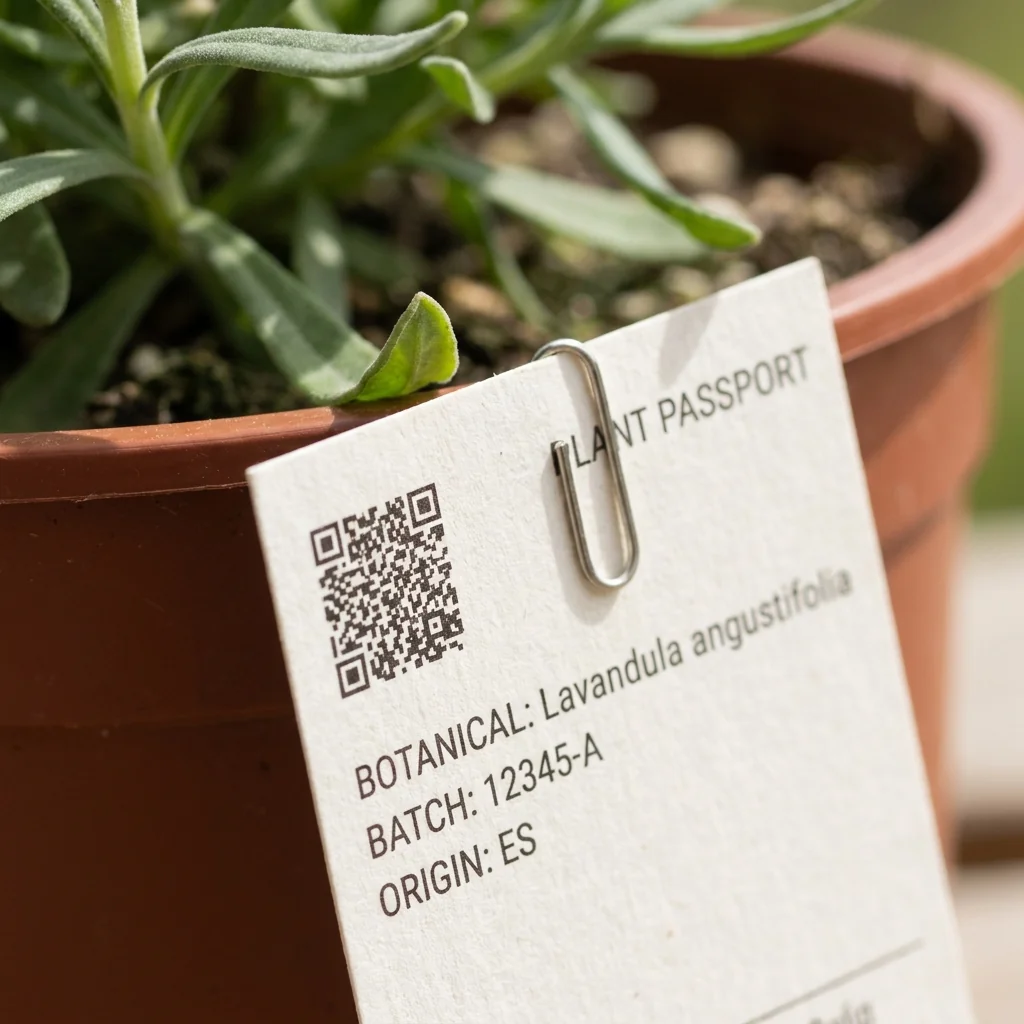
Shipping a single host plant out of a demarcated zone is the moment all of this is tested. That plant needs a passport that is true: the right supplier identity, the botanical name with its EPPO species code, the country of origin and the lot reference. And it needs to be defensible months later.

When the passport is generated from the batch's own records rather than typed fresh, it inherits the testing, the location history and the lineage that make it defensible. It can be attached to the delivery and printed on the invoice. One plant or a full lorry, the consignment leaves with paperwork that matches the ledger behind it.

atlas core

How Atlas Core handles a demarcated quarantine zone

Atlas Core builds the whole demarcation discipline into everyday horticultural management:

  • Draw the zones as polygons. Map the infected and buffer zones as GeoJSON over satellite imagery and flag each site, field, tunnel and bench as restricted or quarantine, so a batch's eligibility to move follows automatically from the polygon it sits in.
  • Inherit authorisation. Set the phytosanitary registration number once on a parent site and every sub-location beneath it inherits it, staying in step if the number changes, so no bench is left unregistered.
  • Test on a cadence. Build testing into the growing protocol as a scheduled stage and hold suspect mother plants at a Quarantine status that blocks propagation until a clean result clears them, logging every inspection, sample and treatment with dates on the plant's health record.
  • Keep an unbroken trail. Track stock as a located batch whose quantity is the sum of every logged movement (receive, move, quarantine, release, ship), for a non-overwritten one-step-back / one-step-forward record.
  • Draw passports from the batch. Generate plant passports straight from the batch's records (supplier identity, botanical name with EPPO species code, country of origin and lot reference), then attach them to the delivery and print them on the invoice.

Read further

What if your software vendor disappears? Field guide · 2026

What if your software vendor disappears?

Vendors get acquired, pivot or quietly switch off the servers. The question worth asking before you commit years of your business isn't whether they'll vanish. It's whether you could leave with everything intact. A plain-English look at data ownership.

6 min read · Jun 2026 Read →

See how Atlas Core handles the zone.

Mapped locations, inherited authorisation, testing built into protocols and passports drawn from the batch turn the burden of a demarcated zone into routine. Talk to us about how it fits your nursery.