library · field guide

Five myths small growers believe about ERP.

Most small growers who avoid ERP are going on a story they half-heard about someone else's rollout, rather than on anything they tried themselves. The stories aren't wrong — but the software has moved on, and so has the price.

the case

The stories are old. The cost of believing them isn't.

Every myth here was true once. What has changed is the software, the price, and the quietly compounding cost of running a living business on guesswork.

why the myths persist

Half-heard, and half-true.

Ask a grower why they have never moved off spreadsheets and you rarely hear about a failed rollout. You hear a story — a neighbour who bought a system that took a year to install, a cousin whose quote had five zeros, a supplier who ended up doing more work than before. The objection is almost never first-hand. It is inherited.

Those stories are not entirely wrong. Business software genuinely used to be that slow, that expensive and that rigid. But the real cost of not having a clear view of your operation is quietly compounding every season, in ways that never show up as a single dramatic bill.

Here are the five myths small growers and nurseries repeat most — and what is actually true.

ERP is too complicated for a small team.

myth one · complexity

ERP is too complicated for a small team.

The fear. You picture months of consultants, an IT project, training days and disruption — all for a team that just needs to know what is in stock and what is going out the door.

The reality. That fear describes legacy, on-premise software from fifteen years ago. Modern cloud systems for smaller businesses are built to go live in a few months, with no IT department required. The genuine difficulty now is clearing enough of your own time to set it up properly. It helps to look for a system shaped around how a nursery actually works, from stock intake to dispatch, rather than a manufacturing template you have to fight or modules you will never open.

It'll cost a fortune.

myth two · cost

It'll cost a fortune.

The fear. You have heard about six-figure ERP projects and quietly filed the whole category under not for a business my size.

The reality. Those numbers come from enterprise deployments at companies with hundreds of staff and revenues in the hundreds of millions — a different world with different software. Cloud subscriptions aimed at small and mid-sized growers now start at ordinary monthly rates, closer to a utility bill than a capital project. The figure that matters is the whole one: look for pricing that names the implementation cost up front, so you know what you are committing to before you start, rather than a low headline price that hides its real total in setup fees.

living inventory

Plants aren't widgets.

Below cost and complexity sits a deeper objection: the honest suspicion that no software could possibly understand a business where the stock is alive.

Myth three: "Generic software won't understand my business."

The fear. Living inventory changes every week. Your system has to understand propagation cycles, availability windows and batch traceability — and the fact that a missed dispatch is not a return, it is a write-off. A warehouse system that thinks a plant is a box on a shelf will be wrong in a hundred small ways.

The reality. This one was true — for generic ERP. It is precisely why a serious grower should not buy generic ERP. Software built from the ground up for horticulture already knows about batches, production stages, availability by stage and plant-passport compliance, because that is all it does. The test is simple: does the system speak grower out of the box, or are you paying a consultant to teach it what a mother plant is? Adapting a system designed for pallets and part numbers is the slow, expensive road that gave ERP its bad name in the first place.

I'll have to change how we work.

myth four · workflows

I'll have to change how we work.

The fear. You have spent years building workflows that suit your team. Bending everything to match a vendor's idea of best practice feels like losing something you worked hard for.

The reality. Configuration is not the same as customisation. Modern cloud systems bend to your business through settings, rules and workflows rather than code and consultants. The twenty per cent of your operation that is genuinely unique to you should stay exactly that. The other eighty per cent (orders, stock, dispatch, accounts) is universal, and it quietly benefits from a structured backbone instead of a folder of spreadsheets.

Spreadsheets are good enough for now.

myth five · spreadsheets

Spreadsheets are good enough for now.

The fear — or the justification. It is working. More or less. You know where things are. You can pull a report when you need one.

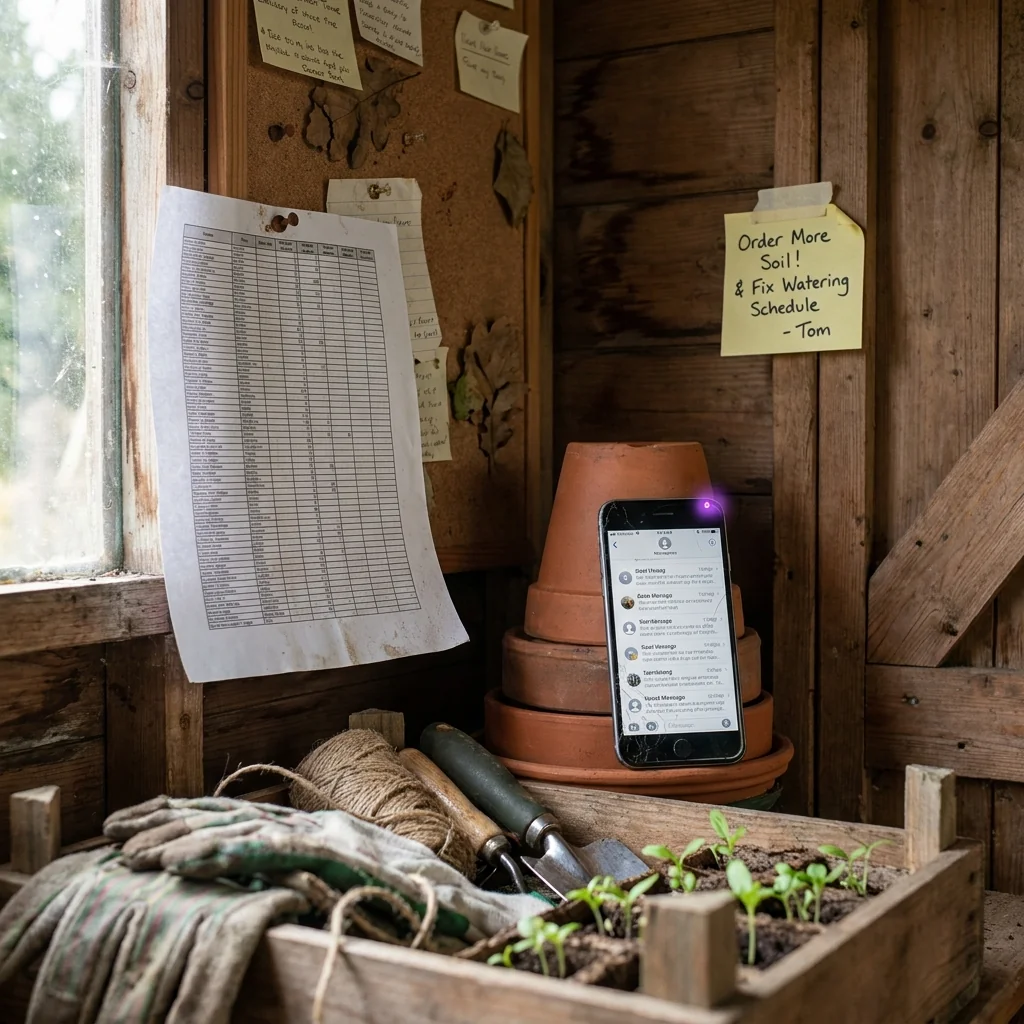
The reality. Research into business spreadsheets keeps finding the same thing: the vast majority of the ones a business actually relies on contain at least one material error — and most of the time nobody ever spots it. For a nursery that means stock figures you cannot fully trust, availability you are half-guessing at, and decisions taken on data that was already three days out of date. The hidden cost is never dramatic. It is gradual: an overcommitted order here, a missed restock there, a season-end write-off that felt unavoidable but was not. Replacing the patchwork (the spreadsheet, the WhatsApp thread, the sticky note on the potting-shed door) with a single live view puts every decision on the same numbers, at the same moment.

atlas core

How Atlas Core handles ERP for a small nursery

The general principles above describe what to look for. Here is how Atlas Core meets them for a grower:

  • Purpose-built for living inventory: batches, propagation cycles, availability by production stage and plant-passport compliance come out of the box, so you are not paying a consultant to teach a warehouse system what a mother plant is.
  • Goes live in months without an IT department: cloud-hosted and shaped to your operation through settings, rules and workflows rather than custom code or a long consulting project.
  • Transparent small-business pricing: a monthly subscription with the implementation cost named up front, sized for a grower rather than an enterprise deployment.
  • A single live view from stock intake to dispatch: replaces the spreadsheet, WhatsApp thread and potting-shed sticky note so every decision rests on the same current numbers.
  • Shaped by settings: the universal 80% (orders, stock, dispatch, accounts) gets a structured backbone while the parts that make your nursery unique stay exactly as they are.

Read further

Bolt-on translation always breaks Field guide · 2026

Bolt-on translation always breaks

Plants cross borders long before software does. Systems born speaking one language crack at the seams - the label printed in the wrong tongue. Why bolt-on translation always shows, and building multilingual from day one is the fix.

7 min read · Jul 2026 Read →
In praise of boring technology Tech brief · 2026

In praise of boring technology

The software that runs your nursery will still be running it in ten years - exactly the wrong place to chase the newest tool. What 'boring' technology buys: fewer moving parts, fewer 3am surprises, and excitement kept for the plants.

6 min read · Jul 2026 Read →

Operational clarity, without the IT department.

Atlas Core is built for growers rather than corporates, and designed to show you what is happening in your operation without an IT team to keep it running. If any of these myths has been holding you back, it is worth a conversation.